

Daily Dose Of Jazz…
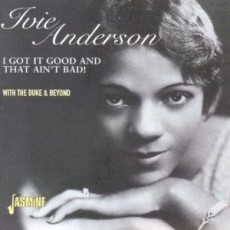
Ivie Anderson was born on July 10, 1905 in Gilroy, California. From age nine to thirteen, she attended St. Mary’s Convent and studied voice. At Gilroy grammar and high school, she joined glee club and choral society. She also studied voice under Sara Ritt while in Nunnie H. Burroughs Institution in Washington, DC.
Ivie’s career officially started around 1921 when she first performed in Los Angeles, California. From 1922 to 1923, she was brought to New York City by joining a pioneering African-American musical revue Shuffle Along. By 1924 and 1925, she had already performed in various locations such as Cuba, the Cotton Club in New York City and in Los Angeles with the bands of Paul Howard, Curtis Mosby and Sonny Clay.
1928 saw Anderson singing in Australia with Clay’s band, starred in Frank Sebastian’s Cotton Club in Los Angeles and soon after, she finally began touring in the States as a solo singer.
With a sweet, clear singing voice, she was a popular attraction with Ellington’s band. Over Ellington’s long career as bandleader, his indifference toward vocalists changed with the hiring of Anderson, who was generally considered the best vocalist he ever employed.
Her outstanding performance of “Stormy Weather” in the movie short Bundle of Blues in 1933 was only eclipsed by the later and far better known version sung by Lena Horne. She also appeared as a singer in the Marx Brothers movie “A Day At The Races” in 1937 and the same year in Hit Parade of 1937 as Ivy Anderson.
Suffering from asthma for years, jazz vocalist Ivie Anderson passed away on December 28, 1949.

Give A Gift Of Jazz – Share
More Posts: vocal
Daily Dose Of Jazz…
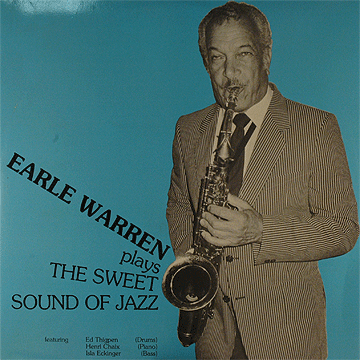
Earle Warren was born on July 1, 1914 in Springfield, Ohio. He was the primary alto saxophonist and occasional singer in the Basie orchestra in its formative years and its heyday, from 1937 to the end of the 1940s. After the break-up of Basie’s 1940s band, in 1949, he worked with former Basie trumpeter, Buck Clayton.
Earle also played some rock´n roll working for Alan Freed in Alan Freed’s Christmas Jubilee, December 1959, which was the very last big Alan Freed show before payola put an end to the legendary Freed. He also appeared in the 1970s jazz film of Count Basie and his band, “Born to Swing”.
In his later years, Warren performed often at the West End jazz club at 116th and Broadway in New York City, helming a band called The Countsmen, which also featured fellow former Basie-ite Dicky Wells on trombone and Peck Morrison on bass. He lived part of the time in Switzerland where he fathered a child in a May/September romance. Alto saxophonist Earle Warren passed away on June 4, 1994.
Put A Dose In Your Pocket
Daily Dose Of Jazz…
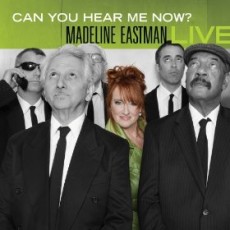
Madeline Eastman was born June 27, 1954 in San Francisco, California. It wasn’t until she turned 18 while watching Lady Sings The Blues that she became enchanted with jazz singing. Listening to Miles Davis’ mid-‘60s quintet and the vocals of Ella Fitzgerald and Sarah Vaughan but gleaned her greatest inspiration from Carmen McRae.
In 2004, Ms. Eastman won 3rd place in the Down Beat Reader’s Poll “Best Female Jazz Vocalist” and was recognized in Down Beat Magazine’s International Critics Poll as “Talent Deserving Wider Recognition.” Eastman has long been heralded for her vocal gifts, interpretive savvy, and irrepressible sense of adventure.
Splitting her time between touring and teaching at Stanford Jazz Workshop and being named Department Chair of Jazz Vocal Studies at the Jazzschool in Berkeley, California, Madeline has performed in Asia and Europe and major clubs in the U.S. such as Yoshi’s, Jack London Square, New York nightclubs and festivals like the Cotati, Monterey and Glasgow.
She has released five CD’s on her own Mad Kat label that she co-founded with vocalist Kitty Margolis and has recorded with such luminaries as Cedar Walton, Kenny Barron, Phil Woods, Rufus Reid and Tony Williams. Vocalist Madeline Eastman continues to record and perform in her bold and original interpretations of the jazz canon and lively onstage persona.
Inspire A Young Mind
More Posts: vocal
Hollywood On 52nd Street
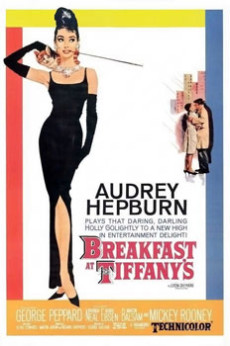
Moon River is another jazz standard originally composed for Breakfast At Tiffany’s by Henry Mancini for music with lyrics written by Johnny Mercer. Blake Edwards directed this 1961 American romantic comedy that starred Audrey Hepburn and George Peppard with support from Patricia Neal, Buddy Ebsen, Martin Balsam and Mickey Rooney. The film is loosely based on Truman Capote’s novella of the same name.
Hepburn’s portrayal of Holly Golightly as the naïve, eccentric café society girl is generally considered to be the actress’ most memorable and identifiable role. However, Hepburn regarded it as one of her most challenging roles, since she was an introvert required to play an extrovert.
The song received an academy Award for Best Original Song for its first performance by Hepburn, won Mancini the 1962 Grammy Award for Record of the Year and Mercer a Grammy Award for Song of the Year.
Sponsored By

www.whatissuitetabu.com
More Posts: comedy,dance,drama,hollywood,musical,suite ta bu,vocal
Hollywood On 52nd Street
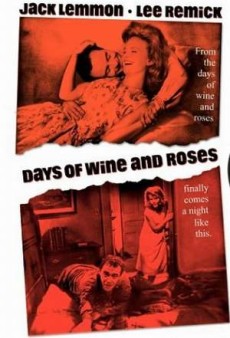
Days of Wine and Roses is a popular song and jazz standard from the 1962 movie of the same name. Henry Mancini composed the music with lyrics by Johnny Mercer. They received the Academy Award for Best Original Song for their work. The song is composed of only two sentences, one for each stanza. Though the best-known recording of the song was by Andy Williams in 1963, several others have recorded the song, including the composer Henry Mancini, Perry Como, Wes Montgomery (1963: Boss Guitar), Lenny Breau, and Joe Pass and Ella Fitzgerald on their Pablo Records album Easy Living.
Sponsored By
www.whatissuitetabu.com
More Posts: hollywood,instrumental,vocal