

Daily Dose Of Jazz…
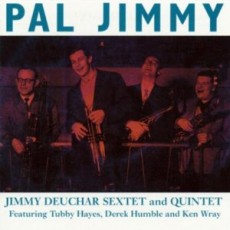
Jimmy Deuchar was born James Deuchar on June 26, 1930 in Dundee, Scotland. Taught trumpet by WWI bugler John Lynch, after national service he began his professional career in the John Dankworth Seven in 1950. He would go on to work with the Oscar Rabin Band, Ronnie Scott, and Kurt Edelhagen’s Orchestra through the decade.
By the Sixties he was working with Tubby Hayes and sitting in with visiting Americans at Ronnie Scott’s club. A highly gifted player and a leading exponent of the “modern” style, he was in demand and achieved success as a touring player in Europe and the United States.
He joined the Kenny Clarke-Francy Boland Big Band during the late 60 and early 70s, returned to London and freelanced, arranged for the BBC Big Band, the BBC Scottish Radio Orchestra and played in a number of settings.
He recorded a number of albums as a leader and sideman beginning in the Fifties utilizing many of his compositions on albums such as The Deuchar Plays Deuchar, Down In The Village, Pal Jimmy and Live In London.
With his health deteriorated, on September 9, 1993 jazz trumpeter and arranger Jimmy Deuchar, who was influenced by Fats Navarro and whose small range was broad and fat toned, passed away at age 63.
More Posts: trumpet
Daily Dose Of Jazz…
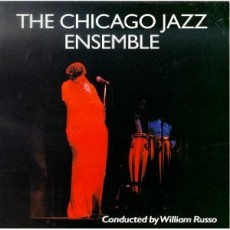
Bill Russo was born William Russo on June 25, 1928 in Chicago, Illinois and studied piano under Lennie Tristano. He would become an arranger and composer and by the 1950s was writing groundbreaking orchestral scores for the Stan Kenton Orchestra. He would compose for Kenton 23 Degrees N 82 Degrees W, Frank Speaking, Portrait of a Count and one of his most famous Halls Of Brass, featuring Buddy Childers, Maynard Ferguson and Milt Bernhart.
By the 60s Russo moved to England, founded the London Jazz Orchestra, and contributed to the Third Stream movement that sought to close the gap between jazz and classical music. Returning to Chicago by mid-decade he founded Columbia College’s music department, became the director of its Center for New Music, the college’s first full-time faculty member and the Director of Orchestral Studies at Scuola Europea d’Orchestra Jazz in Palermo, Italy.
Bill has composed classical symphonies, choral works, operas and several works for the theater. He has received a Koussevitsky award, had his work performed by the New York Philharmonic, the San Francisco and Chicago Symphony Orchestras, and has set music to the poetry of Gertrude Stein as well as scores for dance and film.
Russo has worked with Manny Albam, Teo Macero, Teddy Charles, Donald Byrd, Phil Woods, Bill Evans, Eddie Costa, Bob Brookmeyer, Al Cohn and Art Farmer among others. Starting the Chicago Jazz Ensemble, which is dedicated to preserving and expanding jazz, He was succeeded by Jon Faddis and it is currently under the artistic direction of Dana Hall. Trombonist, composer, arranger, eudcator and author Bill Russo passed away on January 11, 2003 after a bout with cancer. He was 74 years old.
Daily Dose Of Jazz…
Frank Lowe was born on June 24, 1943 and raised in Memphis, Tennessee. Taking up the tenor saxophonist he was extremely influenced by the first and second waves of free jazz throughout the 1960s. He moved to San Francisco, California to explore the avant-garde jazz scene. While making several visits to New York City he began playing with Sun Ra and Alice Coltrane, recording with the later in 1971.
As a leader he recorded two-dozen albums between 1973 and 2002 working with the likes of Don Cherry, Billy Bang, Jack Walrath, James Carter, Geri Allen, Charnett Moffett, Carlos Ward and numerous others.
Composer and tenor saxophonist Frank Lowe passed away on September 19, 2003 of lung cancer. His legacy was a varied body of recordings and memorable performances and his composition “Spirits in the Field” was performed on Arthur Blythe’s 1977 album The Grip.
More Posts: saxophone
Daily Dose Of Jazz…
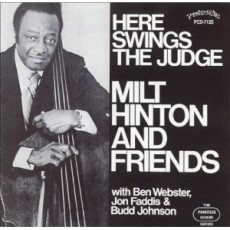
Milt Hinton was born Milton John Hinton on June 23, 1910 in Vicksburg, Mississippi but grew up in Chicago, Illinois from age eleven. He attended Wendell Phillips High School and Crane Junior College and learned to first play violin followed by bass horn, tuba, cello and the double bass.
In the late 1920s and early 1930s, he worked as a freelance musician in Chicago playing with Jabbo Smith, Eddie South, and Art Tatum. In 1936, he joined Cab Calloway’s band playing alongside Chu Berry, Cozy Cole, Dizzy Gillespie, Illinois Jacquet, Jonah Jones, Ike Quebec, Ben Webster, and Danny Barker, where he was equally adept at bowing, pizzicato, and “slapping” a technique for which he became famous while playing in the big band from 1936 to 1951.
Milt later became a television staff musician, working regularly on shows by Jackie Gleason and Dick Cavett, recorded eleven albums as a leader and worked as a sideman on numerous albums with Lionel Hampton, Milt Jackson, Elvin Jones, Charles Mingus, Ike Quebec, Ralph Sutton, Ruby Braff, Clark Terry and Branford Marsalis.
He has twice received awards from the National Endowment For The Arts for his work as a jazz educator and a fellow and is a 1993 NEA Jazz Master. Bassist Milt Hinton, who photographically documented many of the jazz greats, was nicknamed “The Judge”, was heralded as the “the dean of jazz bass players”, passed away on December 19, 2000 in New York City at age 90.
More Posts: bass
Daily Dose Of Jazz…
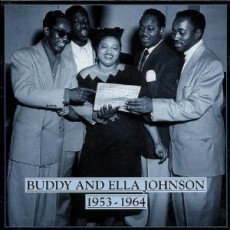
Ella Johnson was born Ella Mae Jackson on June 22, 1919 in Darlington, South Carolina. She joined her brother Buddy Johnson in New York as a teenager, where he was leading a popular band at the Savoy Ballroom in Harlem.
Ella scored her first hit in 1940 with “Please, Mr. Johnson” with subsequent hits included “Did You See Jackie Robinson Hit That Ball?”, “When My Man Comes Home” and “Hittin’ On Me”. Her popular 1945 recording of “Since I Fell For You” composed by her brother, led to its eventual establishment as a jazz standard.
She continued to perform with Buddy Johnson into the 1960s and her singing drew comparisons to Ella Fitzgerald and Billie Holiday. In February 2004, she died in New York City of Alzheimer’s disease, at the age of 84.
More Posts: vocal