

Daily Dose Of Jazz…
Kurt Elling was born November 2, 1967 in Chicago, Illinois who first became interested in music through his father and growing up sang in choirs and played various musical instruments. As a child he listened to Tony Bennett, learned counterpoint from the motets of Bach and sang in his high school choir. He played violin, French horn, piano and drums but wasn’t exposed to jazz until he attended college listening to Dave Brubeck, Dexter Gordon, Herbie Hancock and Ella Fitzgerald among others. He went on to pursue a master’s in philosophy of religion but left one credit short to pursue a career as a jazz vocalist.
Kurt began to perform around Chicago in basement clubs and jam sessions, scat singing and improvising his own lyrics while working day jobs to survive. He started listening to the minimalism and emotion of Chet Baker and to Mark Murphy exposing him to the poetry of Jack Kerouac. He recorded a demo in the early 90s that resulted in signing with Blue Note and the subsequent releasing of seven albums with the label.
He has been nominated for nine Grammy Awards, winning Best Vocal Jazz Album for 2009’s Dedicated To You. He often leads the Down Beat critics poll and has been awarded the Prix Billie Holiday from the Académie du Jazz. Elling is a baritone with a four-octave range, a writer, and composer who performs vocalese. Kurt Elling has sung and recorded with Bob Belden, Joanne Brackeen, Oscar Brown, Jr., Orbert Davis, Jon Hendricks and Bob Mintzer to name a few. Since 1995, he has collaborated with pianist, composer, and arranger and musical director Laurence Hobgood, regularly leading a quartet.
More Posts: vocal
Daily Dose Of Jazz…
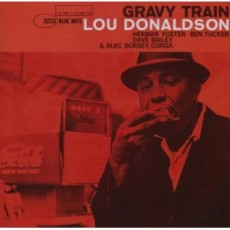
Lou Donaldson was born November 1, 1926 in Baden, North Carolina, the second of four children in a musical family, his mother being a concert pianist and the music director at Baden High School. His mother started him out on the clarinet and once mastering the instrument and his pursuit of a music career was ignited.
At age 15, Lou matriculated to North Carolina A & T College, received a Bachelor’s of Science degree, joined the marching band playing clarinet. Drafted into the US Navy in 1945, he played in the Great Lakes Navy Band playing both clarinet and alto saxophone for dances. Hearing Charlie Parker play, he decided that this was the style of playing he would make his own, having previously playing like Johnny Hodges, Tab Smith or Pete Brown.
Upon return from the military he went back North Carolina A& T College, he played in the Billy Tolles dance band and with the Sabby Lewis Band during the summer months in Boston. Sitting in one night with Illinois Jacquet and hearing him play drummer Poppa Joe Jones told Lou to come to New York. Lou went to work at Minton’s Playhouse, was approached by Alfred Lyons of Blue Note Records and recorded with the Milt Jackson Quartet.
Success came and more records as a leader came with Horace Silver, Clifford Brown, Grant Green, John Patton, Blue Mitchell, Donald Byrd, Horace Parlan, Tommy Turrentine, Al Harewood, George Tucker, Jameel Nasser and Curtis Fuller playing as sidemen. Donaldson went on to have a prolific career playing bebop, hard bop jazz blues and soul jazz, helping fellow musicians get work and get paid, bringing Gene Harris and the 3 Sounds from Washington DC to New York to record with him on the famous album called LD Plus 3.
Awarded an honorary doctorate from North Carolina A&T University and n inducted into the International Jazz Hall of Fame along with countless of honors and awards for his outstanding contributions to jazz, alto saxophonist Lou Donaldson continues to express himself as a composer and bandleader.
More Posts: saxophone
Daily Dose Of Jazz…
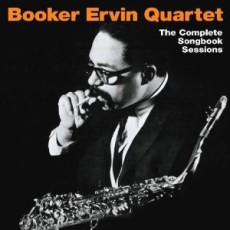
Booker Telleferro Ervin II was born October 31, 1930 in Denison, Texas but didn’t take up the saxophone until he was an adult. After teaching himself tenor saxophone while in the USAF, he moved to the Boston area and studied at Berklee College of Music. His tenor playing was characterized by a strong, tough sound, blues/gospel phrasing and perhaps inspired by growing up in the south. Some thought Coltrane influenced him but it is also thought that they developed their styles independently, and beyond some sheets of sound similarities, they were distinctively different.
Moving to New York, Ervin joined Horace Parlan’s quartet, with whom he recorded “Up & Down” and “Happy Frame of Mind” on Blue Note. He went on to work with Charles Mingus from 1956 to 1963, appearing on “Goodbye Pork Pie Hat” on the album “Mingus Ah Um” and “Wednesday Night Prayer Meeting” on the Blues and Roots session in 1959, as well as the Mingus Mingus Mingus Mingus Mingus recording.
During the Sixties Ervin also led his own quartet, recording for Prestige with ex-Mingus associate pianist Jaki Byard along with bassist Richard Davis and Alan Dawson on drums. Ervin later recorded again on Blue Note and played with pianist Randy Weston.
Tenor saxophonist Booker Ervin had 18 albums as a leader and two dozen as a sideman with Teddy Charles, Andrew Hill, Mal Waldron and others, died of kidney disease in New York City on July 31, 1970 at the age of 39.
More Posts: saxophone

Daily Dose Of Jazz…
Poncho Sanchez was born October 30, 1951 in Laredo, Texas, the youngest of eleven children, but was reared in Norwalk, California. Exposed to and influenced by Afro-Cuban music (mambo, son, cha-cha, rumba, guaracha, salsa) and bebop jazz, he originally started as a guitarist. Discovering his talent for singing during an R&B band audition, he become the group’s lead vocalist. He later taught himself the flute, drums and timbales before finally deciding to pursue conga playing in high school.
In 1975, Sanchez’s idol, vibraphonist Cal Tjader invited him to perform one set with his band. Seeing the young man’s talent, Tjader hired Sanchez for a week before officially making him a full member of the ensemble. Sanchez played a crucial role as conguero for several years until Tjader’s death in 1982.
Before his death, Tjader suggested to Carl Jefferson, Concord Records founder, to sign Sanchez and his soon-to-be-formed group under the Concord Picante label. Tjader’s wishes were honored, and the first two records were composed and arranged by long-time Tjader collaborator Clare Fischer. Poncho produced 19 albums for the label and garnered a Grammy for his “Latin Soul” album.
He has played with Mongo Santamaria, Hugh Masekela and a host of jazz and Latin musicians and vocalists to numerous to name along with the iconic funk band Tower of Power on his “Do It” project. Poncho Sanchez is respected as one of the top percussionists of our time and continues to perform worldwide.
More Posts: conga,percussion
Daily Dose Of Jazz…
Neal Hefti was born on October 29, 1922 in Hastings, Nebraska, outside Omaha and was a child of the jazz age. His mother, a music teacher, started piano lessons at the age of 3, becoming well versed in theory and harmony by the time he took up the trumpet at 11. He was already writing arrangements, having taught himself by trial and error in high school and was supplying local dance bands with music well before he graduated. After winning several school prizes, he was to start making a living as a jazz trumpeter in the big bands of Charlie Barnet and Charlie Spivak.
After travelling to California with Spivak to make a film, Hefti stayed on the West Coast, joined Woody Herman’s band as a trumpeter in 1944 and his arranging began to take precedence over his playing. Hefti married, moved back to New York and began writing in every genre and for all sizes of ensembles, becoming adept at using small forces to create a big sound. He arranged for Count Basie both in octet and big band configurations making Neal became one of his principal writers. He went on to write numerous compositions for Harry James in the late 40s and 50s designed to feature the leader’s trumpet and the band’s star drummer Buddy Rich.
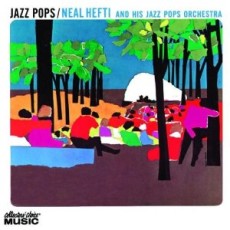
Hefti fronted his own band in the Fifties, contributed to some of Frank Sinatra’s most popular albums, including “Frank Sinatra and Swinging Brass”, which he also produced. From the early 1960s onwards, he was increasingly involved in the world of films and television, winning a Grammy award for his Batman theme. Hefti was a brilliant composer and arranger who created the scores for many other television shows and films, notably the two Neil Simon movies The Odd Couple and Barefoot in the Park. His score for Harlow included the song “Girl Talk” that has become a jazz standard.
However, in 1978 after his wife’s passing, he ceased to write and record new music. Nevertheless, because Basie continued to commission other writers to replicate his style, his effect on big band arranging and on film scores remained extremely influential. Trumpeter, composer, songwriter and arranger Neal Hefti, who contributed to the genres of swing and big band along with scores for the film and television industries, passed away in Toluca Lake, California on October 11, 2008.