

From Broadway To 52nd Street
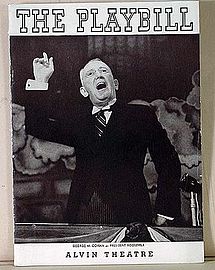
I’d Rather Be Right opened at the Alvin Theatre on November 2, 1937 and ran two hundred and ninety performances. The play starred Joy Hodges, Austin Marshall and George M. Cohen. The composers of the play’s music were Richard Rodgers and Lorenz Hart and one of their songs emerge to become a jazz standard – Have You Met Miss Jones.
The Story: As the story goes, a couple, Phil & Peggy, who wish to marry cannot do so until he receives a raise in pay. This raise was contingent on President Roosevelt balancing the budget. Falling asleep in Central Park, Phil dreams that he and Peggy meet the President. The President, in turn, summons the Cabinet, goes to battle with the Supreme Court, all to help the youngsters. Seemingly stymied, the President then suggests the young lovers marry anyway. When Phil awakens, that’s what they do.
Jazz History: Swing was dance music. It was a “live” broadcast nightly on the radio across America for many years especially by Earl “Fatha” Hines and his Grand Terrace Cafe Orchestra broadcasting coast-to-coast from Chicago. Although it was a collective sound, swing also offered individual musicians a chance to “solo” and “improvise” melodic, thematic solos, which could at times be very complex and “important” music. Over time, social strictures regarding racial segregation began to relax in America: white bandleaders began to recruit black musicians and black bandleaders. In the mid-1930s, Benny Goodman hired pianist Teddy Wilson, vibraphonist Lionel Hampton and guitarist Charlie Christian to join small groups.
More Posts: vocal

Daily Dose Of Jazz…
Johnny Guarnieri, born March 23, 1917 in New York City was a virtuoso jazz and stride pianist best known for his stints with the big bands of Benny Goodman and Artie Shaw in the 1940s. Guarnieri is also noted for his embellishment and juxtaposition of jazz with classical piano, such as Scarlatti and Beethoven.
Throughout the 1940s Guarnieri was a busy sideman, recording with artists such as Charlie Christian, Cozy Cole, Ike Quebec, Charlie Kennedy, Hank D’Amico and Ben Webster. He also led his own group called the “Johnny Guarnieri Swing Men” and recorded with them on the Savoy label, a group that included Lester Young, Hank D’Amico, Billy Butterfield and Cozy Cole. He also led a trio in the 1940s composed of himself, Slam Stewart and Sammy Weiss.
In 1949 Guarnieri recorded an album with June Christy and recorded with numerous other artists over his career. In his later years he shifted more toward jazz education. In commemoration of his reputation as a teacher, Guarnieri’s students financed a label for him called “Taz Jazz Records” and in the ‘70s he recorded numerous albums on his new label, and until 1982 worked the “Tail of the Cock” nightclub in Studio City, California.
Pianist Johnny Guarnieri died doing what he loved to do, play jazz, onstage during a performance with Dick Sudhalter on January 7, 1985.

More Posts: piano
Daily Dose Of Jazz…
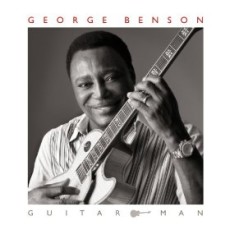
George Benson was born in Philadelphia, Pennsylvania on March 22, 1943 and raised in the Hill District. A child prodigy at the age of 7, he first played the ukulele in a corner drug store and received a few dollars for his efforts. At age 8, he was playing guitar in an unlicensed nightclub on Friday and Saturday nights that was soon closed down by the police. By the time he was 10, George was in New York recording his first single record with RCA-Victor in New York, called “She Makes Me Mad”.
He attended Connelly High School and although he left before graduation, he learned how to play straight-ahead instrumental jazz during a relationship performing for several years with organist Jack McDuff. At the age of 21, he recorded his first album as leader, “The New Boss Guitar” featuring McDuff, followed by “It’s Uptown with the George Benson Quartet” and “The George Benson Cookbook”.
During the ‘60s he was recording with Miles Davis for Columbia’s “Miles In The Sky”, moved on to Verve for a period and then signed with Creed Taylor producing such albums as “White Rabbit” and “The Other Side of Abbey Road” among others.
Benson released “Breezin” in 1976 and it went triple platinum topping Billboard’s 200. Tuning to vocal chops, the guitarist added a crossover audience adding smooth jazz to his repertoire of genres that include R&B, pop and jazz. The multi-Grammy award winner, he has recorded over two hundred albums and singles as a leader, sideman and collaborator; and has performed with the likes of Jaki Byard, Hank Mobley, Jimmy Smith, Lou Donaldson, Hank Crawford, Don Sebesky, Stanley Turrentine, Hubert Laws, Lee Morgan, Red Holloway, J. J. Johnson and Kai Winding, Freddie Hubbard, Deodato, Aretha Franklin, Freddy Cole, and Sadao Watanabe among numerous others.
In 2009 the National Endowment of the Arts honored George Benson with the distinction of being a Jazz Master and he continues to record, perform and tour worldwide.

Daily Dose Of Jazz…
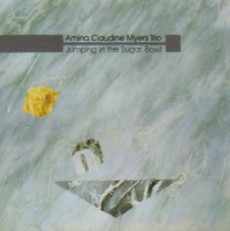
Amina Claudine Myers was born March 21, 1942 in Blackwell, Arkansas. The pianist, organist, vocalist, composer and musical arranger began singing and playing the piano and organ as a child in church choirs in the Dallas/Ft. Worth area where she grew up. She directed choirs at an early age and graduated in concert music and music education from Philander Smith College.
In the early sixties Amina moved to Chicago, teaching and attending classes at Roosevelt University. It was in Chicago that she began working with Sonny Stitt and Gene Ammons, joined the AAMC, focused on vocal compositions and recorded her debut album with Kalaparusha Maurice McIntyre in 1969. .
In 1976 Myers relocated to New York City, where she intensified her compositional work and expanded it into the realm of Off-Broadway productions. She also continued performing and recording as a pianist and organist with Lester Bowie and Muhal Richard Abrams into the early eighties. In 1985 she joined Charlie Haden’s Liberation Music Orchestra and had notable collaborations on recordings with artists like Marian McPartland, the Art Ensemble of Chicago, Archie Shepp, David Murray, Arthur Blytheand Ray Anderson to name a few.
Amina Claudine Myers, a virtuoso pianist and organist whose work is presented internationally and appears on scores of recordings, draws upon her backgrounds in classical music and the music of the black church of her native rural South to create a recombinant sensibility within improvisation-imbued extended compositions. Her work is insistently post-genre at a moment when re-inscriptive collage pretends to postmodern transgression.

Daily Dose Of Jazz…
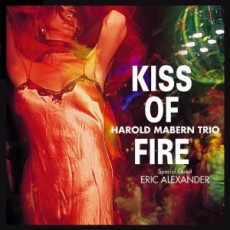
Harold Mabern was born on March 20, 1936 in Memphis, Tennessee and initially started learning the drums before turning his attention to the piano. Attending Douglass High School he played with Frank Strozier, George Coleman, Booker Little but was most influenced by the piano of Phineas Newborn Jr. After graduating from high school he moved to Chicago where he went to street school listening to Ahmad Jamal and others in clubs to increase his proficiency.
Early in his career Harold played in Chicago with Walter Perkins’ MJT + 3 in the late 1950s before moving to New York in 1959. Heading straight to Birdland where he met Cannonball Adderley who introduced him to Harry “Sweets” Edison who was looking for a replacement for Tommy Flanagan. A quick audition was followed by an offer and a few week later they were in the studio recording with Jimmy Forrest.
Mabern grew his reputation as a sideman and in the tradition of hard bop and soul jazz, the pianist worked with Lionel Hampton, the Jazztet, Donald Byrd, Miles Davis, J. J. Johnson, Lee Morgan, Hank Mobley, Sonny Rollins, Freddie Hubbard, Wes Montgomery, Joe Williams and Sarah Vaughan to name a few.
In the late 1960s and early 1970s, Mabern led four albums for Prestige Records and recorded with Stanley Cowell’s Piano Choir. Harold Mabern also recorded as a leader for DIW/Columbia and Sackville and toured with the Contemporary Piano Ensemble.
Pianist Harold Maben has twenty sessions as a leader and another six-dozen as a sideman in his catalogue. In more recent years, Harold is a frequent instructor at the Stanford Jazz Workshop, has recorded extensively with his former William Patterson University student, the tenor saxophonist Eric Alexander and continues to perform and tour.

More Posts: piano