

Daily Dose Of Jazz…
Bobby Sands was born January 28, 1907 in Brooklyn, New York. Learning to play the tenor and baritone saxophones he worked with bandleader Charlie Skeets in the late ’20s. By the end of the decqade his eyes were on an outfit known as the Strand Roof Orchestra under the direction of Billy Fowler. His performances during the 1930s solidified the band’s reputation, both live and recorded.
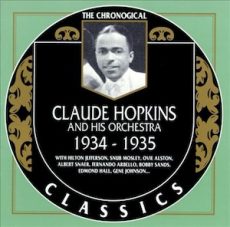
Sands joined pianist and bandleader Claude Hopkins, sharing star soloing duties with the leader as well as clarinetist Edmond Hall in his early years. The band featured a program of both high-spirited novelty songs and a serious jazz repertoire. I Can’t Dance, I’ve Got Ants in My Pants and In the Shade of the Old Apple Tree were the necessary recordings Hopkins made in order to stay attractive to label producers throughout the ’30s.
A superb arrangement of Jelly Roll Morton’s King Porter Stomp joins with Hopkins’ own Minor Mania in which Bobby is in both section and solo capacity. Tenor and baritone saxophonist Bobby Sands retired from music in the 1940s and became a printer. The date and place of his death are unknown.

More Posts: history,instrumental,jazz,music,saxophone
Daily Dose Of Jazz…
Richard Anthony Meldonian was born January 27, 1930 in Providence, Rhode Island. He first began playing the clarinet when he was eight years old and by eleven was proficient on the tenor saxophone. In 1944 he led his first band that he formed.
1949 saw Dick working as a professional musician in the bands of Freddie Slack, and into the Fifties with Charlie Barnet and as an alto saxophonist with Stan Kenton alongside Bud Shank and Art Pepper. He also played with Shorty Rogers, Nat Pierce, Elliot Lawrence and Bill Russo.
Moving to New York City in the mid 1950s, Meldonian worked as a studio and session musician, among other things. with Phil Sunkel, Sam Most and Erroll Garner. In 1957 he was a member of Paul Quinichette’s band with Gene Roland and John Carisi. In 1960 he joined the Gerry Mulligan Concert Jazz Band.
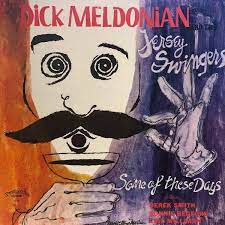
He became better known as the leader of his own quartet, The Jersey Swingers , in the late 1970s and through the big band that he led with drummer Sonny Igoe in the early 1980s. During this time, Dick also recorded with the big band and smaller formations under his own name for the Progressive, Circle and Statiras labels. In 1992 he was still working with Harry DiVito and Marty Grosz.
Soprano and tenor saxophonist Dick Meldonian died on January 25, 2017.
More Posts: bandleader,history,instrumental,jazz,music,saxophone
Daily Dose Of Jazz…
Bob Bain was born January 26, 1924 in Chicago, Illinois and began his professional career in the 1940s playing guitar in popular big band outfits led by Tommy Dorsey and Bob Crosby. He is credited with guitar on one of Dorsey’s biggest hits, Opus No. 1.
An unusually early adopter of the electric guitar, Bob started playing an early Gibson Les Paul model before switching to a modified 1953 Fender Telecaster. Like most jazz guitarists, he also favoured semi-acoustic models such as the Gibson L-5 and ES-150.
A long time collaborator with composer Henry Mancini, he is also credited with the guitar introduction to the theme from the popular 1950s television private detective series Peter Gunn. Bain contributed his guitar talents on another of Mancini’s significant soundtrack albums, the musical score to the movie Breakfast at Tiffany’s, as well as playing on the soundtrack to the television Western series Bonanza.
Guitarist Bob Bain, who was mainly known for his film music contributions, including Dr. Zhivago, where he played the balalaika in the score for certain scenes where Lara’s Theme is heard, died on June 21, 2018 in Oxnard, California. He was 94.
More Posts: guitar,history,instrumental,jazz,music
The Jazz Voyager
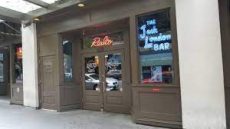
As I say farewell to Indianapolis, I’m looking out the window of the plane heading to the great northwest of Portland, Oregon to pay a visit to the Jack London Revue. The venue is rooted in the original American tradition of jazz and the underlying principles of freedom through improvisation, however, they feature a wide range of music that has been inspired by jazz’s world wide diaspora.L
Saxophonist Lakecia Benjamin will be getting all the attention of this Jazz Voyager as she fuses traditional conceptions of jazz, hip~hop, and soul in her performance. She has received 3 Grammy nominations for her latest album Phoenix. The far-reaching new album finds her poised alongside a curated all-star cast of Wayne Shorter to Dianne Reeves, Georgia Anne Muldrow to Patrice Rushen, and Sonia Sanchez to Angela Davis. The album is produced by the multi-Grammy winner drummer and activist Terri Lyne Carrington.
The club is located at 529 SW 4th Avenue 97204 For those requiring more information go to https://notoriousjazz.com/event/lakecia-benjamin.

More Posts: adventure,club,genius,jazz,music,organ,preserving,saxophone,travel
Daily Dose Of Jazz…
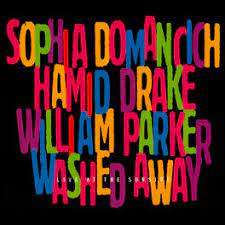
Sophia Domancich was born January 25, 1957 in Paris, France and began learning piano at the age of six. She attended the Conservatoire de Paris from 1968 to 1975 where she won first prize for piano and chamber music. She began her career as an accompanist in vocal and dance lessons, with the Paris Opera and the Théâtre de Caen.
In 1979 she met Steve Lacy, Bernard Lubat and Jean-Louis Chautemps who introduced her to the world of jazz and improvisation. By 1982 she formed a duet with Laurent Cugny and joined the big band Lumiére. She later participated in Quoi D’Neuf Docteur? with Steve Grossman, Glenn Ferris and Jack Walrath.
The following year during a brief collaboration with the group Anaïd, she met several English musicians from the Canterbury scene, drummer Pip Pyle, saxophonist Elton Dean and bassist Hugh Hopper, forming the group L’Equip Out in late 1984. The group included for a time a fifth member, Didier Malherbe on the flute and the tenor saxophone. In 1990, L’Equip Out recorded a second album, Up!, with bassist Paul Rogers.
With the latter and drummers Bruno Tocanne and Tony Levin, she formed the Sophia Domancich Trio with which she toured for eight years and recorded five studio albums. Also with Rogers, she created a 1995 quartet with the original composition, this time with two trumpeters, Patrick Fabert and Jean-François Canape.
Through the 1990s and into the new century, Domancich continued collaborating and recording with John Greaves and Vincent Courtois’ Trouble with Happiness, and with Simon Goubert. She was a pianist under Didier Levallet in the Orchester National de Jazz. In 2000 she formed the Quintet Pentacle, in 2006 the Trio DAG (Domancich, Avenel, Goubert) creating three albums as a trio and an album “free 4 DAG” with saxophonist Dave Liebman. Sophia ventured into electronic music, formed three more groups to continue to express herself through her music.
She became the first woman to receive the Prix Django Reinhardt from the Jazz Academy as French Musician of the Year. By 2007 found herself included in the French Ministry of Foreign Affairs and the Ministry of Culture collaborative book, 100 Jazz Titles, that included her 2002 Pentacle Quintet release.
She has recorded 10 albums as a leader, 7 as a co-leader and 20 as a member of other groups. Pianist and jazz composer Sophia Domancich continues to compose, explore, perform and reinvent herslf.
More Posts: bandleader,composer,history,instrumental,jazz,music,piano