

Requisites
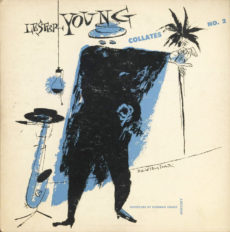
Collates No. 2 is a Lester Young album recorded in 1951 on the Clef label but not released until 1953. It was designed by David Stone Martin. The liner notes were written and the recording session was supervised by Norman Granz.
Lester Young led the trio settings on tenor saxophone, the bass provided by Gene Ramey and Ray Brown, the drummers were Buddy Rich and Jo Jones.
This cool jazz session featured eight compositions. Side A with A Foggy Day, Down ‘N Adam, In A Little Spanish Town and ‘Deed I Do. Side B comprised of Let’s Fall In Love, Little Pee Blues, Thou Swell and Jeepers Creepers.

More Posts: choice,classic,collectible,collector,guitar,history,instrumental,jazz,music,saxophone

The Jazz Voyager
Ryles Jazz Club in Cambridge, Massachusetts is the next stop for the Jazz Voyager to experience this old-time venue in this hip part of town before it closes at the end of June. Situated in Inman Square at 212 Hampshire Street 02139 with jazz downstairs and cabaret on the upstairs stage. Featuring American cuisine of entrees, sandwiches and desserts as well as a Sunday jazz brunch.
For 40 years the Mitchell/Wheeler family has been operating this nightspot next to their S&S Restaurant, hosting a Latin dance night every Thursday with free merengue and salsa lessons. They feature the Ryles Jazz Orchestra as well as offer up local and national jazz performers.
With a modest $15.00 cover, this Thursday at 8:30 I will be soaking up Ryles, Frankly with the talents of vocalist Mike Mastellone fronting the 20-piece Compaq Big Band. They will perform the charts of Sinatra, Darin, Martin, Bennett and Buble and in addition swinging some instrumentals. #wannabewhereyouare

More Posts: adventure,club,genius,jazz,museum,music,preserving,restaurant,travel,voyager

Three Wishes
When the Baroness asked Ornette Coleman what his three wishes would be he stated…
- “Eternal life.”
- “Love.”
- “Happiness.”
*Excerpt from Three Wishes: An Intimate Look at Jazz Greats – Complied and Photographed by Pannonica de Koenigswarter

Requisites
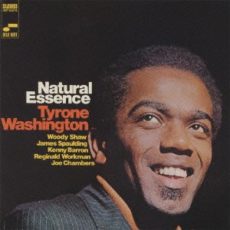
Natural Essence is the debut album by tenor saxophonist Tyrone Washington released on the Blue Note label. All the compositions are by Tyrone Washington were recorded at Rudy Van Gelder Studio in Englewood Cliffs, New Jersey on December 29, 1967
Only 23 at the time of the recording, the tenor saxophonist composed six originals and is joined by other promising young lions Woody Shaw on trumpet, James Spaulding on alto saxophone and flute, pianist Kenny Barron, bassist Reggie Workman and drummer Joe Chambers, who went onto great careers.
One hears the influence of John Coltrane during his rapid-fire runs but memorable is his straight-ahead work on the session. The six song session kicks off with the title track Natural Essence, Yearning for Love, Positive Path, Soul Dance, Ethos and Song of Peace.
More Posts: choice,classic,collectible,collector,guitar,history,instrumental,jazz,music,saxophone
The Jazz Voyager
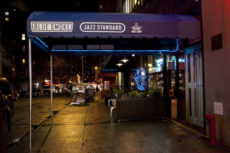
The Jazz Voyager is back in the Big Apple and on his way to the Jazz Standard at 116 E 27th St, New York, NY 10016. This visit to lower Manhattan will be to catch a performance with the Ravi Coltrane Trio with bassist Dezron Douglas and drummer Allan Mednard. His special guests during this engagement are tenor saxophonist Tomoki Sanders – son of Pharoah Sanders, harpist Brandee Younger and trumpeter Ralph Alessi.
This upscale and relaxing jazz club hosts performances by some of the biggest names in the jazz world, however, the typical cover charge is pricey but reasonable by Manhattan standards. With an excellent sound system, the intimate seating holds for a total of 130 people.
The 9:30 set ticket is $30.00, the menu has a variety of enticements all the way through desert and the anticipation of witnessing these performers on stage is exhilarating. The Jazz Standard is open from 11:30 am to 1:00 am on Friday and Saturday and can be reached at jazzstandard.com or at 212-576-2232. #wannabewhereyouare
More Posts: adventure,club,genius,jazz,museum,music,preserving,restaurant,travel,voyager