

Daily Dose Of Jazz…
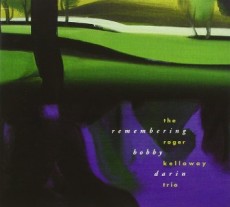
Roger Kellaway was born November 1, 1939 in Waban, Massachusetts. He matriculated through the New England Conservatory and one of his earliest mentors was piano teacher and director of the summer music camp Encore in Marblehead, Massachusetts.
In 1964 Kellaway was a piano sideman for bandleader-producer Boris Midney’s group The Russian Jazz Quartet’s album Happiness on the ABC/Impulse jazz records label. He has written and played the closing theme, Remembering You for the TV sitcom All In The Family and its spinoff Archie Bunker’s Place.
Roger has composed commissioned works for orchestra and jazz big band as well as for film, television, ballet and stage productions. He has served as band leader and pianist for Van Morrison’s Astral Weeks Live at the Hollywood Bowl concerts, been nominated for an Oscar for Best Adaptation Score for the 1976 film A Star Is Born, and a Grammy Award for Best Instrumental Arrangement for Eddie Daniels’ album Memos From Paradise.
He has played with Grady Tate, Jay Berliner, Igor Berukshtis, George Ricci, Ruby Braff, Chuck Domanico, Emil Richards, Edgar Lustgarten, Joe Pass, Red Mitchell, Gene Bertoncini, Jan Allan and Michael Moore among others. He has more than a dozen albums as a leader, and has arranged for Carmen McRae, Diane Schuur, Liza Minelli, Robben Ford, Gary Lemel, Kenny Burrell, J. J. Johnson, Kai Winding, Herbie Mann, Mark Murphy, Oliver Nelson, Clark Terry, Lalo Schifrin, Sonny Rollins, Sonny Stitt, Ben Webster and Jimmy Witherspoon. Pianist Roger Kellaway continues to perform, compose, arrange and record.

Jazz Is Global – Share
More Posts: piano
Daily Dose Of Jazz…
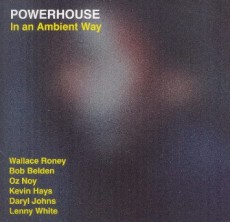
Bob Belden was born James Robert Belden on October 31, 1956 in Evanston, Illinois but was raised in South Carolina. He studied saxophone and later attended the University of North Texas.
In 2008, he arranged and produced Miles from India, a world fusion music record based on the compositions of Miles Davis. In the record, he assembled alumni of Davis and musicians of India. As producer he is mostly associated with the seminal reissue of the recordings by Miles Davis for Columbia Records.
In addition to his work as arranger, composer, conductor and A & R director, Belden contributed numerous liner notes for noted recordings, such as Lou’s Blues by Lou Marini and the Magic City Jazz Orchestra, with some of his liner notes receiving Grammy Awards.
Shortly before his death, Bob became the first American musician in 35 years to bring a band from the States to Iran to perform. He may be best-known for his Grammy Award winning jazz orchestral recording, Black Dahlia. He recorded nine albums as a leader and performed and recorded as a sideman or collaborated with Paquito D’Ribera, Tim Hagans, Nicolas Payton, Sam Yahel, John Hart and Billy Drummond to name a few.
Tenor and soprano saxophonist, arranger, composer, bandleader and producer Bob Belden died of a heart attack on May 20, 2015, at Lenox Hill Hospital in Manhattan at the age of 58.
Give A Gift Of Jazz – Share
More Posts: saxophone
Daily Dose Of Jazz…
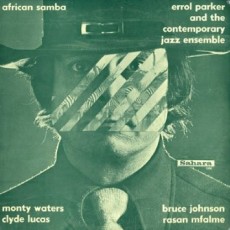
Errol Parker was born Raphaël Schecroun on October 30,1925 in Oran, French Algeria. In 1964, Parker composed the song Lorre, which became a hit in France, and opened his own jazz club called Le Ladybird on Rue de la Huchette.
Following a serious car accident which impaired Parker’s piano playing, he emigrated to New York, where his daughter Elodie Lauten was to begin university in February 1968. It was in America that he started a second career as a record producer, but unable to find a suitable drummer, he started to perform as a jazz drummer, which was not affected by his shoulder injury.
Pianist, composer, record producer and drummer Errol Parker, who played and recorded as a leader and with Django Reinhardt, James Moody, Don Byas and Kenny Clarke among others, passed away of liver cancer at the age of 72 on July 2, 1998 in New York City.
Inspire A Young Mind
Daily Dose Of Jazz…
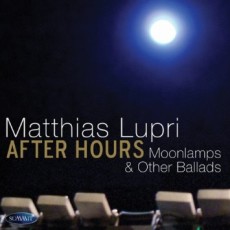
Matthias Albrecht Lupri was born October 29, 1964 in Germany but grew up in Manhattan, Kansas and Alberta, Canada. Initially he played the drums as a teenager in blues, rock and country music bands. In his early twenty’s he studied music at Mount Royal College, where he heard Gary Burton’s recordings and became interested in jazz vibraphone music.
Matthias practiced the instrument for the next five years while on the road with rock bands as a drummer. He then enrolled at the Berklee College of Music and studied with Gary Burton himself. Since graduation he has released several records that have charted in radio’s Top 40 GAVIN, CMJ and Chart Magazine Canada, and was heard on the TV show Alias.
Lupri was named as a rising artist on vibraphone in the Down Beat critics poll for the 2nd time in 2005. He has recorded with Greg Osby, Chris Potter, Kurt Rosenwinkel, Mark Turner, Donny McCaslin, Myron Walden, Greg Hutchinson, Antonio Sanchez, Reuben Rogers, Ian Froman, George Garzone, Jeff Ballard, Rick Margitza, Cuong Vu, Sebastiaan de Krom and Boris Wiedenfeld among other. He continues to perform and tour throughout Canada and the United States.
Dose A Day – Blues Away
More Posts: vibraphone

Daily Dose Of jazz…
Kurt Rosenwinkel was born October 28, 1970 in Philadelphia, Pennsylvania. A guitarist by choice, his influences include John Coltrane, Pat Metheny, Allan Holdsworth, Tal Farlow, George van Eps, John Scofield and Alex Lifson, among others. He matriculated through Berklee College of Music before leaving in his junior year to tour with Gary Burton, the dean of the school at the time.
Subsequently, Rosenwinkel moved to Brooklyn, where began performing with Human Feel, Paul Motian’s Electric Bebop Band, Joe Henderson Group, and the Brian Blade Fellowship. During that time he began using a Lavalier lapel microphone fed into his guitar amplifier that blends his vocalizing with his guitar, much like George Benson and Pat Metheny.
In 1995 he won the Composer’s Award from the National Endowment for the Arts and was signed by Verve Records. Kurt has played and recorded both as a leader and sideman with Mark Turner, Brad Mahldau and Joel Frahm, Aaron Goldberg, Joe Martin, Eric Harland, Aaron Parks, Eric Revis and Justin Faulkner on the short list. He has collaborated with Q-Tip of A Tribe Called Quest, co-producers of Heartcore with Ben Street, Jeff Ballard and Mark Turner. He would have further collaborations with Q-Tip that yielded The Renaissance and Kamaal/The Abstract.
A move to Berlin, Germany has guitarist Kurt Rosenwinkel performing in Europe and on the faculty at the Hochschule fur Musik Hanns Eisler.
Dose A Day – Blues Away
More Posts: guitar