


Daily Dose Of Jazz…
Benny Moten was born on November 30, 1916. A solid and supportive bassist, he had a long career as a sideman for decades. He began seriously playing professionally in 1941 and quickly developed relationships with top players of the time.
Over the course of his career Benny played and recorded with such artists as Hot Lips Page, Henry “Red” Allen, Stuff Smith, Arnett Cobb, Ella Fitzgerald, Wilbur DeParis, Roy Eldridge and Dakota Staton, just to name a few. He toured Africa from 1956 – 1957.
Bassist Benny Moten, often confused or mistaken for pianist and bandleader Bennie Moten, was never a leader however he remained musically active as a sideman until the time of his death at the age of 60 on March 27, 1977.

Dose A Day – Blues Away
More Posts: bass
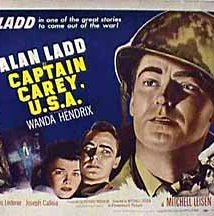
Hollywood On 52nd Street
Mona Lisa, written for the 1950 film Captain Carey, U.S.A. by Ray Evans and Jay Livingston. The title and lyrics refer to the renaissance portrait of the same name painted by Leonardo da Vinci. The song won an Oscar for Best Original Song in 1950. The movie is a drama starring Alan Ladd, Wanda Hendrix and Francis Lederer.
The Story: A group of agents of the U.S. Office of Strategic Services is sent to German-occupied Italy during World War II to knock out the German-held Italian railroad system. In accomplishing this mission, most of them are killed because of an inside betrayal. After the war, one of the survivors, Captain Webster Carey (Alan Ladd), resolves to find the traitor. Captain Carey returns to Orta, near Milan, to find out who betrayed his World War II O.S.S. team and caused the deaths of several villagers. Much to his surprise, his old love Giulia whom he thought dead at the hands of the Nazis, is alive and married to a powerful Italian nobleman, Barone Rocco de Graffi.The villagers are unfriendly, but Carey persists in his clandestine efforts to flush out the traitor.
Sponsored By

www.whatissuitetabu.com
Daily Dose Of Jazz…
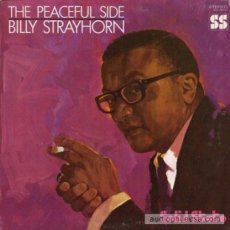
Billy Strayhorn was born William Thomas Strayhorn on November 29, 1915 in Dayton, Ohio but the family moved to Pittsburgh, Pennsylvania shortly after his birth. Protecting him from his father’s drunken sprees his mother sent him to live with his grandparents in North Carolina, which is here he first became interested in music. He learned to play hymns on the piano and listening to records on her Victrola.
By high school he was back in Pittsburgh and began his music career studying classical music, writing a school musical, forming a trio that played daily on the radio and composing Life Is Lonely (renamed Lush Life), My little Brown Book and Something To Live For while still in his teens.
When the harsh reality of a black man making it in the white classical world shattered his 19-year-old ambitions, Strayhorn turned to the music of Art Tatum and Teddy Wilson and was guided into jazz. In 1938 he met Ellington, impressed him with an arrangement of a Duke piece, went to New York and collaborated with Ellington for the next quarter century. He composed Take The “A” Train, Chelsea Bridge, Day Dream, Such Sweet Thunder and A Drum I A Woman among others and the landmark score to the film Anatomy Of A Murder.
Billy was openly gay, participated in many civil rights causes, was a committed friend to Dr. Martin Luther King, influenced and help propel the singing career of Lena Horne, embarked on a solo career and continued to compose and arrange for Ellington.
Billy Strayhorn, composer, pianist and arranger whose compositions are known for the bittersweet sentiment and classically infused designs that set him apart from Duke succumbed to esophageal cancer on May 31, 1967. His final song “Blood Count”, composed while in the hospital, was the first track on Ellington’s memorial album for Strayhorn, …And His Mother Called Him Bill. The final track is a solo version of Lotus Blossom performed by Duke for his friend while the band was packing up.
Inspire A Young Mind
Daily Dose Of Jazz…
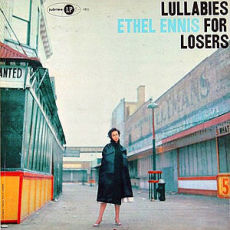
Ethel Llewellyn Ennis was born November 28, 1932 in Baltimore, Maryland and began performing on the piano in high school, but her natural vocal abilities soon eclipsed those as a pianist.
Embarking on a solo career Ethel recorded a number of songs for Atlantic Records before her 1955 debut of “Lullabies for Losers” on Jubilee Records. Two years later she moved to Capitol Records releasing “A Change of Scenery” followed by “Have You Forgotten”.
Ennis took a six-year hiatus from recording while she toured Europe with Benny Goodman. By the early Sixties she was back in the studio recording another four albums for RCA Records but unfortunately was dissatisfied with the creative direction and artist management left for a second recording hiatus of eight years. During this time she recorded the title song for the 1967 film Mad Monster Party and in 1973 the “10 Sides of Ethel Ennis” emerged on record store shelves.
That same year Ennis was invited to sing at the re-inauguration of Richard Nixon and her unusual a cappella rendition of the national anthem shocked some, but inspired many others. Ethel returned to Baltimore, rarely performing outside the area over the next several decades. 1980 saw her return to the studio releasing a live album, but it would be fourteen years later before her self-titled album came out, followed by the 1998 release of “If Women Ruled The World” was released on Savoy Jazz and a 2005 live recording of her performance at Montpelier was released to critical acclaim. Jazz vocalist Ethel Ennis passed away from a stroke on February 17, 2019, in her hometown. She was 86.
Give A Gift Of Jazz – Share
Daily Dose Of Jazz…
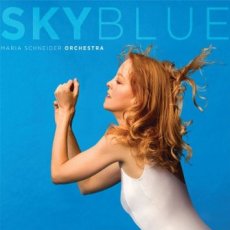
Maria Schneider was born on November 27, 1960 in Windom, Minnesota and started playing piano as a child. She studied music theory and composition at the University of Minnesota, followed by earning a Masters of Music from the Eastman School of Music and studying for one year at the University of Miami.
After Eastman she became an apprentice arranger under Gil Evans, collaborating with him for the next several years, producing arrangements commissioned by Sting and scoring the films “The Color of Money” and “Absolute Beginners”. Schneider went on to study with Bob Brookmeyer from 1986 to 1991, concurrently worked as a freelance arranger in New York.
She formed The Maria Schneider Jazz Orchestra in 1993, appearing weekly at Visiones in Greenwich Village for five years, then hit the festival circuit and toured Europe. In 2005, her album “Concert In The Garden” won a Grammy for “Best Large Ensemble Album” and was the first Grammy for a work sold entirely via the Internet. Her second Grammy came for Cerulean Skies from her 2007 Sky Blue project for Best Instrumental Composition.
Maria was one of the first artists to use ArtistShare to produce an album, and the composer, arranger and big-band leader has garnered recognition from the Jazz Journalist Association as Composer of the Year, Arranger of the Year and Large Jazz Ensemble of the Year.
Jazz Is Global – Share