

Daily Dose Of Jazz…
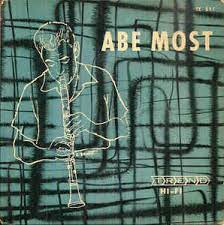
Abe Most was born on February 27, 1920 in New York City, New York. He began his career in 1939 as a member of Les Brown’s Big Band. After serving three years in the Army during World War II beginning in 1942, he became a member of Tommy Dorsey’s Big Band.
Most made a few albums with smaller labels between 1946 and 1984, including Superior, Trend, Annunciata and Camard. His last two albums were Abe Most Live! and I Love You Much Too Much.
He was a studio musician for seven decades, recording on albums by Ted Gärdestad, Dick Haymes, Randy Newman, Dory Previn, Laurindo Almeida, Dominic Frontiere, Henry Mancini, Peggy Lee, Carmen McRae, Ray Conniff, and George Shearing, as well as Joni Mitchell, Cher, Earth, Wind & Fire, and B. B. King among others. He can also be heard playing on the soundtrack of the film How to Marry a Millionaire.
Clarinetist Abe Most, the older brother of flautist Sam Most, recorded three albums as a leader and thirty-one as a sideman, transitioned on October 10, 2002.

More Posts: bandleader,clarinet,history,instrumental,jazz,music
Daily Dose Of Jazz…
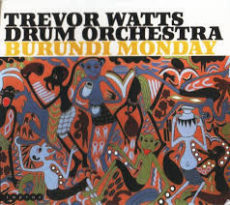
Trevor Charles Watts was born in York, England on February 26, 1939 and is largely self-taught, having taken up the cornet at age 12 then switched to saxophone at 18.
While stationed in Germany with the RAF from 1958 to 1963, he encountered the drummer John Stevens and trombonist Paul Rutherford. After his service he returned to London, England and in 1965, he and Stevens formed the Spontaneous Music Ensemble (SME), which became one of the crucibles of British free improvisation.
Leaving the band to form his own group Amalgam in 1967, Trevor returned to SME for another stretch that lasted until the mid-1970s. Collaborating with bassist Barry Guy and his London Jazz Composers’ Orchestra, they performed until their disbandment in the mid-1990s.
Though he was initially strongly identified with the avant-garde, Watts was versatile, working in everything from straight jazz contexts to rock and blues. His own projects blended jazz and African music, notably the Moiré Music ensemble which he led since 1982. He has collaborated with jazz musicians including Archie Shepp, Steve Lacy, Don Cherry, Jayne Cortez and Stephen Grew.
Free-improvising alto and soprano saxophonist Trevor Watts, who recorded 31 albums as a leader, and two as a sideman, continue to explore the music.
More Posts: bandleader,history,instrumental,jazz,music,saxophone

Daily Dose Of Jazz…
Åke Persson was born on February 25, 1932 in Hässleholm, Sweden and started his music career by playing valve trumper in school. Known as The Comet, he moved to Stockholm, Sweden in 1951, where he played in Simon Brehm’s quintet until 1954. During the Fifties he led several sessions for labels such as Metronome, Philips, and EmArcy.
Following this Persson worked through the Sixties and into the 1970s with Arne Domnérus, Hacke Björksten, Harry Arnold’s Radio Band, Quincy Jones, Lars Gullin, the RIAS Berlin Band, and the Kenny Clarke-Francy Boland Big Band.
Persson played with many American musicians, including George Wallington, Roy Haynes, Benny Bailey, Count Basie, Duke Ellington, and Dizzy Gillespie.
He drowned in the Djurgården canal as a result of him driving his car into the canal either accidentally or deliberately. A biography was written, Trombonist Åke Persson, authored by Bo Carlsson.
Trombonist Åke Persson, who flourished in the bebop and big band tradition, transitioned on February 5, 1975.
More Posts: bandleader,history,instrumental,jazz,music,trombone
Daily Dose Of Jazz…
Alun Morgan was born on February 24, 1928 in Pontypridd, Wales and became interested in jazz as a teenager during World War II. Charlie Parker was a significant influence on him in the late 1940s.
Morgan began to write on jazz from the early 1950 for Melody Maker, Jazz Journal, Jazz Monthly and Gramophone, and for 20 years from 1969 a weekly jazz column in a local Kent newspaper.
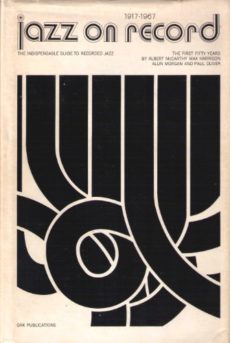
Over his writing career he completed liner notes for over 2,500 albums, initially for Vogue Records. From 1954 he contributed to music programs for BBC Radio. Morgan was the author of a book on modern jazz in England and the co-author of several books on jazz records. They were Jazz On Record: A Critical Guide, Jazz On Record: A Critical Guide To The First 50 years, Modern Jazz-The Essential Records, Modern Jazz – A Survey Of Developments Since 1939, Count Basie, and The Gramophone Jazz Good CD Guide.
He lectured on jazz at the Guildhall School of Music and Drama and the Royal Academy of Music in London, England. Additionally, he was a full-time architect until 1991.
Shortly after retiring from his other occupation, he emigrated to Australia to live out his life. Author and critic Alun Morgan transitioned on November 11, 2018.
Daily Dose Of Jazz…
Harold “Money” Johnson was born in Tyler, Texas on February 23, 1918 and didn’t start playing trumpet until he was fifteen. Moving to Oklahoma City, Oklahoma in 1936, he jammed with Charlie Christian and Henry Bridges before joining Nat Towles’s band.
He played with Horace Henderson and Bob Dorsey before returning to Towles’s band in 1944 in Chicago, Illinois. He also played with Count Basie, Cootie Williams, Lucky Millinder, and Bull Moose Jackson during the decade.
In the 1950s Money’s associations included Louis Jordan, Lucky Thompson, Sy Oliver, Buddy Johnson, Cozy Cole, Mercer Ellington, Little Esther, and Panama Francis.
The Sixties saw Johnson played in the house band at the Apollo Theater in Harlem, and recorded with King Curtis in 1962. He toured the USSR with Earl Hines in 1966. From 1968 he played in the Duke Ellington Orchestra and also worked again with Hines and Oliver.
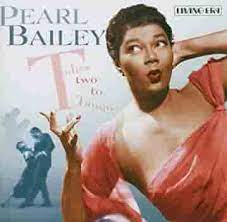
He recorded with Buck Clayton, Pearl Bailey, Red Prysock, Barbara Lews, Jack McDuff, Houston Person, and Jesse Stone. Trumpeter Money Johnson, whose last performance was on the night before, transitioned from a heart attack on March 28, 1978 in New York City.
More Posts: history,instrumental,jazz,music,trumpet