

Daily Dose Of Jazz…
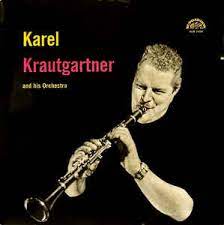
Karel Krautgartner was born on July 20, 1922 in Mikulov, Moravia into the family of a postmaster. He began studying clarinet on a private basis with Stanislav Krtička, and performed a demanding part of the Concertino by Leoš Janáček at the composer’s request at the festival of contemporary music in Frankfurt am Main, Germany in 1926. Acquiring the necessary skills of clarinet playing, and a fanatic passion for clarinet construction and components – reeds, mouthpieces, and barrels, which he later used his knowledge of wind instruments as a lecturer at German universities in Cologne and Düsseldorf.
In 1930 he began playing piano and by 1935 after moving to Brno, Czech Republic he became interested mainly in jazz radio broadcasts. 1936 saw Karel founding the student orchestra Quick band. In 1942, he signed his first professional contract as a saxophonist in the Gustav Brom orchestra in the hotel Passage in Brno. A year later he created Dixie Club and started to arrange in the Benny Goodman and Glenn Miller styles. From 1945 – 1955, the core of the Dixie Club moved to Prague and became a part of the Karel Vlach Orchestra.
He achieved a privileged position as the leader of the saxophone section and started to contribute with his own compositions. In 1956,along with Karel Velebný he put together the Karel Krautgartner Quintet, performed with the All Star Band, and with Studio 5. During the Sixties he became the head of the Dance Orchestra of Czechoslovakia Radio, renamed the Karel Krautgartner Orchestra. In 1968 he emigrated to Vienna, Austria and became the chief conductor of the 0RF Bigband. He eventually moved to Cologne, Germany. Clarinetist, saxophonist, arranger, composer, conductor and educator Karel Krautgartner passed away on September 20, 1982.

More Posts: arranger,clarinet,composer,conductor,educator,history,instrumental,jazz,music,saxophone
Daily Dose Of Jazz…
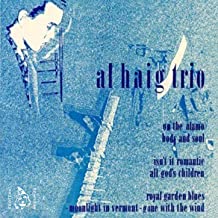
Alan Warren Haig was born on July 19, 1922 in Newark, New Jersey and raised in nearby Nutley. At eighteen he majored in piano at Oberlin College and started playing with Dizzy Gillespie and Charlie Parker in 1945. He performed and recorded from 1945 to 1951 with Gillespie, Parker, Eddie Davis and His Beboppers with Fats Navarro, the Eddie Davis Quintet, and Stan Getz. The Gillespie quintet, which included Haig, recorded four 78 r.p.m. sides for Guild Records in May 1945 which are regarded as the first recordings to demonstrate all elements of the mature bebop style. He was part of the nonet on the first session of Miles Davis’ Birth of the Cool.
For much of the 1950s and 1960s, Haig got by with semi-cocktail piano in New York bars. In 1969 he had a brush with the law having been accused and acquitted of the strangling murder charge of his thrid wife.
In 1974, Haig was invited to tour Europe by Tony Williams, owner of Spotlite Records in the United Kingdom. At the end of a very successful tour he recorded the Invitation album for Spotlite with Bibi Rovère on bass and Kenny Clarke on drums. This kick-started his re-emergence and, over the next eight years, he built a strong following in Europe and toured several times, recording in the UK and France, and appearing elsewhere. He also recorded for several Japanese labels.
Pianist Al Haig, best known as one of the pioneers of bebop, and who recorded twenty~three albums as a leader, passed away from a heart attack on November 16, 1982 in New York City.
More Posts: bandleader,history,instrumental,jazz,music,piano
Daily Dose Of Jazz…
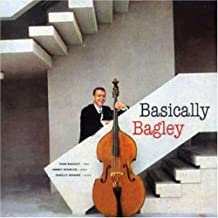
Donald Neff Bagley was born on July 18, 1927 in Salt Lake City, Utah. He received formal training on the double bass, and studied in Los Angeles, California. He played in 1945 with Shorty Sherock and Wingy Manone, and in 1948 with Dick Pierce.
From 1950 to 1953, and sporadically thereafter, Bagley played with Stan Kenton and during his time with Kenton, A Study for Bass by Bill Russo and Bags by Bill Holman were written to feature his playing. Beginning in 1954, he fronted his own ensembles. Between 1950 and 1952, he worked extensively as a session musician with Nat King Cole, Maynard Ferguson, and Dexter Gordon. In the middle of the 1950s, he played in Europe with Zoot Sims, Lars Gullin, Frank Rosolino, and Åke Persson.
From 1956 to 1967, he returned to Kenton and worked with Les Brown. Toward the end of the 1950s he played with Jimmie Rowles, Shelly Manne, and Phil Woods. Don played with Pete Fountain, did a session with Ben Webster, and performed in Japan with Julie London. In the 1970s and 1980s, Bagley composed and arranged for film and television. Between 1976 and 1984, he worked with Burt Bacharach.
Double bassist Don Bagley, who recorded three albums under his own name, passed away on July 26, 2012 at the age of 85.
More Posts: bandleader,bass,history,instrumental,music
Daily Dose Of Jazz…
John James Chilton was born on July 16, 1932 in London, England to working-class parents and was evacuated to Northamptonshire, where he began playing the cornet at the age of 12. Switching to trumpet at 17, after doing two years in the RAF, in 1952 he formed his own jazz band.
He worked in Bruce Turner’s Jump Band from 1958 to 1963 which also had a film of their exploits called Living Jazz in 1961. He went on to play in Alex Welsh’s Big Band. During the 1960s he played piano on some pop recordings, worked in Mike Daniels’ Big Band. He formed his own Swing Kings band which backed touring American jazz musicians including Buck Clayton, Ben Webster, Bill Coleman and Charlie Shavers. He also recorded The Song of a Road, one of the radio ballads by folk singers Ewan MacColl and Peggy Seeger in the 1950s for the BBC.
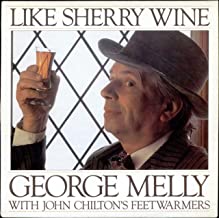
He would go on to work with cartoonist Wally Fawkes, form John Chilton’s Feetwarmers, and began accompanying jazz singer George Melly. Together they made records and toured the world for nearly 30 years. In 1983 and 1984 they had their own BBC television series called Good Time George, and appeared on countless other TV shows.
A songwriter and composer, one of his songs, “Give Her A Little Drop More”, was used in the film St Elmo’s Fire. John is one of the few European writers to win a Grammy Award for his album notes on Bunny Berigan and was nominated again in 2000. He won the British Jazz Award for Writer of the Year, his Who’s Who of Jazz was described as one of the essential jazz books, and he wrote award winning books on Coleman Hawkins, Louis Jordan Sidney Bechet and Louis Armstrong. Trumpeter John Chilton continued to play trumpet with the clarinetist Wally Fawkes in London until he passed away on February 25, 2016 in London.
More Posts: author,bandleader,history,instrumental,jazz,music,trumpet

Daily Dose Of Jazz…
Rodrigo Amado was born in Lisbon, Portugal on July 15, 1964 and began studying the sax at the age of 17, briefly at the Hot Club Music School of Lisbon and with mentors Carlos Martins, Pedro Madaleno, and Jorge Reis.
With diverse musical interests, he explored improvisation in other genres, including his work with his various ensembles like the Lisbon Improvisation Players and the Motion Trio with Miguel Mira and Gabriel Ferrandini. He is an in~demand studio player on numerous recorded projects.
He started his own label Clean Feed in 2001, with brothers Pedro and Carlos Costa, before leaving the imprint in 2005 to start a second label, European Echoes. Also an accomplished professional photographer, Amado continues to be a bright light on the Portuguese and international improvisational jazz scene.
Saxophonist Rodrigo Amado continues to specialize in free-form, composition-in-the-moment jazz, and his various projects and trios have given him an international following.
More Posts: bandleader,composer,history,instrumental,music,saxophone