

Daily Dose Of Jazz…
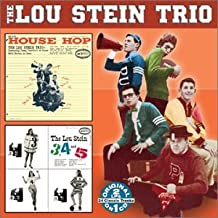
Lou Stein was born on April 22, 1922 in Philadelphia, Pennsylvania and joined Ray McKinley’s band in 1942. He played with Glenn Miller when the latter was stateside during World War II.
After the war he worked with Charlie Ventura from 1946 to 1947 and became a session musician. He performed with the Lawson-Haggart Band, Benny Goodman, Sarah Vaughan, the Sauter-Finegan Orchestra, Louie Bellson, Red Allen, Coleman Hawkins, and Lester Young.
Recording as a bandleader, in 1957 he had a U.S. Top 40 hit with Almost Paradise, as well as a Top 60 hit with his cover version of Got a Match the following year. From 1969 to 1972 he played with Joe Venuti.
Pianist Lou Stein passed away on December 11, 2002.
More Posts: bandleader,history,instrumental,jazz,music,piano

Daily Dose Of Jazz…
John G. Blowers Jr. was born April 21, 1911 in Spartanburg, South Carolina and learned to play percussion during his schooldays and began performing with the Bob Pope Band in 1936.
After attending Oglethorpe College, in 1937 he travelled to New York City, where he found employment as a drummer in Greenwich Village. In 1938 he joined Bunny Berigan’s band, and in 1942 he began performing with the up-and-coming Frank Sinatra, who asked Johnny to record with him. They performed and recorded together regularly until the 1950s.
In 1947, he opened Club Blowers in the Queens district. In addition to Sinatra, Blowers performed with Louis Armstrong, Perry Como, Bing Crosby, Sidney Bechet, Eddie Fisher, Ella Fitzgerald, Judy Garland, Billie Holiday, and Mel Tormé.
Johnny Blowers, drummer of the swing era, passed away on July 17, 2006.
More Posts: bandleader,drums,history,instrumental,jazz,music
Daily Dose Of Jaz…
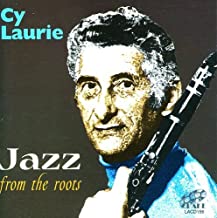
Cyril Laurie was born on April 20, 1926 in London, England of Latvian/Jewish immigrant stock. A self-taught clarinetist he put together a band in 1947. George Melly debuted in this ensemble in 1948. He played with Mike Daniels in 1949-50 and led the Cy Laurie Four in 1950 with Fred Hunt and Les Jowett.
He ran his own club in Windmill Street, Soho, London from 1951 and headed a seven-member ensemble with Chris Barber, Alan Elsdon, Al Fairweather, Graham Stewart and Colin Smith. Cy Laurie’s Club was in a basement in Ham Yard in Great Windmill Street, opposite the Windmill Theatre.
Quitting music from 1960 to 1968, he travelled to India to study meditation with the Maharishi Mahesh Yogi. Returning in 1968 to lead another ensemble at the end of the decade his career saw a resurgence late in the 1970s. He toured in ensembles as a soloist and sometimes led his own groups. Cy played with Eggy Ley and Max Collie in the 1980s. He continued performing into the 1990s. In 1996 to celebrate his 70th birthday he put together a celebratory reunion gig at London’s 100 Club.
Clarinetist Cy Laurie, who was a leading figure in the post 1945 Trad Jazz boom in the UK, passed away on April 18, 2002 at the age of 75 in Stapleford Abbotts, Essex, England.
More Posts: bandleader,clarinet,history,instrumental,jazz,music
Daily Dose Of Jazz…
Glauco Masetti was born on April 19, 1922 in Milan, Italy and was classically trained on violin, attending the Milan and Turin conservatories. An autodidact on reed instruments, in the late 1940s he worked with Gil Cuppini for the first time, an association that would continue into the 1960s.
Masetti often worked as a session musician in the first half of the 1950s with Gianni Basso and Oscar Valdambrini among others. He led his own ensemble from 1955, and played with Eraldo Volonté and Chet Baker. In addition to working with Cuppini again for most of the 1960s, he also played with Giorgio Gaslini during that decade.
Reedist Glauco Masetti passed away on May 27, 2001 in Milan.
More Posts: bandleader,history,instrumental,jazz,music,reeds
Daily Dose Of Jazz…
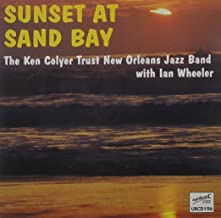
Kenneth Colyer was born on April 18, 1928 in Great Yarmouth, Norfolk, England, but grew up in Soho, London, and served as a member of his church choir. Listening to his elder brother’s jazz records which influenced him. He joined the Merchant Navy at 17, travelled around the world and heard famous jazz musicians in New Orleans, Louisiana.
In the UK, Colyer played with various bands and joined the Crane River Jazz Band in 1949 with Ben Marshall, Sonny Morris, Pat Hawes, John R. T. Davies, Julian Davies, Ron Bowden and Monty Sunshine. Rejoining the Merchant Navy, and jumping ship in Mobile, Alabama, he travelled to New Orleans, where he played with his idols in George Lewis’ band. Though offered the job of lead trumpeter on a tour, he was caught by the authorities, detained and deported.
Ken went on to join the Chris Barber Band and made their first recordings on the Storyville in 1953. Parting company the following year, then briefly joined a band in the mid-1950s with clarinetist Acker Bilk and trombonist Ed O’Donnell.
Then he put together his own band with Mac Duncan, Ian Wheeler, Johnny Bastable, Ron Ward, Colin Bowden and Ray Foxley. This band played together until the early 1960s before incorporating a new lineup.
After a bout with stomach cancer in 1972 he stopped being a bandleader but continued to work, occasionally associated with Chris Blount’s New Orleans Jazz Band. A biography, Goin’ Home, was compiled by Mike Pointon and Ray Smith. Trumpeter and cornetist Ken Colyer, who was known for skiffle interludes and devoted to New Orleans jazz, passed away on March 8, 1988.
More Posts: bandleader,cornet,history,instrumental,jazz,music,trumpet