

Daily Dose Of Jazz…
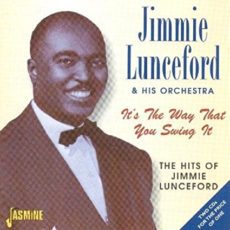
James Melvin Lunceford was born on June 6, 1902 on a 53 acre farm in the Evergreen community, west of the Tombigbee River, near Fulton, Mississippi. They moved seven months after his birth to his other’s hometown of Oklahoma City, Oklahoma and as a child he learned several instruments. By high school they were living in Denver, Colorado where he studied music under Wilberforce J. Whiteman, father of bandleader Paul Whiteman. He went on to continue his studies at Fisk University. By 1922, he was playing alto saxophone in a local band led by the violinist George Morrison which included Andy Kirk, another musician destined for fame as a bandleader.
In 1927 he organized a student band at Manassas High School in Memphis, Tennessee called the Chickasaw Syncopators, and later changed to the Jimmie Lunceford Orchestra. Under the new name, the band started its professional career in 1929 and made its first recordings in 1930. He gained recognition as the first public high school band director in Memphis. After a period of touring, the band accepted a booking at the Harlem nightclub The Cotton Club in 1934 for their revue ‘Cotton Club Parade’ starring Adelaide Hall. His orchestra, with their tight musicianship and the often outrageous humor in their music and lyrics, made an ideal band for the club, and his reputation began to steadily grow.
The band’s style of playing was based its ensemble work and for using a two-beat rhythm, called the Lunceford two-beat, as opposed to the standard four-beat rhythm, a distinction made possible by the imaginative arrangements by trumpeter Sy Oliver. Comedy and vaudeville also played a distinct part in Jimmie’s presentation incorporating costumes, skits and jabs at mainstream white bands.
Over the next decade the orchestra recorded on the Decca and Vocalion labels, toured Europe extensively, lost arranger Oliver to the Dorsey band and appeared in the movie Blues In The Night. Unfortunately, most of Lunceford’s sidemen were underpaid and left for better paying bands, leading to the band’s decline.
On July 12, 1947 while signing autographs at a local record store in Seaside, Oregon, saxophonist, flautist and bandleader Jimmie Lunceford collapsed and passed away on the way to the hospital. Accounts from other bandmates who also got sick within hours of the meal, substantiate the claims that they were poisoned by a disgruntled restaurant owner unhappy with having to serve Negroes. However the official autopsy has his caused of death as coronary occlusion.

#preserving genius
Daily Dose Of Jazz…
Koby Hayon was born June 5, 1972 in Jerusalem, Israel and studied guitar at the Rimon School of Jazz and Contemporary Music in Tel Aviv. While there he gained experience as a guitarist with the DGK Trio, Hulon Big Band, and many other notable groups.
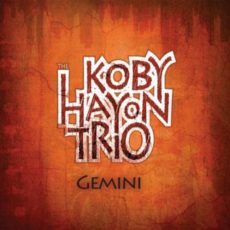
Moving to the United States in 2001, he earned his BFA in Jazz Performance at SUNY Purchase, was a recipient of the Ullendorff Memorial Foundation Scholarship, and studied with John Abercrombie, Hal Galper, Todd Coolman, and Jon Faddis. In 2009, Hayon formed the Koby Hayon Jazz Trio. With bandmates Kermit Driscoll and Jerome Morris, he fuses his heritage with his vast musical training by performing classic Israeli songs in a jazz setting, as well as his own compositions. In addition he is part of Trio Shalva with pianist Assaf Gleizner and percussionist Nadav Snir-Zelniker.
As a sideman, Hayon has performed and toured throughout Western New York and Canada, playing and recording with countless bands, from Dixie/Swing Band, led by the legendary Sol Yaged, to playing alongside bassist Bill Crow and with various bands playing traditional Israeli music.
In addition to playing live music where he can be heard regularly at the 55bar, Cornelia St. Cafe, Watercolor Cafe, Birdland and other reputable New York clubs. Hayon is the musical director of “Nigunim – A Festival of New Improvised Jewish Music” and through his efforts, the festival became a recipient of the Arts Project Grant from Westchester Arts Council.
Sponsored By

Voices From The Community

#preserving genius
More Posts: guitar

Daily Dose Of Jazz…
Ted Daniel was born June 4, 1943 in Ossining, New York and studied trumpet in elementary school. He began his professional career playing local gigs with his childhood friend, guitarist Sonny Sharrock. He briefly attended Berklee School of Music and Southern Illinois University, before a tour of duty with U.S. Army Bands. After his discharge from the Army, Daniel attended Central State College in Ohio, on a full music scholarship, where he met and studied with Dr. Makanda Ken McIntyre. After a year, Daniel returned to New York City and eventually received a bachelor of music degree in theory and composition from the City College of New York.
Beginning his recording career while studying in Ohio he returned briefly to New York to record Sonny Sharrock’s first album Black Woman. His second recording was with the band Brute Force that he co-led with his brother, Richard. The recording was titled Brute Force on the Embryo label and was produced by Herbie Mann. Since then, Daniel has participated in more than 30 published recordings with such artists as: Archie Shepp, Dewey Redman, Andrew Cyrille, Sam Rivers, Billy Bang, Tatsuya Nakamura and Henry Threadgill.
Daniel has produced three albums under his own name: The Ted Daniel Sextet on Ujamaa Records, Tapestry on Sun Records, and In The Beginning on Altura recordings. This recording features a twelve-piece ensemble including such artist as Oliver Lake, Arthur Blythe, Charles Tyler and David Murray. Eventually this ensemble evolved into a larger group called “Energy”.
As an educator Ted has held workshops at Amherst College, Bennington College, Williams College and the University of Hosei in Tokyo, Japan. He has also conducted a seminar in Madrid, Spain, as well as work in his community conducting summer music workshops for high and college age students.
Daniel has received a NEA compositional grant, was awarded Talent Deserving Wider Recognition from Downbeat Magazine. Presently, trumpeter Ted Daniel is writing and performing with his new group, the International Brass and Membrane Corporation (IBMC).
Sponsored By
Voices From The Community
#preserving genius
More Posts: trumpet
Daily Dose Of Jazz…
Carl Briggs Pruitt was born on June 3, 1918 in Birmingham, Alabama and began his career as a pianist, but switched to bass in 1937. For a brief time he played around Pittsburgh, Pennsylvania and then went on to work through the Forties with Roy Eldridge, the Jeter-Pillars Orchestra, Lucky Millinder, Maxine Sullivan, Cootie Williams, and Mary Lou Williams.
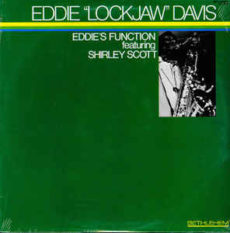
The 1950s saw Pruitt touring with Earl Hines and the Sauter-Finegan Orchestra, but was mostly active as a sideman and session musician on recordings with Shorty Baker, Arnett Cobb, Eddie “Lockjaw” Davis, Bill Doggett, Wynonie Harris, Bull Moose Jackson, Roland Kirk, George Shearing, Sahib Shihab, and Hal Singer among others.
Pruitt did not perform or record frequently in the 1960s or 1970s, but he did play with Woody Herman at the Montreux Jazz Festival in 1967 and recorded with Ray Nance in 1969. He toured France with Doc Cheatham and Sammy Price in 1975.
Double-bassist Carl Pruitt passed away in June of 1977.
Sponsored By

#preserving genius
More Posts: bass
Daily Dose Of Jazz…
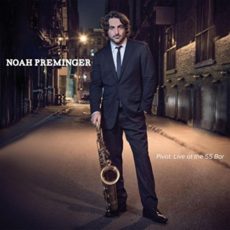
Noah Preminger was born on June 2, 1986 and grew up in Canton, Connecticut. While in high school, he studied with saxophonist Dave Liebman and went on to graduate from the New England Conservatory of Music.
Releasing his debut album Dry Bridge Road, that was a sextet session with guitarist Ben Monder, pianist Frank Kimbrough, trumpeter Russ Johnson, bassist John Hébert, and drummer Ted Poor. Noah’s sophomore album as a leader came three years later in 2011 titled Before the Rain on the Palmetto label and featured a quartet with Kimbrough, Hébert and drummer Matt Wilson. Both albums received critical acclaim from Jazz Review, Hartford Courant, New York Times and DownBeat. Dry Bridge Road was named Debut of the Year in the Village Voice critics poll, making top 10 lists in Stereophile, The Nation and JazzTimes.
Preminger has performed with Billy Hart, Dave Holland, Fred Hersch, Dave Douglas, Victor Lewis, John and Bucky Pizzarelli, Billy Drummond, George Cables, Roscoe Mitchell, Eddie Henderson, Rob Garcia, Andre Matos, Dan Cray and Julian Shore.
Currently based in Brooklyn, saxophonist Noah Preminger has released eight albums since his debut in 2008 and continues to compose, perform and record.
Sponsored By

#preserving genius
More Posts: saxophone