

Daily Dose Of Jazz…
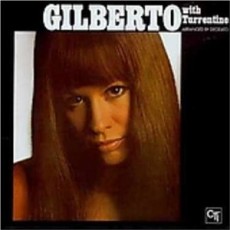
Astrud Gilberto was born Astrud Weinert on March 30, 1940 in the state of Bahia and raised in Rio de Janiero, the daughter of a Brazilian mother and a German father, She married Joao Gilberto in 1959, emigrating to the United States in 1963 and has continued to reside in the US ever since. They divorced in the mid-1960s and she began a relationship with her musical partner, Stan Getz.
Although now widely known for her samba and bossa nova music, she had never sung professionally and it was at the behest of her husband Joao that she sang on the recording of the Getz/Gilberto album featuring Stan Getz, Joao Gilberto and Antonio Carlos Jobim. Providing the English vocals to the 1965 Grammy Award-winning song “The Girl From Ipanema”, and her career was launched garnering her worldwide recognition and establishing her as a jazz and pop singer.
Her first solo album was The Astrud Gilberto Album in 1964, went on tour with Stan Getz singing bossa nova and American jazz standards, Gilberto didn’t start to record her own compositions until the 1970s. Her repertoire included such standards as “The Shadow Of Your Smile”, “It Might As Well Be Spring”, “Love Story”, “Fly Me To The Moon”, “Day By Day”, “Here’s That Rainy Day” and “Look to the Rainbow”.
Astrud has recorded songs in Portuguese, English, Spanish, Italian, French, German and Japanese, has received the “Latin Jazz USA Award for Lifetime Achievement”, inducted into the “International Latin Music Hall of Fame”, contributed to the Aids benefit album Red Hot + Rio, has had numerous versions of her songs sampled and used in movies, is a fine artist and ardent animal rights advocate.
More Posts: vocal
Daily Dose Of Jazz…
Remo Palmier was born Remo Paul Palmieri on March 29, 1923 in New York City, later dropping the “i” at the end of his name. He was taught himself to play guitar and began his professional career with the Nat Jaffe Trio in New York in 1942. In the early part of his career he played with Coleman Hawkins, Billie Holiday, Dizzy Gillespie and Charlie Parker, establishing his own reputation as a swinging and inventive jazz guitarist.
Remo was known to a wider television audience as the guitarist on The Arthur Godfrey Show, a position he held for 27 years from 1945. He went on to work with Red Norvo, pianists Phil Moore and Teddy Wilson, Barney Bigard and Sarah Vaughan in the mid-1940s.
After a hiatus from music, Palmier returned to active jazz playing in the early 1970s, working with the likes of Vic Dickenson, Bobby Hackett, and as an occasional stand-in for Bucky Pizzarelli in Benny Goodman’s small group.
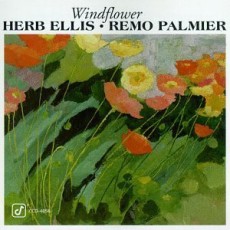
He recorded and released the albums “Windflower” with guitarist Herb Ellis and “Remo Palmier”, and continued to perform into the 90s, including recordings with Louis Bellson, Joe Wilder, and concerts with Benny Carter. Suffering from leukemia and lymphoma, jazz guitarist Remo Palmier passed away in New York City on February 2, 2002.
More Posts: guitar
Daily Dose Of Jazz…
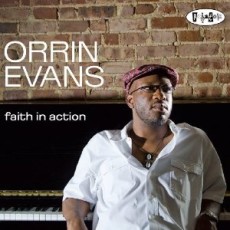
Orrin Evans was born on March 28, 1976 in Trenton, New Jersey but was raised in Philadelphia, Pennsylvania. Nurtured in a household filled with music due to his classical singer mother who surrounded him with the melodies of Puccini to the pulsating rhythms of Basie and Ellington.
Evans graduated from high school in the early 90s and studied at Rutgers University before going on to study piano privately with Kenny Barron and be employed as a sideman by Bobby Watson, Ralph Peterson, Duane Eubanks, Lenora Zenzalai-Helms and others.
Evans recorded his first session as a leader, The Orrin Evans Trio, for his own Black Entertainment label in 1994. After that, he signed with Criss Cross and between 1997-99 he recorded Justin Time, Captain Black and Grown Folks Bizness. Into the new millennium Orrin recorded prolifically releasing “Listen to the Band”, “Blessed Ones” and “Meant to Shine”, continuing his yearly release schedule up to his latest “Flip The Script”.
Influenced greatly by McCoy Tyner, Horace Silver, Bud Powell and Thelonious Monk among others, he remains in the hard bop genre but occasionally detours into soul-jazz and R&B when backing vocalists Denise King and Dawn Warren. In 2010 he was awarded a Pew Fellowship in the Arts. He continues to perform, record and tour.
Daily Dose Of Jazz…
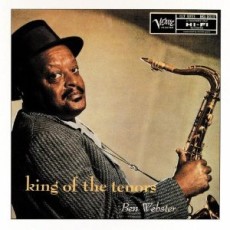
Benjamin Francis Webster was born on March 27, 1909 in Kansas City, Missouri and learned to play piano and violin at an early age, before learning to play the saxophone, although he did return to the piano from time to time, even recording on the instrument occasionally. But it was Budd Johnson who showed him some basics on the saxophone. Webster began to play that instrument in the Young Family Band that at the time included Lester Young.
Kansas City at this point was a melting pot from which emerged some of the biggest names in 1930s jazz and Webster spent time with the Andy Kirk orchestra, joined Bennie Moten’s legendary 1932 band that included Count Basie, Oran Page and Walter Page, Fletcher Henderson’s Orchestra, then Benny Carter, Willie Bryant, Cab Calloway and the Teddy Wilson orchestras.
Also known as “The Brute” or “Frog”, Ben was an influential jazz tenor saxophonist who had a tough, raspy, and brutal tone on stomps (with his own distinctive growls), yet on ballads he played with warmth and sentiment. Stylistically he was indebted to alto star Johnny Hodges, who, he said, taught him to play his instrument.
By the mid thirties he was playing with the Duke Ellington Orchestra as the featured tenor on recordings of Cotton Tail and All Too Soon. His contribution to the band, along with bassist Jimmy Blanton, was so important that Ellington’s orchestra during that period is known as the Blanton-Webster band.
After Ellington in 1943, Webster worked on 52nd Street in New York City; recorded frequently as both a leader and a sideman. He worked with jazz giants Jay McShann, Oscar Peterson, Sid Catlett, Herb Ellis, Coleman Hawkins, Ray Brown, Alvin Stoller and Art Tatum, to name a few.
Webster generally worked steadily but in 1964 he moved permanently to join other American jazz musicians in Copenhagen, Denmark, where he played when he pleased during his last decade. In 1971 Webster reunited with Duke Ellington Big Band and he recorded “live” in France with Earl Hines.
Tenorist Ben Webster died in Amsterdam, The Netherlands on September 20, 1973. He remained rooted in the blues and swing-era ballads but he could swing with the best.
More Posts: saxophone
Daily Dose Of Jazz…
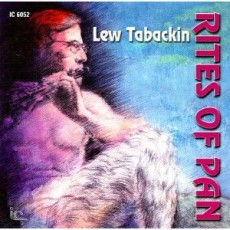
Lew Tabackin was born March 26, 1940 in Philadelphia, Pennsylvania. Tabackin studied flute at the Philadelphia Conservatory of Music and also studied music with composer Vincent Persichetti. Graduating in he did a stint with the Army, and then worked with Tal Farlow. He also worked in a combo that included Elvin Jones, Donald Byrd and Roland Hanna. He eventually took a chair in the band of the Dick Cavett Show.
He formed a quartet with Toshiko Akiyoshi in the late 1960s, and in 1973 co-founded the Toshiko Akiyoshi – Lew Tabackin Big Band that would later transform into the Toshiko Akiyoshi Jazz Orchestra featuring Lew Tabackin. He would be the principal soloist for the big band/orchestra from 1973 through 2003. The orchestra would play bebop in the Duke Ellington-influenced arrangements and compositions by Akiyoshi.
Tabackin has become a great supporter of The Jazz Foundation of America in their mission to save the homes and the lives of America’s elderly jazz and blues musicians including musicians that survived Hurricane Katrina. He has been seated on the Advisory Committee of the Foundation since 2002.
Saxophonist Lew Tabackin has some 54 albums under his belt as a leader and co-leader as well as another twenty-eight in his catalogue as a sideman. He has been a Down Beat Critic’s and Reader’s Poll winner numerous times for Jazz Album of the Year, Big Band and Flute, has been nominated for a Grammy for Best Jazz Instrumental Performance – Big Band ten times as well as Stereo Review magazine Jazz Album of the Year and recognition in Japan winning four Gold and Silver Disks from Swing Journal. He continues to perform and record.