

Daily Dose Of Jazz…
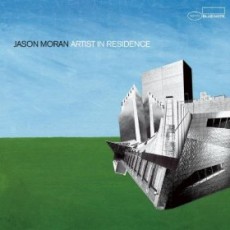
Jason Moran was born January 21, 1975 and grew up in Houston, Texas. He began playing the piano when he was six, though he had no love for the instrument until, at the age of 13, he first heard the song “Round Midnight” by Thelonious Monk and switched his efforts from classical music to jazz. He attended Houston’s High School for the Performing and Visual Arts, and then enrolled at the Manhattan School of Music where he studied with pianist Jaki Byard. While still in college Moran also received instruction from other avant-garde pianists including Muhal Richard Abrams and Andrew Hill.
In 1997, when Moran was a senior at the Manhattan School of Music he was invited to join the band of saxophonist Greg Osby for a European tour. Osby liked his playing and Moran continued to play with the group upon their return to the United States, making his first recorded appearance on Osby’s 1997 “Further Ado” for Blue Note, subsequently appearing on several Osby albums. This led to Blue Note signing Moran and his debut “Soundtrack to Human Motion” was released in 1999.
He has since released several albums playing with contemporaries Stefon Harris, Lonnie Plaxico, Eric Harland, Tarus Mateen, Nasheet Waits, Sam Rivers and Marvin Sewell as well as collaborations with Charles Lloyd, Cassandra Wilson, Joe Lovano, Don Byron, Lee Konitz, Steve Coleman, Ravi Coltrane, Von Freeman and Christian McBride.
Jason has been commissioned to create a number of works by the Walker Art Center, the Dia Art Foundation and Jazz at Lincoln Center. He has been voted Up-n-Coming Jazz Musician by the Jazz Journalists Association, Down Beat’s critics poll voted him Rising Star Jazz Artist, Rising Star Pianist, and Rising Star Composer for three years straight from 2003-2005, named Jazz Artist of the Year in 2007 by Playboy, and was named a USA Prudential Fellow.
Pianist Jason Moran is currently working on a multimedia project “In My Mind” inspired by Thelonious Monk’s 1959 large band concert at Town Hall. He serves as music advisor to the Kennedy Center, serves on the faculty of the New England Conservatory of Music and the Manhattan School of Music, as he continues to compose, perform, tour and record.
Daily Dose Of Jazz…
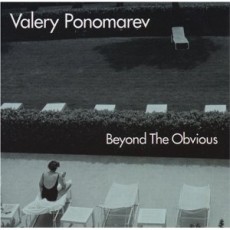
Valery Ponomarev was born January 20, 1943 in Russia and the young trumpeter became interested in jazz after hearing it on Voice of America. Feeling a particular affinity for Clifford Brown, he dedicated countless hours to transcribing, studying and memorizing legendary jazz trumpet solos. Fleeing the Soviet Union in 1973 he emigrated to the U.S. where he joined Art Blakey’s Jazz Messengers, an association that lasted four years.
Valery’s tenure with Blakey afforded him the opportunity to perform the major concert venues, clubs and festivals around the world, recording eleven albums and television appearances in Europe, Japan, Brazil and the United States. After his departure from The Jazz Messengers, Valery formed his own band “Universal Language”.
Ponomarev has performed or collaborated with Max Roach, Harold Land, George Morrow, Sam Dockery, Evelyn Blakey, Curtis Fuller, Bobby Watson and others. He is currently a member of the memorial Art Blakey & The Jazz Messengers band led by Benny Golson. He also tours with his big band playing some originals and some music from the Jazz Messengers repertoire.
Considered by many as an outstanding educator and mentor, Valery teaches privately and as part of the Wells Fargo Jazz for Teens program in Newark, New Jersey. He has had a documentary made about his life, “Messenger From Russia” and released his autobiographical book “On The Flip Side of Sound” in 2009.
More Posts: trumpet
Daily Dose Of Jazz…
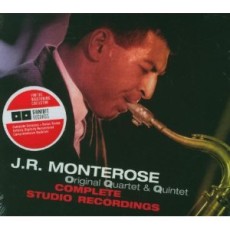
J. R. Monterose was born Frank Anthony Peter Vincent Monterose, Jr. in Detroit Michigan on January 19, 1927. A few months after his birth, the family moved to Utica, New York and this is where he began formal clarinet studies at thirteen. After hearing the Glenn Miller soloist Tex Beneke J.R. taught himself to play tenor saxophone with his early influences Coleman Hawkins and Chu Berry. He also found harmonic inspiration in pianist Bud Powell and learned chord changes from guitarist Sam Mancuso.
Monterose first stepped into the professional arena playing in upstate New York territory dance bands in the late forties. In 1950 he joined the Henry “Hot Lips” Busse touring orchestra, then the Buddy Rich band in ’51 but left for lack of soloing opportunities.
By the mid to late 50s he was in New York City as a featured soloist with Claude Thornhil’s orchestra and with vibraphonist Teddy Charles’ modernist groups, Charles Mingus’s Jazz Workshop and Kenny Dorham’s short-lived Jazz Prophets. He recorded two sessions with Alfred Lion for Blue Note as a leader, “J.R. Monterose” in 1956 and “The Message” in 1959.
Throughout his life he continued to pursue his ever-evolving craft in small time U.S. venues and during extended stays in the late 1960’s through the mid 1970’s in Belgium, The Netherlands and Denmark with occasional low-profile recordings. His preference for small group work in out of the way places would shape much of his subsequent career, contributing to the musical growth upon which he was always so intently focused but ultimately relegating him to an undeserved obscurity.
He steadfastly refused to be pigeonholed in any particular style and was quoted as saying “ I’ve tried all my life to avoid copying. If I can’t be myself, there’s no point in being in jazz”. Tenor saxophonist J.R. Monterose passed away on September 16, 1993.
More Posts: saxophone
Daily Dose Of Jazz…
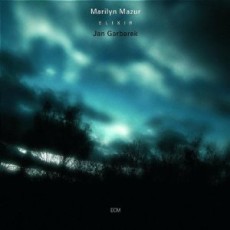
Marilyn Mazur was born on January 18, 1955 of Polish and African American descent in New York but grew up on Denmark from the age of six. Primarily a self-taught percussionist and drummer, she got a degree in percussion at the Royal Danish Academy of Music.
From 1975, Mazur has worked as a percussionist with various groups, among others, the group Six Winds with Alex Riel. She has performed with such notables as Niels-Henning Orsted Pederson, Jan Garbarek, Miles Davis, Gil Evans, Wayne Shorter Jeanne Lee and Palle Mikkelborg to mention a few.
By 1989, Marilyn founded her band Future Song, a sextet with her husband Klavs Hovman. A second project, Percussion Paradise, brought together percussionists Benita Haastrup, Lisbeth Diers and Birgit Løkke.
Marilyn Mazur is also a composer, pianist, dancer and bandleader and has been selected by Down Beat in 1989, 1990 and 1995 as a “percussion talent deserving wider recognition”. In 2001, she was awarded the Jazzpar Prize, the world’s largest international jazz prize. She continues to record, perform and tour.
More Posts: bandleader,drums
Daily Dose Of Jazz…
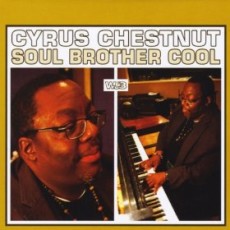
Cyrus Chestnut was born January 17, 1963 in Baltimore, Maryland. He started his musical career at the age of six, playing piano at Mount Calvary Baptist Church. By age nine, he was studying classical music at Peabody Institute and in 1985 earned a degree in jazz composition and arranging from Berklee College of Music where he was awarded the Eubie Blake Fellowship, the Quincy Jones Scholarship and the Oscar Peterson Scholarship.
A year after graduating his prolific career began with a tour with Jon Hendricks, followed by two-year stints with Terence Blanchard, Donald Harrison, Wynton Marsalis and Betty Carter. Under Betty’s tutelage, Cyrus was advised to take chances and play things she had never heard.
Signing with Atlantic Records in 1993 he released the critically acclaimed Revelation followed by The Dark Before The Dawn the next year, debuting at #6 on the Billboard charts. He has performed and/or recorded with Freddy Cole, Bette Midler, Freddie Hubbard, Jimmy Scott, Chick Corea, Isaac Hayes, Kevin Mahogany, Dizzy Gillespie, Manhattan Transfer, Vanessa L. Williams, Brian McKnight, Christian McBride, Lewis Nash, James Carter, Wycliffe Gordon and the list continues.
Never straying far from his church roots he collaborated and toured with soprano opera diva Kathleen Battle, recording the notable “So Many Stars” in 1996. Later that same year came Blessed Quietness: A Collection of Hymns, Spirituals and Carols.
Chestnut’s leadership and prowess as a soloist has also led him to be a first call for the piano chair in many big bands including the Lincoln Center Jazz Orchestra, Dizzy Gillespie Big Band and the Carnegie Jazz Orchestra. He has amassed a further string of critically acclaimed albums while continually touring with his trio, playing jazz festivals around the world as well as clubs and concert halls.
More Posts: bandleader,composer,piano