

Daily Dose Of Jazz…
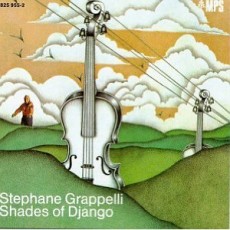
Stéphane Grappelli was born on January 26, 1908 in Paris, France. Losing both his parents he was accepted into Isadora Duncan’s dance school where he discovered his love for French impressionist music. His musical career began playing violin at age 12, attended the Conservatoire de Paris studying music theory and made his living busking on the streets of Paris and Montmartre.
While at the conservatory he worked as a silent film pianist and also playing the saxophone and accordion. Grappelli eventually gained fame in Paris as a violin virtuoso but piano was his other love. His early fame came playing with the Quintette du Hot Club de France with Django Reinhardt though the band disbanded in 1939 due to World War II. In 1940, a little known jazz pianist by the name of George Shearing made his debut as a sideman in Grappelli’s band.
After the war Stephane appeared on hundreds of recordings including sessions with Duke Ellington, Oscar Peterson, Michel Petrucciani, Claude Bolling, Jean-Luc Ponty, Stuff Smith, Toots Thielemans, Gary Burton, Joe Pass, Andre Previn and many, many others.
During the 1960s he played for cocktail hour at the Paris Hilton, recorded the title track of Pink Floyd’s “Wish You Were Here”, made a cameo appearance in “King of the Gypsies”, received the Grammy Lifetime Achievement Award in 1997 and was inducted into the Down Beat Jazz Hall of Fame.
Violinist Stephane Grappelli died in Paris after undergoing a hernia operation on December 1, 1997.
More Posts: violin
Daily Dose Of Jazz…
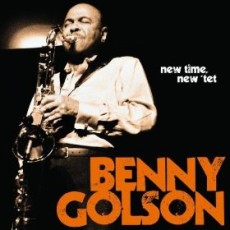
Benny Golson was born January 25, 1929 in Philadelphia, Pennsylvania. While in high school he played with several other promising young musicians, including John Coltrane, Red Garland, Jimmy Heath, Percy Heath, Philly Joe Jones and red Rodney. After matriculating Howard University, Benny joined Bull Moose Jackson’s R&B band where he met and learned about writing from pianist Tadd Dameron.
From 1953 to 1959 Golson played with Dameron’s band and then with the bands of Lionel Hampton, Johnny Hodges, Earl Bostic, Dizzy Gillespie and Art Blakey & The Jazz Messengers. While working with the Lionel Hampton band at the Apollo in 1956, Benny learned that his friend trumpeter Clifford Brown had died in a car accident. In honor, Golson composed “I Remember Clifford”.
From 1959 to 1962 Golson co-led the Jazztet with Art Farmer. Golson then left jazz to concentrate on studio and orchestral work for 12 years and during this period he composed music for such television shows as Ironside, Room 222, M*A*S*H and Mission: Impossible.
By the mid-1970s Golson returned to jazz playing and recording, he re-organized the Jazztet in 1983, was honored as a NEA Jazz Maser in ’95, made a cameo appearance in the Tom Hanks vehicle “The Terminal” that was related to his participation in the classic photo “A Great Day In Harlem”, received the Mellon Living Legend Legacy Award, the Outstanding Lifetime Achievement Award from the University of Pittsburgh International Academy of Jazz, in which he was also inducted into their Hall of Fame.
Since 1996 Howard University created and has awarded the prestigious Benny Golson Jazz Master Award to several distinguished jazz artists. As of 2007, Benny Golson, tenor saxophonist, composer and arranger in the bebop and hard bop genres continues to tour regularly. He is known for his jazz standards “Stablemates”, “Whisper Not”, “Killer Joe”, “Along Came Betty and “Are You Real”, that have been performed and recorded by countless jazz musicians.
More Posts: saxophone
Daily Dose Of Jazz…
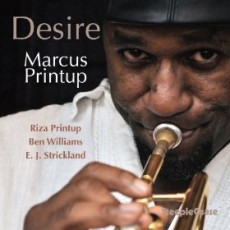
Marcus Printup was born on January 24, 1967 in Conyers, Georgia. His first musical experiences hearing the fiery gospel music his parents sang in church and didn’t discover jazz until he was a senior in high school.
He is a versatile musician who started playing trumpet in the fifth grade, played funk as a teenager, and while attending the University of North Florida on music scholarship, won the “International Trumpet Guild Jazz Trumpet Competition”, and was a member of a ten-piece group called “Soul Reason for the Blues”. In 1991 he met pianist Marcus Roberts, his mentor to this day, who introduced him to Wynton Marsalis, and was induction into the Jazz @ Lincoln Center Orchestra two years later.
Marcus has performed and/or recorded with Betty Carter, Dianne Reeves, Eric Reed, Cyrus Chestnut, Wycliffe Gordon, Carl Allen, Marcus Roberts among many others, not to mention a few of his projects as a leader, Song for the Beautiful Woman, Hub Songs, The New Boogaloo, Bird of Paradise, London Lullaby and his most recent, Desire.
Printup’s screen debut was in the 1999 movie “Playing By Heart” and also recorded on the film’s soundtrack. He tours annually with the Lincoln Center Jazz Orchestra, spending one-third of his year touring world wide, and nourishes his educator side by teaching youth and experienced musicians and contributing to several camps annually.
More Posts: trumpet
Daily Dose Of Jazz…
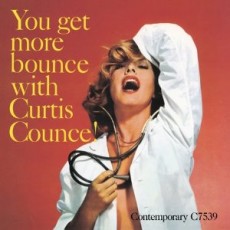
Curtis Counce was born in Kansas City, Missouri on January 23, 1926. Studying violin and tuba early on before settling on the string bass, he went on the road when he was 16, playing with the Nat Towles Band in Omaha.
After some freelancing, Counce moved to Los Angeles in 1945, working with Johnny Otis and making his recording debut the following year with Lester Young. During the ‘50’s he was a key member of the West Coast jazz scene, recording as a sideman with Shelly Manne, Lyle Murphy, Teddy Charles, Clifford Brown, and many others.
In 1956, Counce organized a quintet comprised of trumpeter Jack Sheldon, tenor saxophonist Harold Land, pianist Carl Perkins, and drummer Frank Butler. During a 15-month period, they recorded enough material to document their endeavor, all of which were originally released by Contemporary and fall stylistically between West Coast cool jazz and hard bop.
Changing personnel, the Curtis Counce Quintet recorded a final album for the Dooto label before breaking up in 1958. The bassist continued working in the Los Angeles area until his death on July 31,1963 from a heart attack.
More Posts: bass
Daily Dose Of Jazz…
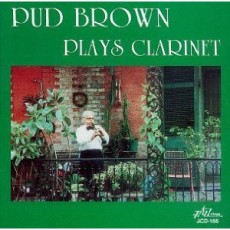
Pud Brown was born Albert Francis Brown on January 22, 1917 in Wilmington, Delaware but was raised in Shreveport, Louisiana. Brown was fluent on saxophone by age five, and toured throughout North America in a family band at the age of seven, playing the circus, nightclub and minstrel show circuits in the mid 1920s.
After moving to Chicago, Pud found work in Phil Lavant’s orchestra in 1938 and then in Lawrence Welk’s band. In 1941 he married, left music to run a motorcycle shop in Shreveport – a failed endeavor, relocated to Los Angeles and found work as a jazz musician.
Brown career exploded over the next several decades working with such jazz musicians as Les Brown, Coleman Hawkins, Doc Cheatham, Danny Barker, Kid Ory, Percy Humphrey and Louis Armstrong among others. He returned to New Orleans in 1975 and became a mainstay of the local scene playing with Clive Wilson’s Original Camelia Brass Band in the 1980s, holding a regular gig at the French Quarter’s Palm Court Jazz Cafe.
Pud Brown, clarinetist, reed player and active as an educator in local schools until his death, passed away on May 27, 1996 in Algiers, Louisiana.