

Daily Dose Of Jazz…
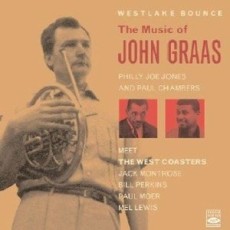
French Horn jazz musician and arranger John Graas was born March 14, 1917 in Dubuque, Iowa. Classically trained, partially at Tanglewood Music Center, he soon became interested in jazz and studied ways to bring it together with classical. His earliest effort would be called Third Stream music.
Following the path of dual music loves, between 1941 and 1953 John was a member of the Indianapolis Symphony Orchestra, The Claude Thornhill Orchestra, the Army Air Corps band during WWII, the Cleveland Orchestra, the Tex Beneke Orchestra and the Stan Kenton Orchestra.
Eventually settling in Los Angeles, Graas found work as a studio musician and played with kindred spirits on the innovative side of West Coast jazz including Shorty Rogers, Jimmy Giuffre, Gerry Mulligan, Art Pepper, Buddy Collette and Shelly Manne. All of these musicians were involved in efforts to blend jazz with elements of classical music.
John recorded a few albums under his own name, including French Horn Jazz, Coup de Graas, and Jazzmantics. His “Jazz Chaconne No. 1” was an example of his ambitious attempts to fuse jazz with classical music. It appeared on the 1958 International Premiere in Jazz with his “Jazz Symphony No. 1”, which, despite its title, was far more classical than jazz.
The 1950s held intense activity for Graas, as performer, composer, and arranger. Leading groups under his own name, he appeared in the musical aggregations of Stan Kenton, Maynard Ferguson, Billy May, Pete Rugolo, Mel Lewis, Henry Mancini and Bobby Darin among others.
John Graas was known primarily as one of the first and best French horn players in jazz. He had a short but busy career on the West Coast, until his career was cut short by his death of a heart attack, at age 45, on April 13, 1962 in Los Angeles, California.
More Posts: french horn
Daily Dose Of Jazz…
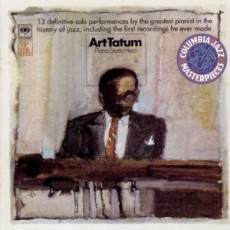
Arthur Tatum, Jr. was born in Toledo, Ohio on October 13, 1909. His father was a guitarist and his mother played piano. A prodigy with perfect pitch, Tatum learned to play by ear, picking out church hymns by the age of three, learning tunes from the radio and copying piano-roll recordings his mother owned. As a child he was also very sensitive to the piano’s intonation and insisted it be tuned often. He developed an incredibly fast playing style, without losing accuracy.
Suffering from infancy with cataracts that left him blind in one eye and only very limited vision in the other, Art had a number of surgical procedures to improve his eye condition but lost some of the benefits when he was assaulted in 1930. He enrolled in the Columbus School for the Blind and studied music, piano and learned Braille. Drawing inspiration from pianists James P. Weldon and Fats Waller, who exemplified the stride piano style, he also identified with the more modern style of Earl Hines.
By the age of 19, he was playing with singer Jon Hendricks at the Waiter’s and Bellmen’s Club. As word of Tatum spread, national performers including Duke Ellington, Louis Armstrong, Joe Turner and Fletcher Henderson when passing through Toledo would make it a point to drop in to hear the piano phenomenon. However, the major event that propelled his meteoric rise to success was his appearance at a 1933 cutting contest at Morgan’s Bar in New York City that included Waller, Johnson and Willie “The Lion” Smith. Standard contest pieces included Johnson’s “Harlem Strut” and “Carolina Shout” and Fats Waller’s “Handful of Keys.” Tatum triumphed with his arrangements of “Tea For Two” and “Tiger Rag”, in a performance that was considered to be the last word in stride piano. Tatum’s debut was historic because he outplayed the elite competition and heralded the demise of the stride era.
Tatum went on to have a prolific performing and recording career being widely acknowledged as one of the greatest jazz pianists of all time. The virtuoso, while piano was his most obvious skill, he also had an encyclopedic memory for Major League Baseball statistics. Art Tatum passed away at age 47 from kidney failure on November 5, 1956 in Los Angeles, California.
More Posts: piano
Daily Dose Of Jazz…
Nancy Kelly was born on October 12, 1950 in Rochester, New York and at the age of four began studying piano, clarinet, drama and dance with private instructors, and voice at the Eastman School of Music. By sixteen she formed a combo and performed in clubs around Rochester.
The early Seventies saw her joining a rock band as lead singer and touring the East coast and Midwest. She enjoyed the freedom of improvising and soon gravitated to jazz, once again forming her own group. Gaining a reputation she began performing on the West coast, the Far East and Europe and regularly performs in New York City at the Blue Note, Birdland and Dizzy’s Club Coca-Cola at Lincoln Center.
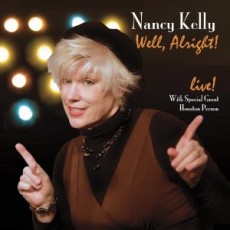
Nancy has appeared on the stages of numerous jazz festivals, sung with symphony orchestras, and has been named “Best Female Jazz Vocalist” twice in the Down Beat Readers’ Poll. He debut cd “Live Jazz” reached #11 on the Billboard charts, followed by three ore with “Born To Swing” and “Well Alright” featuring tenor saxophonist Houston Person.
A four-year stint at Jewels Jazz club in Philadelphia between 1982 – 86 helped to revitalize jazz in Philadelphia, Pennsylvania. Subsequently jazz musicians Al Cohn, Jack McDuff, Etta Jones, Shirley Scott and Joey DeFrancesco became favorites of audiences bringing together students and professional people.
Nancy Kelly continues to perform and swing with her signature smoky, take-no-prisoner, back to the roots style delivering authentic expression of real emotion.
More Posts: vocal
Daily Dose Of Jazz…
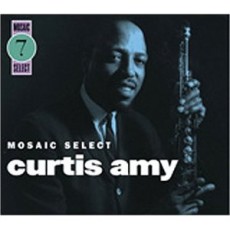
Curtis Amy was born on October 11, 1929 in Houston, Texas and learned how to play clarinet before joining the Army. During his time in service he picked up the tenor saxophone and after his discharge he enrolled and graduated from Kentucky State College.
Working as an educator in Tennessee while playing in mid-western jazz clubs for a time and in the mid-1950s, Amy relocated to Los Angeles and signed with Pacific Jazz Records. By the mid-60s he spent three years as musical director for Ray Charles’ orchestra, together with his wife and singer Merry Clayton, and Steve Huffsteter.
Curtis lead his own bands and recording albums under his own name, Amy also did session work and played the solos on several recordings, including The Doors song “Touch Me”, Carole King’s “Tapestry”, and Lou Rawls’ first albums, “Black and Blue and Tobacco Road”; with Dexter Gordon in the Onzy Matthews’ big band as well as working with Marvin Gaye, Tammy Terrell and Smoky Robinson.
Soul jazz and hard bop tenor saxophonist Curtis Amy, a part of the West coast jazz scene who explored other musical mediums, passed away on June 5, 2002.
More Posts: saxophone
Daily Dose Of Jazz…
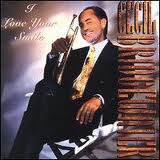
Cecil Bridgewater was born on Oct. 10, 1942 in Urbana, Illinois and studied music at the University of Illinois. Along with his brother Ron, they formed the Bridgewater Brothers Band in 1969. In 1970 he played with Horace Silver following this stint with a Thad Jones/Mel Lewis association from 1970 to 1976. During this period of the Seventies he married Dee Dee Bridgewater and played with Max Roach starting a decades-long association.
Cecil recorded his debut album “I Love Your Smile” in 1992, has enjoyed playing the sideman on some two dozen recordings with Dizzy Gillespie, Art Blakey, Randy Weston, Charles McPherson, Joe Henderson, Roy Brooks, Abdullah Ibrahim and Sam Rivers; and has composed works premiered by the Cleveland Chamber Orchestra and Meet the Composer.
Bridgewater has become a great supporter of The Jazz Foundation of America in their mission to save the homes and the lives of America’s elderly jazz and blues musicians including musicians that survived Hurricane Katrina. Cecil performed at the 2008 Benefit Concert, “A Great Night in Harlem” at the World Famous Apollo Theater. He continues to perform while currently teaching as adjunct faculty at Manhattan School of Music, New School, William Patterson and The Julliard School.
More Posts: trumpet