Daily Dose Of Jazz…
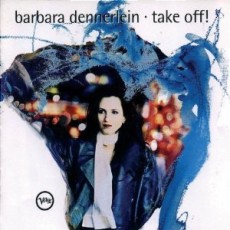
Barbara Dennerlein was born on September 25, 1964 in Munich, Germany. The hard bop/post bop Hammond B3 organist began playing electric organ at age 11. After starting organ lessons, she learned to play the two-manual organ with a bass pedal board. After one and a half years of lessons she continued to study without formal instruction and by 15, she playing in a jazz club for the first time. When leading her own bands, she was often the youngest musician in the group, learning to cooperate with more experienced musicians. Her local reputation as the “Organ Tornado from Munich” spread after her first television appearance in 1982.
With her career jumpstarted Barbara recorded her first two albums and by her third “Bebab”, she started her own record label, receiving the German Jazz Critics Award. She signed with Enja Records for three recordings, moved to Verve’s international label for three more sessions working with Ray Anderson, Randy Brecker, Dennis Chambers, Roy Hargrove, Mitch Watkins, and Jeff “Tain” Watts.
Her performances include solo performances as well as quintets and she has worked on a variety of projects with the pipe organ, church organ and symphonic orchestras. She has recorded twenty-three albums to date and her compositions range from traditional blues, romantic melancholic ballads and up-tempo drives with elements of swing, bebop, funk and Latin rhythms. Barbara Dennerlein continues to compose, record, perform and tour.
More Posts: organ
Daily Dose Of Jazz…
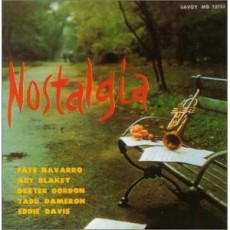
Theodore “Fats” Navarro was born on September 24, 1923 in Key West, Florida to Cuban-Black-Chinese parentage. He began playing piano at age six, but did not become serious about music until he began playing trumpet at age of thirteen. By the time he graduated from Douglass High School he wanted to be away from Key West and joined a dance band headed for the mid-west.
Tiring of the road life after touring with many bands and gaining valuable experience, including influencing a young J. J. Johnson when they were together in Snookum Russell’s territory band. Navarro settled in New York City in 1946, where his career took off. He met and played with, among others, Charlie Parker, but was in a position to demand a high salary, so Fats didn’t join one of Parker’s regular groups. Unfortunately he developed a heroin addiction, which, coupled with tuberculosis and a weight problem led to a slow decline in his health.
Through his short-lived career, trumpeter Fats Navarro played with among others Andy Kirk, Billy Eckstine, Benny Goodman and Lionel Hampton big bands, and also participated in small group recording sessions with Kenny Clarke, Tadd Dameron, Eddie “Lockjaw” Davis, Coleman Hawkins, Illinois Jacquet, Howard McGhee, Bud Powell and Charles Mingus, with whom he had a deep friendship.
Hospitalized on July 1st after his final performance with Charlie Parker at Birdland, the pioneering bebop jazz improvisation trumpeter Fats Navarro passed away at the age of 26 on July 7, 1950.
More Posts: trumpet
Daily Dose Of Jazz…
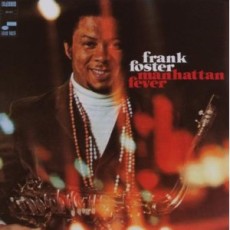
Frank Benjamin Foster III was born September 23, 1928 in Cincinnati, Ohio and began his musical career when he took up the clarinet at 11. Two years later he was playing the alto saxophone, quickly advanced and played with local bands by 14. He began composing and arranging at 15, leading his own 12-piece band while still in high school. He received his continued musical education at Wilberforce University but left with Snooky Young, moved to Detroit, playing the local jazz scene with Wardell Gray.
From 51-53 he served in Korea followed by joining Count Basie’s Big Band, contributed both arrangements and original compositions to Count Basie’s band including the standard, “Shiny Stockings” and other popular songs such as “Down for the Count,” “Blues Backstage,” “Back to the Apple,” “Discommotion,” and “Blues in Hoss Flat” as well as arrangements for the entire “Easin’ It” album.
From 1970 to 1972 he played with Elvin Jones, and in 1972 and 1975 with the Thad Jones-Mel Lewis big band. Frank went on to form and lead several groups, most notably Living Color and The Loud Minority while also co-leading a quintet with Frank Wess in 1983, and toured Europe with Jimmy Smith’s quintet in 1985.
By June 1986 Foster succeeded Thad Jones as leader of the Count Basie Orchestra and during his tenure Dr. Foster received two Grammy Awards for his big band arrangement of the Diane Schuur composition “Deedles’ Blues” and for his arrangement of the renowned guitarist/vocalist George Benson’s composition “Basie’s Bag”.
Over his career he was never far from education spending time teaching at the New England Conservatory of Music, New York City Public School System in Harlem, and State University of New York, Buffalo. Suffering a stroke in 2001, Frank Foster discontinued his playing but continued to lead The Loud Minority on limited engagements but soon passed the helm to trumpeter Cecil Bridgewater.
The tenor and soprano saxophonist and flautist amassed throughout his career twenty-six albums as a leader, thirty-four as a sideman and arranged five albums for Sarah Vaughan, Diane Schuur, Frank Sinatra, George Benson and Count Basie. Saxophonist Frank Foster continued to compose and arrange until his passage on July 26, 2011 at the age of 82.

Daily Dose Of Jazz…
Marlena Shaw was born Marlina Burgess on September 22, 1942 in New Rochelle, New York and was first introduced to music by her jazz trumpet player uncle Jimmy Burgess. She cites Dizzy Gillespie, Miles Davis, Al Hibbler and lots of gospel as her teaching tools.
In 1952, Burgess brought her on stage at Harlem’s Apollo Theatre to sing with him and his band. Shaw’s mother did not want her daughter to go on tour with her uncle at such a young age. Instead, she enrolled Shaw into the New York State Teachers College in Potsdam to study music. She later dropped out, got married, had five children but never gave up on her singing career.
Shaw began making appearances in jazz clubs whenever she could spare the time. This most notable of these appearances was in 1963 when she worked with jazz trumpeter Howard McGhee. That same year, she had an unsuccessful audition due to nervousness with Columbia Records but continued to play at small clubs in 1964 until 1966 when her career took off after landing a gig with the Playboy Club chain in Chicago. It was through this gig that she met with Chess Records, inked a deal, released her first two albums on their subsidiary Cadet and moved to Blue Note by 1972.
With the onset of disco in the 70s, she reinvented herself and recorded “Go Away Little Boy” and one of the era’s biggest hits remaking “Touch Me In The Morning” for Columbia. Her career has touched all forms of music even being sampled by hip-hop artists and commercials. Vocalist Marlena Shaw has continued to record, toured and consistently performing at club dates and festivals like the North Sea Jazz Festival in the Netherlands.

Daily Dose Of Jazz…
Henry Butler was born September 21, 1949 in New Orleans, Louisiana and was blinded by glaucoma in infancy.His musical training began at the Louisiana State School for the Blind where he learned to play valve trombone, baritone horn and drums before focusing his talents on singing and piano. Mentored at Southern University by clarinetist and educator Alvin Batiste. He later earned a masters degree in music at Michigan State University in 1974, and received the MSU Distinguished Alumni Award in 2009.
He is known for his technique and his ability to play in many styles of music. He has been said to revel in fluency and facility, splashing chords all over the keyboard and streaking through solos with machine-gun articulation.Henry has recorded for Impulse, Windham Hill and Basin Street Records putting together a catalogue of eight albums to date.
With his home and vintage Mason & Hamlin piano destroyed by Hurricane Katrina’s floodwaters, Butler left New Orleans and briefly relocated to Boulder, and then Denver, Colorado before a final relocation to New York in 2009.
Butler’s pursuit of photography as a hobby since 1984, has culminated in his methods and photos being featured in an HBO2 documentary, Dark Light: The Art of Blind Photographers, airing in 2010 and has had his Butler’s photographs shown in galleries in New Orleans. The talented pianist and vocalist continues to perform, record and represent his generation of New Orleans pianists.
More Posts: piano