


Daily Dose Of Jazz…
Naná Vasconcelos was born in Recife, Brazil on August 2, 1944. At age 12 he began playing his father’s guitar and joined the city’s marching band. His intense curiosity and inquisitive ear prompted him to listen to music from Brazil’s greatest composer Villa Lobos to Jimi Hendrix. He played with every imaginable musical configuration in Recife from orchestras to street bands until finally moved to Rio where he began performing with Milton Nascimento.
By 1970 Argentinean tenor, Gato Barbieri came through Rio and invited Nana to join his group and everywhere the played Nana created a sensation. After the tours end he settled in Paris where he made his first recording, “Africa Deus”. He returned to Brazil to record Amazonas, began an eight-year collaboration with guitarist Egberto Gismonti, returned to New York and formed the group “Cordona” with Don Cherry and Collin Walcott, while touring and recording with Pat Metheny.
Throughout his career he has worked with everyone from B.B. King to Jean Luc Ponty to the Talking Heads but has never become a studio musician. With over two-dozen albums as a leader, Nana has contributed special energies to another sixteen albums with such musicians as Walter Bishop Jr., Jan Gabarek, Pierre Favre and Danny Gottlieb that go well beyond the usual contributions of a percussionist.
A master all of Brazil’s percussion instruments, specializing in the berimbau and taking it far beyond its traditional uses, he currently leads his own group “Bushdance” and has developed a theatrically staged piece that explores the full, fascinating range of sounds and songs that lie in the heart of his music.
Nana Vasconcelos has performed at the Woodstock Jazz Festival, “Luz De Candeeiro” to the AIDS benefit compilation album Onda Sonora: Red Hot + Lisbon produced by the Red Hot Organization and was awarded the Best Percussionist Of The Year by the Down Beat Critics Poll for seven consecutive years, from 1984 to 1990. He continues to perform, record and tour.
More Posts: percussion
Daily Dose Of Jazz…
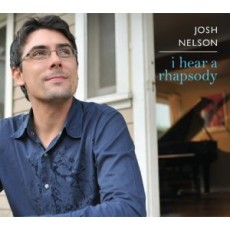
Josh Nelson was born August 1, 1978 in Long Beach, California. His talent was discovered from a very young age, but it was during his high school years that he received the Louis Armstrong Award, the John Phillip Sousa Award, as well as numerous “Outstanding Soloist Awards” at music competitions from around the country. He attended summer camps at Berklee College of Music and mentored by Bill Cunliffe and Benny Green.
Nelson produced his 1998 independent debut album “First Stories” at age nineteen. He went on to receive his degree in Jazz Studies from Long Beach University. His sophomore project three years later titled “Emergence” was followed by “The Leadwell Project” in 2002 and “Anticipation” in 2004. Five years later he released “I Hear A Rhapsody” featuring a host of young west coast players, with his latest “Discoveries” landing on shelves in 2011.
With an innate sense of swing and rhythm, Josh has established himself as a strong voice on the local and international jazz scene, performing with some of the most respected names in jazz, including Natalie Cole, Ralph Moore, Christian McBride, Anthony Wilson, Albert “Tootie” Heath, Ernie Watts, Tom Scott, Alex Acuna, Seamus Blake, Matt Wilson, Jack Sheldon, Peter Erskine, Bob Hurst, Queen Latifah and Erin Bode.
Josh Nelson pianist, composer, arranger, and recording artist is a strong advocate for music education, and spends a good deal of his time maintaining a private studio of jazz students, as well as teaching for Soka University of America as Adjunct Jazz Faculty.
More Posts: piano
Daily Dose Of Jazz…
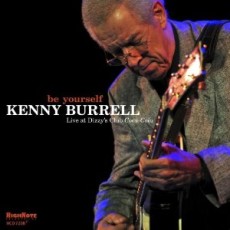
Kenneth Earl Burrell was born July 31, 1931 in Detroit, Michigan and began playing guitar at age 12. He cites his influences as Charlie Christian, Django Reinhardt and Wes Montgomery. He made his debut recording with Dizzy Gillespie’s Sextet while still matriculating Wayne State University in 1951.
After graduating Kenny went on the road with Oscar Peterson in 1955 and a year later moved to New York City. During this decade and forward Burrell has led his own groups and recorded some 40 albums and CDs, many of them well-received albums, such as, Midnight Blue, Blue Lights, Sunup to Sundown, Soft Winds, and his 75th Birthday Bash.
A consummate sideman, Burrell recorded with a wide range of prominent musicians. A highly popular performer, he has won several jazz polls in Japan, United Kingdom and the United States.
In the 1970s he began leading seminars about music, particularly “Ellingtonia”, examining the life and accomplishments of Duke Ellington. As of 1996 he has served as Director of Jazz Studies at UCLA, mentoring such notable alumni as Gretchen Parlato and Kali Wilson.
Guitarist Kenny Burrell has amassed over sixty albums as a leader and another 58 as a sideman with the likes of Jimmy smith, Lalo Schifrin, Charlie Rouse, Sonny Rollins, Ike Quebec, Wynton Kelly, Etta Jones, Milt Jackson, Coleman Hawkins and Red Garland among numerous others. He continues to perform, record and tour.
More Posts: guitar
Daily Dose Of Jazz…
Kevin Mahogany was born July 30, 1958, in Kansas City, Missouri and began his childhood study of music with piano, later learning to play the clarinet and baritone saxophone. He performed with jazz bands and teaching music while still in high school and later attended Baker University, performing with both instrumental and vocal ensembles. He formed a vocal jazz group, matriculating with a BFA in Music and English Drama.
After graduation, he returned to Kansas City where he attracted a local following in the 80’s performing with his groups, “The Apollos” and “Mahogany”. 1991 saw the vocalist featured on a Frank Mantooth CD and lists his influences as Lambert, Hendricks & Ross, Al Jarreau and Eddie Jefferson.
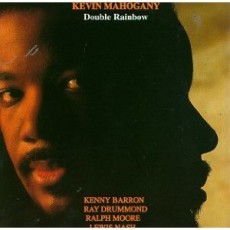
His first CD release as a solo artist was Double Rainbow in 1993 followed by his self-titled album Kevin Mahogany, which won him his first critical acclaim in the media, prompting Newsweek to call him “the standout jazz vocalist of his generation.”
He appeared in Robert Altman’s 1996 film Kansas City playing a character that’s said to be based on Kansas City singer Big Joe Turner. As a jazz educator, he has taught at the Berklee College of Music and the University of Miami. Known for his scat singing and with a dozen albums to his credit, vocalist Kevin Mahogany continued to perform, record, tour and educate until he passed away in his home on December 17, 2017 at the age of 59.
More Posts: vocal
Daily Dose Of Jazz…
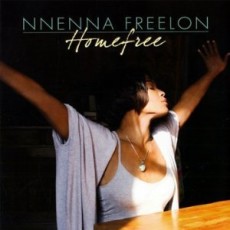
Nnenna Freelon, born Chinyere Nnenna Pierce on July 28, 1954 was raised in Cambridge, Massachusetts and sang in Union Baptist Church and St. Paul AME choirs as a young woman. She graduated from Boston’s Simmons College with a health care administration degree, worked at the Durham County Hospital in North Carolina and by 1990 had been singing for about seven years under her married name.
Attending the Southern Arts Federation conference presented her the opportunity to meet Ellis Marsalis, who became mentor and teacher. He passed her “package” on to George Butler of Columbia Records and in 1992 she was signed and dropped her debut. By 1994 Columbia ended their association and two-years later Concord picked her up.
The singer, composer, arranger, producer has been nominated for a five Grammy Awards, has performed and toured with the likes of Aretha Franklin, Ellis Marsalis, Al Jarreau, Clark Terry, Dianne Reeves, Terence Blanchard and Herbie Hancock, just to name a few. Nnenna has performed at venues such as Carnegie Hall, Montreux, Monterey and Ellington Jazz Festivals, the Kennedy Center, the Apollo Theatre and many more worldwide.
Aside from her many jazz and singing responsibilities, Freelon is the national spokesperson for the National Association of Partners in Education, an arts education organization with over 400,000 school/community partnership programs across the U.S; and her Babysong workshops teaches young mothers and healthcare providers the importance of the human voice for healing, nurturing and brain development in young children. She continues to perform, record and tour.
More Posts: vocal