

Daily Dose Of Jazz…
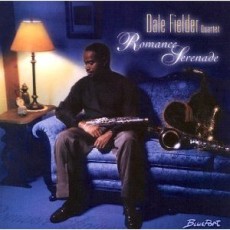
Dale Fielder was born July 27, 1956. Growing up in Midland, a small suburb outside Pittsburgh, Pennsylvania he studied oboe, bassoon and tuba in the school system and clarinet, saxophone, composition and arranging privately with Pittsburgh area tenor saxophonist Phillip Celli. An alumnus of the University of Pittsburgh Jazz Studies Program, Dale studied as an ethnomusicology major under Dr. Nathan Davis. His debut jazz performance was as a member of the Joe Harris Quartet, former drummer with the Charlie Parker Quintet and Dizzy Gillespie Orchestra.
Fielder is a recipient of a NEA grant, has completed his first large work “The Aquarian” for alto saxophone and chamber orchestra; spent eight years in NYC, moved to Los Angeles, began studying with alto legend, Charles McPherson. He has recorded a dozen CDs as a leader including the top-ten critically acclaimed “Dear Sir: Tribute To Wayne Shorter”; he received his first commission and wrote the extended eleven-movement jazz suite, “Ocean Of Love And Mercy”; was selected as BET’s 1999 Jazz Discovery winner and performs throughout Europe and Asia with his quartet.
If originality is the barometer of what truly makes a great jazz artist, Dale Fielder possesses a quality of originality in his voice. The multi-instrumentalist offers rare and obscure jazz classics to his audience coupled with his original compositions, giving the listener a variety of new concepts and presentations. He continues his performance, recording and touring.
More Posts: saxophone
Daily Dose Of Jazz…
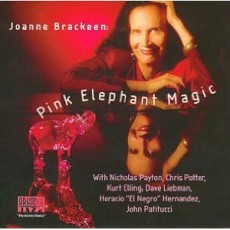
Joanne Brackeen was born Joanne Grogan on July 26, 1938 in Ventura, California but has used her married name throughout her career. The pianist and music educator attended the Los Angeles Conservatory of Music, but devoted her talents to jazz by imitating Frankie Carle albums. She was greatly influenced by Charlie Parker and bebop.
Her career began in the late 1950s while working with names like Dexter Gordon, Teddy Edwards, Harold Land, Don Cherry, Charlie Haden and Charles Lloyd. In 1969 Brackeen began to “take off” as she became the first woman to join Art Blakey’s Jazz Messengers.
In the 70s Joanne he played with Joe Henderson (1972-75) and Stan Getz (1975-1977) before leading her own trio and quartet. Brackeen established herself as a cutting edge pianist and composer through her appearances around the world, and her solo performances also cemented her reputation as one of the most innovative and dynamic of pianists. Her trios featured such noted players as Clint Houston, Eddie Gomez, John Patitucci, Jack DeJohnette, Cecil McBee and Billy Hart.
She has served on the grant panel for the National Endowment for the Arts, toured the Middle East with the US State Department as sponsor, had solo performances at Carnegie Hall and is a professor at the Berklee College of Music. With 25 albums to her credit, pianist Joanne Brackeen continues to perform and record.
More Posts: piano
Daily Dose Of Jazz…
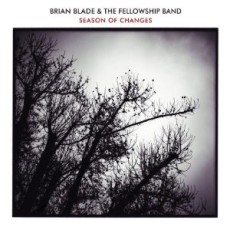
Brian Blade was born July 25, 1970 in Shreveport, Louisiana. The first music he experienced was gospel and songs of praise at the Zion Baptist Church pastored by his father, Brady L. Blade. Elementary school music appreciation classes were an important part of his development and at age nine, he began playing the violin. Inspired by his older brother, Brady, who had been the church drummer, he shifted his focus to the drums throughout middle and high school.
During high school Brian began listening to the music of John Coltrane, Charlie Parker, Miles Davis, Art Blakey, Thelonious Monk, Elvin Jones and Joni Mitchell. Upon graduation he attended Loyola University from 1988 through 1993, studying and playing with most of the master musicians living in New Orleans, such as Ellis Marsalis, George French and Alvin Red Taylor.
As a bandleader, he has released three albums under Brian Blade & the Fellowship Band and In conjunction with his leader duties Blade has been a member of Wayne Shorter’s most recent quartet and continues to record and perform with the likes of Joni Mitchell, Bill Frisell, Ellis Marsalis, Norah Jones, Emmylou Harris, Daniel Lanois, Bob Dylan, Dorothy Scott, Billy Childs, Chris Potter and David Binney, just to name a few. He has recorded for Verve, Columbia, Blue Note, Warner and Nonesuch record labels, and continues to amass a prestigious catalogue as a sideman and leader.
More Posts: drums
Daily Dose Of Jazz…
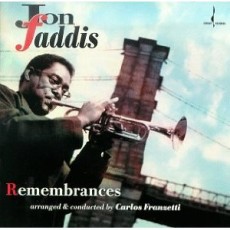
Jon Faddis was born July 24, 1953 in Oakland, California and studied music and trumpet as a child. At 18, he joined Lionel Hampton’s big band followed with tenure in the Thad Jones/Mel Lewis Orchestra as lead trumpet. After playing with Charles Mingus, he became a noted studio musician in New York, appearing on many pop recordings in the late 1970s and early 1980s.
The mid-Eighties saw Jon leaving the studios to pursue his solo career, which resulted in albums like Legacy, Into The Faddisphere and Hornucopia. Becoming the director and main trumpet soloist of the Dizzy Gillespie 70th Birthday Big Band and Dizzy’s United Nation Orchestra, in 1992 he began leading the Carnegie Hall Jazz Band at Carnegie Hall, conducting over 40 concerts in ten years.
Faddis has led the Dizzy Gillespie Alumni All-Stars and the Dizzy Gillespie Alumni All-Stars Big Band, was appointed artistic director of the Chicago Jazz Ensemble, heads the Jon Faddis Jazz Orchestra of New York. As an educator he teaches at The Conservatory of Music at Purchase College-SUNY and is a guest lecturer at Columbia College Chicago.
A jazz trumpeter, conductor, composer, and educator renowned for both his highly virtuosic command of the instrument and for his expertise in the field of music education, trumpeter Jon Faddis also leads master classes, clinics and workshops around the world often bringing promising students along to his gigs to sit in, and has produced a number of CDs for up-and-coming musicians.
More Posts: trumpet
Daily Dose Of Jazz…
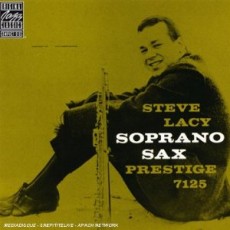
Steve Lacy was born Steven Norman Lackritz on July 23, 1934 in New York City. He didn’t begin his career until age sixteen, coming to prominence in the 1950s as a progressive Dixieland musician playing with the likes of Henry “Red” Allen, Pee Wee Russell, George ”Pops Foster and Zutty Singleton, as well as Kansas City jazz musicians like Buck Clayton, Dicky Wells and Jimmy Rushing.
Working extensively in experimental jazz and dabbling in free improvisation, Lacy’s music was typically melodic and tightly structured over a long and prolific career. He became involved with the avant-garde, performed on “Jazz Advance” in 1956, the debut album of Cecil Taylor, and appeared with his groundbreaking quartet at the 1957 Newport Jazz Festival.
Steve made a notable appearance on an early Gil Evans album, however, his most enduring relationship, however, was with the music of Thelonious Monk, his first recorded album in 1958 as a leader “Reflections” featured only Monk compositions. He briefly played in Monk’s band in 1960 and later on Monk’s Columbia session “Big Band/Quartet” in 1963.
Monk tunes became a permanent part of his repertoire, making an appearance in virtually every concert appearance and on his albums. He often collaborated with trombonist Roswell Rudd in presenting interpretations of Monk, Mingus, Ellington and Herbie Nichols’ compositions, rarely playing standard popular or show tunes. In the 1960s he continued to work with other players involved in the American free-jazz avant-garde, and in the Seventies immersed in the European free improvisation scene that would remain an important element in his work thereafter.
Steve became a highly distinctive composer with his signature simplicity of style. He became a widely respected figure on the European jazz scene for several decades, was the recipient of a MacArthur Fellowship, began teaching at the New England Conservatory of Music in Boston and performed one of his last public performances in front of 25,000 people at the close of a peace rally on Boston Common in 2003.
Steve Lacy, soprano saxophonist, was diagnosed with cancer continued playing and teaching until weeks before his death on June 4, 2004 at the age of 69.
More Posts: saxophone