

Daily Dose Of Jazz…
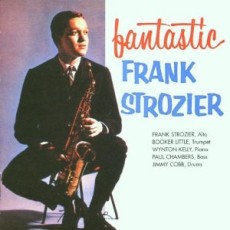
Frank Strozier was born on June 13, 1937 in Memphis, Tennessee. He played with other hometown musicians in his youth and continued even after his move to Chicago in 1954 including Harold Mabern, Booker Little and George Coleman.
A renowned hard bop alto saxophonist who never got the recognition he deserved he did lead recording sessions for Vee-Jay Records and recorded with the MJT+3 from 1959-1960. After moving to New York, Frank was briefly with the Miles Davis Quintet in 1963, between the tenures of Hank Mobley and George Coleman. During this period he also gigged with Roy Haynes.
Strozier relocated to Los Angeles working with Chet Baker, Shelly Manne and most notably with the Don Ellis big band where he executed a memorable solo on “K.C. Blues” on the “Autumn” album. Returned to New York in 1971 he worked with the Jazz Contemporaries, the New York Jazz Repertory Company, Horace Parlan and Woody Shaw among others,.
Frustrated with lack of work, Frank would reappear from time to time as a piano player but with little results. His last recordings were in 1977 and he left a limited catalogue of seven albums as a leader and another 15 as a sideman.
More Posts: saxophone
Daily Dose Of Jazz…
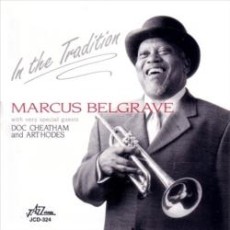
Marcus Belgrave was born June 12, 1936 in Chester, Pennsylvania and was tutored on trumpet by Clifford Brown when he was 17. Belgrave toured with Ray Charles from 1954-59 and later played with Charles Mingus and Max Roach.
In 1963 Marcus moved to Detroit and established himself as an educator and studio musician. He has recorded with Motown and Blue Note Record labels, The Lincoln Center Jazz Orchestra, Tony Bennett, Sammy Davis Jr., Dizzy Gillespie, Ella Fitzgerald and a host of other luminaries in jazz.
His reputation as a clinician and instructor led Marcus to cultivate young jazz talent over the years like Regina Carter, Rodney Whitaker, Kenny Garrett, James Carter, Geri Allen, Bob Hurst, Carlos McKinney and Karriem Riggins.
In 2006 he lent his expertise to the Young Musicians Program (YMP) summer program at the University of California Berkeley helping out student with coaching and private lessons. He was a frequent faculty member at Stanford Jazz Workshop and was a visiting professor of jazz trumpet at the Oberlin Conservatory.
Trumpeter Marcus Belgrave transitioned on May 23, 2015, in Ann Arbor, Michigan of heart failure after being hospitalized since April with complications of chronic obstructive pulmonary disease and congestive heart failure.
More Posts: trumpet
Daily Dose Of Jazz…
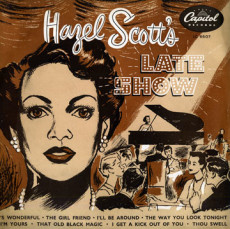
Hazel Dorothy Scott was born on June 11, 1920 in Port of Spain, Trinidad but was raised in New York City from age four. Performing extensively as a child pianist, she trained at Julliard and appeared in the 1942 production of Priorities and performed numerous times at Carnegie Hall.
A jazz and classical pianist and singer, Scott was known for improvising on classical themes and also played boogie-woogie, blues, and ballads. She was the first woman of color to have her own television series “The Hazel Scott Show” that premiered on the Dumont Television Network on July 3, 1950. However, due to her public opposition to McCarthyism and racial segregation the show was canceled in 1950 when she was accused of being a Communist sympathizer; the final broadcast was September 29, 1950.
The talented Hazel went on to have a brief motion picture career included films Something To Shout About, I Dood It, Broadway Rhythm, The Heat’s On and Rhapsody In Blue. Her album Relaxed Piano Moods on the Debut Record label with Charles Mingus and Max Roach is the album critics hold in high regard.
She married U.S. Congressman Adam Clayton Jr., a union that lasted from 1945 to 1956 and produced one child, Adam III. Pianist and vocalist Hazel Scott passed away of pancreatic cancer in New York City on October 2, 1981. She was 61 years old.

Daily Dose Of Jazz…
Charnett Moffett was born June 10, 1967 in New York City. His first name is a combination of his father’s name, drummer Charles Moffett and that of Ornette Coleman. Taking up the bass in his childhood, he attended Fiorello H. La Guardia High School for Music and Arts in New York City, later studied at Mannes College of Music and the Juilliard School of Music.
In 1983, he played on saxophonist Branford Marsalis’ debut as a leader, Scenes in the City, and the following year he joined the Wynton Marsalis quintet, appearing on the1985 acclaimed Black Codes (From the Underground). During the Eighties, he also played on Stanley Jordan’s best-selling 1985 Blue Note debut, Magic Touch, and went on to play with Tony Williams on two Blue Note albums.
In 1987, Moffett signed with Blue Note Records and debuted as a leader that year with his first of three albums for the label, Beauty Within, which featured his father and older brothers Codaryl Moffett on drums and Mondre Moffett on trumpet, Kenny Garrett on alto saxophone, and Stanley Jordan on guitar.
This led to a career as a free-lance bassist, performing and recording with Stanley Jordan, Ornette Coleman, McCoy Tyner, Kenny Garrett, Mulgrew Miller, Courtney Pine, Arturo Sandoval, Lew Soloff and Sonny Sharrock.
Charles Moffett, who plays the bass, piccolo bass, double bass, bass guitar has played and recorded as a leader in addition to Blue Note with Manhattan, Evidence and Piadrum record labels. With eleven albums under his belt as a leader and set to release an album for Motema, the former member of the Manhattan Jazz Quintet is currently performing with Melody Gardot.
More Posts: bass

Daily Dose Of Jazz…
Kenny Barron was born June 9, 1943 in Philadelphia, Pennsylvania, the younger brother of the late tenor saxophonist Bill Barron. Starting on piano at 12, by 1957 he was playing in with Mel Melvin’s R& B band. By the time he turned 18, he was living in New York and playing with the likes of James Moody, Lee Morgan, Roy Haynes and Lou Donaldson. From 1962 to 1966 he was a member of Dizzy Gillespie’s quartet, followed by stints with Freddie Hubbard, Yusef Lateef, Stanley Turrentine, Milt Jackson, Buddy Rich and Ron Carter.
In the Eighties, Barron along with Buster Williams, Ben Riley and Charlie Rouse co-founded the quartet Sphere, focusing on music composed by Thelonious Monk and original compositions inspired by him. He has also co-led the Classical Jazz Quartet and led his own trios and quintets with a multitude of players.
Kenny recorded several albums with Stan Getz between 1987 and 1991 including his last duet project. He has been nominated for a Grammy nine times often for both album and solo performance, he consistently wins jazz critics and readers polls for Down Beat, Jazz Times and Jazziz magazines and is a six time recipient of Best Pianist by the Jazz Journalists Association.
Known for his lyrical, adaptive style, Barron is the pianist of choice for the most prestigious jazz musicians in the world. In 2005 he was inducted into the American Jazz Hall of Fame, won the MAC Lifetime Achievement Award and in 2010 was honored as a National Endowment for the Arts Jazz Master.
For over 25 years, Barron taught piano and keyboard harmony at Rutgers University in New Jersey mentoring young musicians like David Sanchez, Terence Blanchard and Regina Bell. He now teaches at the Manhattan School of Music, has recorded nearly four dozen albums as a leader and many more as a sideman with jazz greats such as Ella Fitzgerald, Booker Ervin, Roy Haynes, Joe Henderson, Bobby Hutcherson, Elvin Jones, Yusef Lateef and James Moody. He continues to perform, record and tour with his newest quintet “Brazilia” featuring some of Brazil’s greatest musicians.

More Posts: piano