Daily Dose Of Jazz…
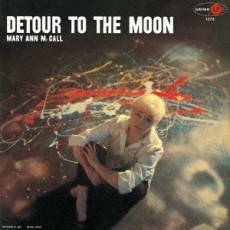
Mary Ann McCall was born on May 4, 1919 in Philadelphia, Pennsylvania and started her music career singing middle-of-the-road pop but quickly grew into a respected jazz singer. She started out singing and dancing in Philly with Buddy Morrow’s Orchestra followed by brief stints with Tommy Dorsey and Woody Herman in 1938 and ’39 respectively, and then Charlie Barnett until 1940.
During the forties Mary Ann reconnected with Woody Herman and recorded notable tunes “Wrap Your Troubles In Dreams” and “Detour Ahead”. She went on to work with the Ralph Burns Orchestra, Tommy Reynolds and Teddy Powell and in 1949 she won the Down Beat Readers Poll for Girl Singer (with Band).
In the 50’s McCall she recorded several albums as a leader working with Charlie Ventura, Teddy Charles, Phil Moore and Ernie Wilkins. By the end of the decade her flame had started to fade singing in Detroit and then relocating to Los Angeles where she performed intermittently. In the seventies she re-emerged to record with Jake Hanna and Nat Pierce and in 1987 she came out of retirement to perform at a Woody Herman tribute concert a few days before his death.
Vocalist Mary Ann McCall passed away on December 14, 1994 in Los Angeles, California.
More Posts: vocal
Daily Dose Of Jazz…
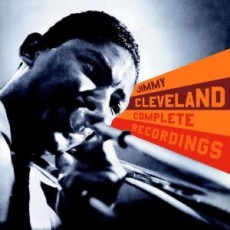
Jimmy Cleveland was born May 3, 1926 in Wartrace, Tennessee but didn’t start playing the trombone until he was sixteen. His first important gig didn’t happen until 1950 with Lionel Hampton and a subsequent European tour.
Leaving Hampton in 1953, Cleveland went to moved to New York and became a successful freelance musician recoding with the likes of Dizzy Gillespie, Gil Evans, Oliver Nelson, Antonio Carlos Jobim, Sarah Vaughan, Gigi Gryce, Oscar Pettiford, Lucky Thompson, James Moody and Gerry Mulligan.
As a leader Jimmy recorded a series of albums for EmArcy/Mercury records in the ‘50s and later in the decade toured Europe once again this time with Quincy Jones and in 1967 recorded with Thelonious Monk. He moved to Los Angeles to work with the Merv Griffin show and continued recording with Quincy.
Although he moved into a season of obscurity once he moved to the West coast, he continued to play till shortly before his death on August 23, 2008 in Lynwood, California at age 82. Jimmy Cleveland remains one of the most technically skilled of the bop-based jazz trombonists.

More Posts: trombone
Daily Dose Of Jazz…
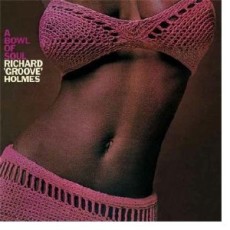
Richard Arnold “Groove” Holmes was born in Camden, New Jersey on May 2, 1931. A self-taught organist, he began his early career working along the East coast. It wasn’t until a recording session with Les McCann and Ben Webster in 1961 that widespread interest was piqued in his work.
Touring and recording throughout the 60s he achieved important recognition and acceptance amongst mainstream and post-bop jazz audiences. His landmark recording of “Misty” brought him critical acclaim and is considered by some a precursor of acid jazz.
He developed a solid relationship with Gene Ammons and their playing exemplified the soul-heavy organ-tenor playing that proliferated the decade. He played with big bands including one led by Gerald Wilson and recorded with Dakota Staton, Houston Person and Jimmy Witherspoon among others.
His sound was immediately recognizable in the upper register, but even more so because of his virtuosity in creating, undoubtedly, the most rapid, punctuating, and pulsating bass lines of all the jazz organists. He stands alongside the elite of jazz organists Jimmy Smith, Brother Jack McDuff and Jimmy McGriff for his contributions to the instrument and music.
Performing to the end of life, his last concerts in a wheelchair, organist Richard “Groove” Holmes, revered in soul-jazz circles died of a heart attack on June 29, 1991 in St. Louis, Missouri after a long struggle with prostate cancer.
More Posts: organ
Daily Dose Of Jazz…
Hayes Alvis was born on May 1, 1907 in Chicago, Illinois. He started his career playing drums but switched to tuba and bass after playing with Jelly Roll Morton in 1927-28. He played tuba and arranged for Earl Hines from 1928 to 1930.
Moving to New York City in 1931 Hayes played with Jimmie Noone in the Mills Blue Rhythm Band from 1931-34 and 1936. A very early double-bass solo can be heard on his 1932 recording “Rhythm Spasm”. He also occasionally played baritone saxophone in this ensemble as well, and was the group’s tour manager. From 1935 to 1938 Alvis played with Duke Ellington, working with fellow bassist/tubist Billy Taylor.
After his stint with Ellington, Alvis played with Benny Carter, Joe Sullivan and Louis Armstrong, replacing Pops Foster. From 1942 to 1945 he played in the Army band led by Sy Oliver. After the war, he played with Dave Martin until 1947, and then took a longstanding run as a house musician at the Cafe Society in New York City.
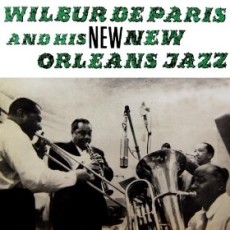
In the 1950s, he played in various swing and Dixieland revival groups, including Wilbur De Paris’s New Orleans Jazz. In the early seventies he played in a trio with Jay McShann and Tiny Grimes.
Never recording as a leader, bassist, tubist and sideman Alvis Hayes died in New York City on December 30, 1972 at the age of 65.
Daily Dose Of Jazz…
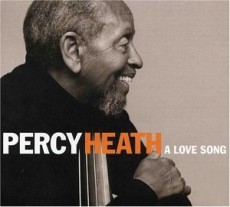
Percy Heath was born on April 30, 1923 in Wilmington, N.C. but was raised in Philadelphia. The second of four children, he was the brother of saxophonist Jimmy Heath and drummer Albert “Tootie” Heath. With music in the house, as a child Percy started playing violin at eight but it wasn’t until after serving as a Tuskegee Airman during WWII that he took up the bass. After a stint in music school he was playing in Philly clubs, ventured to Chicago in 1948 to record a Milt Jackson session with his brother. Moving to New York he worked with Joe Morris, Johnny Griffin and Dizzy Gillespie.
Working with Dizzy were pianist John Lewis, drummer Kenny Clarke, vibist Milt Jackson and bassist Ray Brown who would become the Modern Jazz Quartet. When Ray decided to leave to become a part of his wife Ella Fitzgerald’s band, Percy stepped into the position and the MJQ was officially launched in 1952, with Connie Kay replacing Clarke shortly after.
In 1975 along with brothers Jimmy and Albert and Stanley Cowell, he formed the Heath Brothers, sometimes playing cello when recording a series of albums. Over the course of his lifetime he played and recorded with such notables as Miles Davis, Charlie Parker, Wes Montgomery, Thelonious Monk and Dizzy Gillespie.
After a second bout with bone cancer Percy Heath passed away on April 28, 2005 in Southampton, New York. His final recording A Love Song garnered critical acclaim and was a fitting tribute to his long and illustrious career.