

Daily Dose Of Jazz…
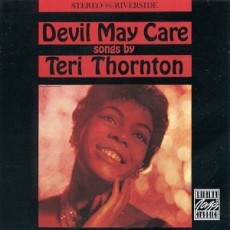
Teri Thornton was born Shirley Enid Avery on September 1, 1934 in Detroit, Michigan. Encouraged by her mother to study classical music, as a teenager she turned to jazz, singing and playing piano. Thornton first performed in local Detroit clubs in the 1950s but her debut as a professional took place at the Ebony Club in Cleveland, Ohio. She moved to Chicago, Illinois and worked with Cannonball Adderley and Johnny Griffin Her debut release of “Devil May Care ” in 1961 for Riverside brought her national attention, with and a subsequent move to New York City where she established herself on the jazz and club scene. She would go on to work with Duke Ellington and Clark Terry.
Scoring her biggest hit with the theme to the television show Naked City “Somewhere in the Night ” in 1963, she would next appear on the Ed Sullivan Show, get a recording contract from Columbia Records and receive a personal stamp of approval from Ella Fitzgerald as her favorite singer. Thornton also found work during this period singing for television ads and recording for several different labels.
By the late Sixties, Teri faded from public view, due to poor managers, alcohol, drugs and her unfailing dedication to taking care of her children. She moved to Los Angeles and it wasn’t until 1979 that she reemerged singing in small piano bars. It was decades later that she was discovered to have been singing on various song poem records in Los Angeles on the Preview label as “Teri Summers.”
Teri moved back to New York in 1983 and once again started performing on the club circuit. In 1998 she fully revived her career after a surprise win at the Thelonious Monk Institute of Jazz Vocal Competition. Thornton signed with Verve Records, releasing I’ll Be Easy to Find. Fame short-lived however, diagnosed with bladder cancer, jazz vocalist Teri Thornton passed away of the disease on May 2, 2000 in Englewood, New Jersey.
More Posts: vocal

Daily Dose Of Jazz…
Tineke Postma was born on August 31, 1978 in Heereveen, The Netherlands. At the age of eleven she began playing the saxophone and studied at the Amsterdam Conservatory. Graduating the conservatory in 2003, Tineke received a Masters from the Manhattan School of Music in New York and during this period of her education Tineke was taught by David Liebman, Dick Oatts and Chris Potter. She has been teaching at the Amsterdam Conservatory since 2005.
Performing internationally the saxophonist and composer has worked with Esperanza Spaulding, Terri Lyne Carrington and Wayne Shorter; she has received numerous recognitions from Down Beat Poll, won the Dutch Edison Award, the Jazz Juan Revelations Award, the Midem International Jazz Revelation of the Year Award and The Sisters in Jazz All Star Award.
Postma leads the Tineke Postma Quartet and The Tineke Postma International Quartet featuring Geri Allen on piano, Scott Colley on bass and Terri Lyne Carrington on drums. They have played festivals around the globe and recorded five albums under the leaders name. Postma has recorded as a sideman and collaborator and continues to compose, perform and tour.
More Posts: saxophone
Daily Dose Of Jazz…
Jewel Brown was born on August 30, 1937 in Houston, Texas and her first professional performance was at the age of 12 in the Manhattan Club in Galveston, Texas. Before she graduated from Jack Yates High School Lionel Hampton heard her sing and offered the opportunity to tour professionally in Europe.
In 1957 while on a vacation in Los Angeles, California, Jewel sat in with organist Earl Grant at the Club Pigalle and he hired her that night. Their collaboration lasted for a year. She went on to work for nightclub owner Jack Ruby in Dallas, Texas.
In the Sixties she was offered singing positions with Duke Ellington and Louis Armstrong, and she chose the later, appearing with Armstrong in the films, “Louis Armstrong and All Stars” and “Solo”.
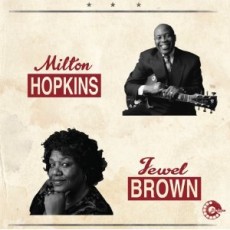
Brown recorded an exuberant solo of “Jerry” and vocal backup and “twist choreography” on “When the Saints” on the 1962 live performance “Jazz Festival, Vol. 1 with ‘Louis Armstrong All Stars”, “With Louis Armstrong: Best Live Concert 1: Jazz In Paris” and also recorded with Milton Hopkins.
She retired in 1971 to care for ailing members of her family, establishing a successful hair salon in Houston. In recent years she has revived her career, singing in the Heritage Hall Jazz Band. Vocalist Jewel Brown’s publicist announced her death from colon cancer on June 26, 2024 at the age of 86.
More Posts: vocal
Daily Dose Of Jazz…
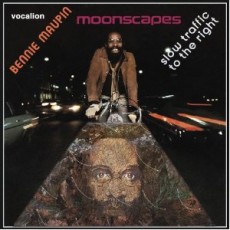
Bennie Maupin was born on August 29, 1940 in Detroit, Michigan and undertook extensive instrumental studies, both privately and at the Detroit Institute of Musical Art from age 14 until 1962. During this period his influences were Yusef Lateef, Wayne Shorter, John Coltrane and Sonny Rollins. By 1966 he was working with Roy Haynes followed by a two-year tenure with Horace Silver in ’68.
Maupin joined Herbie Hancock’s Mwandishi sextet and his Headhunters band, and then joined Miles Davis for the recording of Bitches Brew. He has also performed on several Meat Beat Manifesto albums.
Bennie is noted for having a harmonically advanced, “out” improvisation style, and as a composer, he has the ability to create brief melodies and song forms that create vast landscapes for improvisation.
Multireedist Bennie Maupin was also a member of the group “Almanac” with Cecil McBee, has recorded a half dozen albums as a leader and another two-dozen as a sideman. He has worked with the likes of Lee Morgan, Eddie Henderson, Marion Brown, John Beasley, Mike Clark, Jack DeJohnette, Darek Oles, Lonnie Smith, McCoy Tyner and Lenny White. He appears in the 2016 biopic I Called Him Morgan about trumpeter Lee Morgan and continues to pursue his career in music from jazz to rock to abstraction.
In January 2025 he lost his home, instruments, and other belongings in the Eaton Wild Fire in Los Angeles, California. Flutist, clarinetist and saxophonist Bennie Maupin continues to perform and record.
Daily Dose Of Jazz…
Larry Goldings was born on August 28, 1968 in Boston, Massachusetts and Larry studied classical piano until the age of twelve. While in high school he attended a program at the Eastman School of Music and during this period Errol Garner, Oscar Peterson, Dave McKenna, Red Garland and Bill Evans were prime influences. As a young teenager, Larry studied privately with Ran Blake and Keith Jarrett.
Goldings moved to New York in 1986 to attend The New School and while in college he studied piano with Jaki Byard and Fred Hersch. As a freshman he traveled to Copenhagen with Sir Roland Hanna and played piano with Sarah Vaughan, Harry Sweets Edison and Al Cohn. His later college years saw him touring worldwide with Jon Hendricks and subsequent collaboration with guitarist Jim Hall.
In 1988, Larry started developing his organ style while gigging at Augie’s (now Smoke) in New York City. His 1991 debut release was Intimacy Of The Blues and since then has performed and/or recorded with Charlie Haden, Jack Dejohnette, Carla Bley, Pat Metheny, Madeleine Peyroux, Michael Brecker, Luciana Souza, Steve Gadd, Melody Gardot, David Sanborn, Al Jarreau, Sia, John Scofield and India.Arie to name a few.
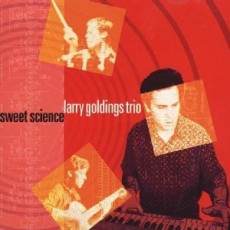
Pianist, organist, producer/arranger and composer Larry Goldings has 16 albums as a leader, eighty-four as a sideman, half dozen film and tv credits, has been nominated for a “Best Jazz Album of the Year” Grammy, has twice been a Jazz Journalist Association Winner “Best Organist/Keyboardist of the Year”, has won The New Yorker Magazine Best Jazz Albums for Awareness and Big Stuff. His latest released this year is Rhombus, with Peter Bernstein and Bill Stewart, proves that he continues to compose, perform, tour and record.