

Daily Dose Of Jazz…
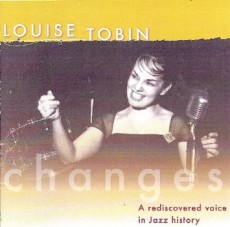
Born Mary Louise Tobin on November 14, 1918 in Aubrey, Texas and at age fourteen in 1932 she won a CBS Radio Talent Contest. Following a tour with society dance orchestras in Texas, she joined Art Hicks and his Orchestra in 1934. At that time, Harry James was playing first trumpet in the band and a year later she and James were married.
Tobin brought Frank Sinatra to James’ attention in 1939 after hearing him sing on the radio. James subsequently signed Sinatra to a one-year contract at $75 a week. While she was singing with trumpeter Bobby Hackett at Nick’s in the Village, jazz critic and producer John Hammond heard her and brought Benny Goodman to a performance and soon joined the Goodman band.
Louise went on to record There’ll Be Some Changes Made, Scatterbrain, Comes Love, Love Never Went To College, What’s New? and Blue Orchids. Johnny Mercer wrote Louise Tobin Blues for her while she was with Goodman and was arranged by Fletcher Henderson. In 1940 Tobin recorded Deed I Do and Don’t Let It Get You Down with Will Bradley and His Orchestra.
By 1945 Tobin was recording with Tommy Jones and His Orchestra, Emil Coleman and His Orchestra and through the decade performed and recorded with Skippy Anderson’s Band at the Melodee Club in Los Angeles, and with Ziggy Elman and His Orchestra.
Taking a long hiatus to raise her children, Louise came back in 1962 at the Newport Jazz Festival, met second husband Peanuts Hucko, acquired a regular gig at Blues Alley on Washington, DC and moved to Denver, Colorado and opened the Navarre Club as co-owners. They would go on to lead and sing with the Glenn Miller Orchestra, touring worldwide with Louise singing and recording various numbers with the band.
In 2008 Tobin donated her extensive collection of original musical arrangements, press clippings, programs, recordings, playbills and photographs to create the Tobin-Hucko Jazz Collection at Texas A&M University-Commerce.

Give A Gift Of Jazz – Share
More Posts: vocal
Daily Dose Of Jazz…
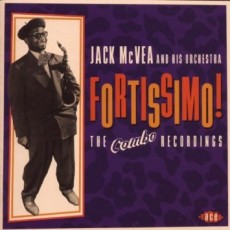
Jack McVea was born in Los Angeles, California on November 5, 1914. His first instrument was a banjo, learning from his father Satchel, who was a noted banjoist. After playing jazz in Los Angeles for several years, he joined Lionel Hampton’s orchestra in 1940. From 1944 on he mostly worked as a leader, but impressively performed as a sideman in those years was at the first Jazz at the Philharmonic concert in 1944.
McVea was leader of the Black & White Records studio band and was responsible for coming up with the musical riff for the words Open the Door, Richard and Ralph Bass got him to record it in 1946. It became immensely popular, entering the national charts the following year, and was recorded by many other artists.
From 1966 till his retirement in 1992 he led a group that played Dixieland jazz in New Orleans Square at Disneyland, called The Royal Street Bachelors. When formed, the trio consisted of McVea on clarinet, Herman Mitchell on banjo, and Ernie McLean on guitar and banjo.
In 1945 he played tenor saxophone in a recording session for Slim Gaillard alongside Charlie Parker and Dizzy Gillespie. He is also known for his playing on T-Bone Walker’s Call It Stormy Monday (But Tuesday Is Just As Bad, and has performed and recorded with B. B. King.
Tenor and baritone saxophonist Jack McVea, who also played clarinet in the swing, blues and rhythm and blues genres, passed away on December 27, 2000. He was 86.
Dose A Day – Blues Away
Daily Dose Of Jazz…
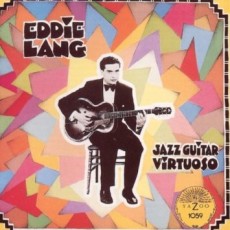
Eddie Lang was born Salvatore Massaro on October 25, 1902 in Philadelphia, Pennsylvania. He first took violin lessons for 11 years and while in school he became friends with Joe Venuti, with whom he would work for much of his career. By the time he was 16 he was playing violin, banjo and guitar professionally. He worked with various bands in the Northeast United States, worked in London between late 1924 to early 1925, and then settled in New York City.
By 1927 Lang was being featured along with cornetist Bix Beiderbecke on the recording of Singin’ the Blues by Frankie Trumbauer and His Orchestra. Between the two trading licks and soloing this session became a landmark jazz recording of the decade. 1929 saw him joining Paul Whiteman’s Orchestra and performing in the movie King of Jazz. The following year he played guitar on the original recording of the jazz and pop standard Georgia On My Mind recording with Hoagy Carmichael and His Orchestra with Joe Venuti and Bix Beiderbecke.
Eddie would leave Whiteman’s band with Bing Crosby and as his accompanist was back in the movies with Big Broadcast. Switching gears to play blues he recorded under the pseudonym Blind Willie Dunn on a number of blues records with Lonnie Johnson. Over the course of his short career he composed some three-dozen songs and recorded with the bands of Joe Venuti, Frank Signorelli, Adrian Rollini, Roger Wolfe Kahn, Jean Goldkette, in addition to doing a large amount of freelance radio and recording work.
Guitarist Eddie Lang, who was one of the three major innovators of jazz guitar and who influenced future guitarists, such as Django Reinhardt, passed away following a tonsillectomy in New York City on March 26, 1933 at the age of thirty. He had been urged by Crosby to have the tonsillectomy so that he might have speaking parts in Crosby’s films. His voice was chronically hoarse, and it was hoped that the operation would remedy this.
His recording of Singin’ The Blues with Frankie Trumbauer and His Orchestra was inducted into the Grammy Hall of Fame and has been placed on the U.S. Library of Congress National Recording Registry. He has been inducted into the Big Band and Jazz Hall of Fame, is one of the ASCAP Jazz Wall of Fame inductees.
Give The Gift Of Knowledge
More Posts: guitar
Daily Dose Of Jazz…
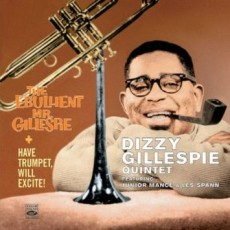
Dizzy Gillespie was born John Birks Gillespie on October 21, 1917 in Cheraw, South Carolina, the youngest of nine children of James and Lottie Gillespie. His father, a local bandleader, made instruments available to the children. He started playing the piano at the age of four and taught himself how to play the trombone as well as the trumpet by the age of twelve. From the night he heard his idol, Roy Eldridge, play on the radio, he dreamed of becoming a jazz musician. Receiving a music scholarship to the Laurinburg Institute in North Carolina, he attended for two years before accompanying his family when they moved to Philadelphia.
Gillespie’s first professional job was with the Frank Fairfax Orchestra in 1935, after which he joined the respective orchestras of Edgar Hayes and Teddy Hill, essentially replacing Roy Eldridge as first trumpet in 1937 and making his first recording as part of the band on King Porter Stomp. He would move on to play with Cab Calloway, alongside Cozy Cole, Milt Hinton and Jonah Jones until an altercation with Calloway got him fired. During his period he started writing big band music for bandleaders like Woody Herman and Jimmy Dorsey while freelancing with a few bands – most notably Ella Fitzgerald’s orchestra, comprised of members of the late Chick Webb’s band, in 1942. Avoiding service in World War II, he joined the Earl Hines band followed by a stint with Billy Eckstine’s big band, got reunited with Charlie Parker and finally left to play with a small combo of quintet size.
A forerunner of the evolution of bebop along with Parker, Monk, Bud Powell, Kenny Clarke, and Oscar Pettiford, Dizzy helped shape a new vocabulary of musical phrases. They jammed at Minton’s Playhouse and Monroe’s Uptown House with compositions like Groovin’ High, Woody ‘n’ You, Salt Peanuts and A Night In Tunisia that also introduced Afro-Cuban rhythms.
As an educator Gillespie taught or influenced many of the young musicians on 52nd Street including Miles Davis, Max Roach, Fats Navarro, Clifford Brown, Lee Morgan, Chuck Mangione and even balladeer Johnny Hartman about the new style of jazz, but after ambivalent or hostile reception in Billy Berg’s Los Angeles club, he decided to lead his own big band, though unsuccessful at his first attempt in 1945. He went on to work with Milt Jackson, John Coltrane, Lalo Schifrin, Ray Brown, Kenny Clarke, James Moody, J.J. Johnson and Yusef Lateef, whole appearing as a soloist for Norman Granz’s Jazz at the Philharmonic.
In 1948 Dizzy lost his ability to hit the B-flat above high C due to an automobile hitting the bicycle he was riding. He won the case, but the jury awarded him only $1000, in view of his high earnings up to that point. Not to be sidelined, he went on tour for the State Department earning himself the title Ambassador of Jazz. His new big band would tour the U.S. and record a live album at the 1957 Newport Jazz Festival and featured pianist Mary Lou Williams.
Dizzy immersed himself in the Afro-Cuban movement and hired Chano Pozo and Mario Bauza to play in his bands on 52nd Street, the Palladium and the Apollo Theater. He co-wrote with Pozo the songs Manteca and Tin Tin Deo, commissioned George Russell’s Cubano Be, Cubano Bop, and discovered Arturo Sandoval while on a music researching trip to Cuba.
As his tone gradually faded in the last years in life his performances often focused more on his protégés, such as, Arturo Sandoval and Jon Faddis, all the while keeping his good-humored comedic routines a part of his live act. Dizzy would go on to give 300 performances in 27 countries, appeared in 100 U.S. cities in 31 states and the District of Columbia, headline three television specials, performed with two symphonies, and recorded four albums.
Gillespie put himself on the ballot as a write-in candidate of the 1964 Presidential election, published his autobiography, To Be or Not To Bop, was a vocal fixture in many of the John & Faith Hubley’s animated films, such as The Hole, The Hat and Voyage to Next. He led the United Nation Orchestra, toured with Flora Purim and David Sanchez in his band, received Grammy nominations, guested on The Muppet Show, Sesame Street and The Cosby Show and had a cameo on Stevie Wonder’s hit Do I Do and Quincy Jones’ Back On The Block.
Inducted into the Down Beat Magazine’s Jazz Hall of Fame, Dizzy was also honored by being crowned a traditional chief in Nigeria, received the Ordre des Arts et des Lettres from France, and was named Regent Professor by the university of California, received fourteen honorary doctorates, received a Grammy Lifetime Achievement Award, the Polar Music Prize, a Hollywood Walk of Fame Star, the Kennedy Center Honors Award, and the Ameican Society of Composers, Authors and Publishers Duke Ellington Award for 50 years of achievement. Composer, performer, bandleader and trumpeter Dizzy Gillespie passed away of pancreatic cancer on January 6, 1993 in Englewood, New Jersey at the age of 75. In 2014, Gillespie was inducted into the New Jersey Hall of Fame.
Inspire A Young Mind
More Posts: trumpet
Daily Dose Of Jazz…
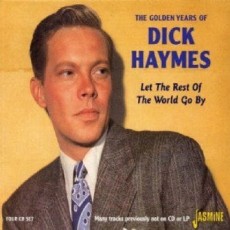
Richard Benjamin “Dick” Haymes was born on September 13, 1918 in Buenos Aires, Argentina. His mother was a well-known vocal coach and instructor and he became a vocalist in a number of big bands, worked in Hollywood, on radio, and in films throughout the 1940s and1950s.
Though never achieving the immensely popular status of fellow baritone crooners like Bing Crosby, Frank Sinatra or Perry Como was nonetheless just as respected for his musical ability. In 1942, Sinatra introduced him on the radio as his replacement in the Tommy Dorsey band, but prior to joining Dorsey’s group, he sang with the Harry James Orchestra.
Teaming with female vocalist Helen Forrest, they made numeroous hit duets during World War II, including Together, I’ll Buy That Dream, and Long Ago and Far Away, and he sang with Judy Garland on two Decca recordings of songs from the film The Shocking Miss Pilgrim, in which he appeared with Betty Grable. Haymes paired with the Andrew Sisters on a dozen or so Decca collaborations, including Teresa, Great Day, My Sin and Here In My Heart, backed by Nelson Riddle’s lush strings.
He joined Bing Crosby and The Andrews Sisters for 1947 session that produced the Billboard hit There’s No Business Like Show Business as well as Anything You Can Do (I Can Do Better). Between 1949 and 1950 Dick hosted Club Fifteen with the sisters.
In 1953, he nearly got deported for traveling to Hawaii, then a territory, without notifying the authorities, but eventually won his case to stay in the States. Falling on hard times financially by the 1960s he declared bankruptcy with a half million in debt. He appeared as unscrupulous doctor Elroy Gantman in a 1974 episode of the TV show Adam-12. Vocalist Dick Haymes, passed away from kung cancer in Los Angeles, California on March 28, 1980. He was 61 years old.
Give The Gift Of Knowledge
More Posts: vocal