

Daily Dose Of Jazz…
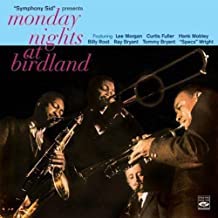
William Root was born March 6, 1934 in Philadelphia, Pennsylvania and was raised in a musical family. His father, a drummer in Philadelphia ensembles, took him to the Earle Theater at an early age, where big bands from Ellington, Basie and Lunceford performed. At the age of ten he learned the saxophone, at the age of 16 he played briefly with Hot Lips Page.
During the early 1950s, he began performing professionally and toured with the Hal McIntyre Orchestra, then returned to his hometown and played in local jazz clubs. Billy played as a member of the house band in appearances with Clifford Brown, Roy Eldridge, Red Rodney, Buddy Rich, Hal McIntyre, J. J. Johnson, Sonny Stitt, Eddie Lockjaw Davis, Art Blakey, Miles Davis and Kenny Dorham. In 1953 he went to New York, where he played with Bennie Green in an orchestra at the Apollo Theater, which was conducted by Earle Warren.
Root went on to play and record with Dizzy Gillespie, Hank Mobley, Lee Morgan, and Curtis Fuller. He led his own ensembles from the late 1950s. In the 1960s he performed with Al Grey and Dakota Staton, as well as working as an accompanist for Ella Fitzgerald, Sarah Vaughan and Billy Eckstine.
For family reasons, Root stopped touring in the early 1960s, from then on worked in local clubs and studied flutes, clarinet and bass clarinet for seven years before playing in various orchestras in Las Vegas, such as in 1968 in the Philadelphia Orchestra at performances of George Gershwin’s Rhapsody in Blue and An American in Paris. In Las Vegas he worked from 1968 with stars such as Tony Bennett and Peggy Lee.
By 1968, settling in Las Vegas, Nevada he played live in casinos for the next two decades, often backing vocalists like Tony Bennett and Peggy Lee. Tenor and baritone saxophonist Billy Root, who recorded as a soloist on several sessions and on no less than ten albums over the course of his career as a sideman, passed away on July 30, 2013.

More Posts: history,instrumental,jazz,music,saxophone
Daily Dose Of Jazz…
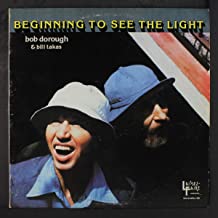
William “Bill” Takas was born March 5, 1932 in Toledo, Ohio and played in the band that backed Bob Dorough from the mid-1950s. His first recordings with the singer were made in New York City in 1956, Devil May Care for Bethlehem Records.
In the following years Bill also worked with Frank Socolow Sextet, Nat Pierce, Tal Farlow, Dan Terry and Pee Wee Russell. In the 1960s he played with the Gerry Mulligan Concert Jazz Band and the bands of Cy Coleman, Don Elliott, Benny Goodman, Doc Severinsen and Les DeMerle. In 1962 he made a guest appearance with Ruby Braff at the Newport Jazz Festival.
From the 1970s to the late 1990s Takas continued to work in a duo with Bob Dorough, recording Beginning to See the Light in 1976, in a trio, heard on Devil May Care II with Al Levitt, and Right On My Way Home in 1979 with Grady Tate, with guest soloists such as Art Farmer and Phil Woods.
Bill was in the all-star formation Children of All Ages with Randy Brecker, Lew Tabackin, Arnie Lawrence, Pat Rebillot, Ron McClure, Buzzy Linhart, among others and Bill Goodwin. Together with Dorough, he released a Charlie Parker tribute album PHililogy in 1995.
Between 1956 and 1997, double and electric bassist Bill Takas was involved in 37 recording sessions in the field of jazz.
More Posts: bandleader,bass,history,intrumental,jazz,music

Daily Dose Of Jazz…
Barney Jean Wilen was born on March 4, 1937 in Nice, France. His mother was French, his father was an American dentist turned inventor. He began performing in Nice nightclubs after receiving encouragement from Blaise Cendrars who was a friend of his mother.
His career was boosted in 1957 when he worked with Miles Davis on the soundtrack Ascenseur pour l’Échafaud. In 1959, Wilen wrote his two soundtracks Un Témoin Dans la Ville and Jazz sur scène with Kenny Clarke, and two years later composed the soundtrack for Roger Vadim’s film Les Liaisons Dangereuses working with Thelonious Monk. In the mid-to-late 1960s he became interested in rock, and recorded an album dedicated to Timothy Leary.
Returning to composing for French films in the 1980s and 1990s, touring Japan for the first time in 1990. He ventured into the world of punk rockers before returning to jazz in the early 1990s. Barney played with modern jazz musicians until his death in 1996.
In 1987, French comic book artist Jacques de Loustal and author Philippe Paringaux paid homage to Wilen in their “bande dessinée” Barney et la note bleue (Barney and the Blue Note).
Tenor and soprano saxophonist and jazz composer Barney Wilen, passed away from cancer in Paris, France on May 25, 1996.
More Posts: bandleader,composer,history,instrumental,jazz,music,saxophone
Three Wishes
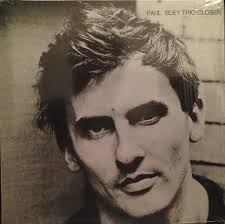
The inquiry of three wishes came from the Baroness to Paul Bley who told her:
- “To never hear another chord!”
- “To be driven home to Fourteenth Street and Eighth Avenue. Thank you very much! I’ll tell you my other wish next time I see you.”
- “To have God on your side.”
*Excerpt from Three Wishes: An Intimate Look at Jazz Greats ~ Compiled and Photographed by Pannonica de Koenigswarter
More Posts: baroness,history,instrumental,jazz,music,pannonica,piano,three,wishes
Three Wishes
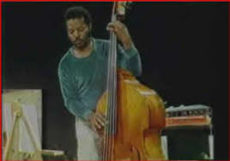
Nica asked Ray McKinney what he would wish for if he was given three and his response was:
- “I want to be the greatest person in the world.”
*Excerpt from Three Wishes: An Intimate Look at Jazz Greats ~ Compiled and Photographed by Pannonica de Koenigswarter
More Posts: baroness,bass,history,instrumental,jazz,music,pannonica,three,wishes