

Three Wishes
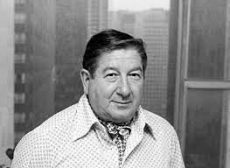
While the Baroness was in conversation with Teo Macero he was asked by her what three wishes he would make if given. He told her:
- “Peace of mind.”
- “To change the status of jazz. That is, to get rid of the stigma attached to jazz music. You know. A jazz musician is regarded as some kind of freak! This is something that has bugged me for a long, long time. Like, someone will come up to me and say, “Oh, so you’re a jazz musician?” And when I say< “Yes. A jazz musician and a composer,” they will look at me altogether differently. It would be marvelous if jazz musicians could be given a status equal to that or great figures of contemporary music.”
- “To have no problems with people recording. No problems in the studio.”
*Excerpt from Three Wishes: An Intimate Look at Jazz Greats ~ Compiled and Photographed by Pannonica de Koenigswarter

More Posts: baroness,composer,history,instrumental,jazz,music,pannonica,producer,saxophone,three,wishes
Daily Dose Of Jazz…
Lawrence William “Beau” Dixon was born on September 5, 1894 in Chillicothe, Ohio, the second of five children. His father was a farm laborer and part-time musician, from whom he learned to play music from an early age.
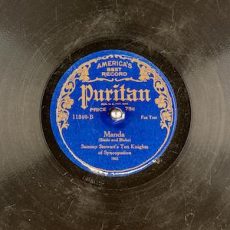
From 1923 to 1928 he played in Chicago, Illinois and Columbus, Ohio with Sammy Stewart’s Ten Knights of Syncopation, which recorded for Paramount Records. During the Twenties Beau also worked with Vance Dixon’s Jazz Maniacs, Fess Williams, Dave Peyton, Paul Jordan, Clarence Moore, and Grant Williams.
In 1931 he joined Earl Hines’s band and remained with him until 1937 as rhythm guitarist and arranger. Dixon worked with Franz Jackson’s Original Jass All Stars in the Chicago area in the 1950s and 1960s.
Banjoist and guitarist Beau Dixon, who suffered for years with pulmonary emphysema and tuberculosis, transitioned on January 16, 1970 in Chicago.

Daily Dose Of Jazz…
Jan Savitt was born Jacob Savetnick on September 4, 1907 in Shumsk, Russian Empire and reared in Philadelphia, Pennsylvania. He showed musical ability at an early age and began winning conservatory scholarships in the study of the violin. He was offered the position of concertmaster in Leopold Stokowski’s Philadelphia Symphony Orchestra, but turned it down, preferring to continue his studies at Curtis Institute. About a year later, believing himself ready, he joined Stokowski and the association continued for seven years, during which time he gained further laurels as a concert soloist and leader of a string quartet.
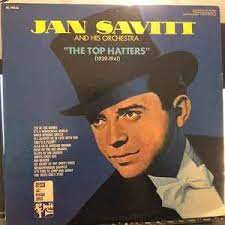
By 1938, Jan Savitt & His Top Hatters broadcasted as the KYW staff orchestra at KYW/NBC in Philadelphia coast-to-coast. The group also played at the Earl Theatre and performed with The Andrews Sisters and The Three Stooges.
Getting his start in popular music some time later as music director of KYW, he evolved the unique “shuffle rhythm” which remained his trademark. Numerous sustaining programs created such a demand for the “shuffle rhythm” that Jan left KYW to form his own dance crew.
His band was notable for including George “Bon Bon” Tunnell, one of the first Black singers to perform with a white band. Tunnell’s recording with Savitt included Vol Vistu Gaily Star co-composed by Slim Gaillard and Rose of the Rio Grande. Helen Englert Blaum, known at the time as Helen Warren, also sang with Savitt during the war years. His orchestra had a bit role in the 1946 film High School Hero.
Shortly before arriving in Sacramento, California with his orchestra in 1948 he was stricken with a cerebral hemorrhage and taken to Sacramento County Hospital. Bandleader, arranger, and violinist Jan Savitt, known as The Stokowski of Swing, transitioned on October 4, 1948 with his wife at his bedside.
More Posts: arranger,bandleader,history,instrumental,jazz,music,violin

Requisites
The Lost Melody ~ Joe Bonner Quartet | By Eddie Carter
The Joe Bonner Quartet begins this morning’s discussion with their 1987 release, The Lost Melody (SteepleChase Records SCS-1227). It was the pianist’s sixth album for Nils Winther’s label and ninth as a leader. Joe was born in Rocky Mount, North Carolina and attended Virginia State College. His style was Hard-Bop and Modal, and he learned from the musicians he worked with. Bonner’s influences include Art Tatum and McCoy Tyner, and his resume includes playing with several jazz greats. On this date, Bob Rockwell on tenor sax, Jesper Lundgaard on bass, and Jukkis Uotila on drums complete the ensemble. My copy is the original European Stereo album.
You and The Night and The Music, by Arthur Schwartz and Howard Dietz, kicks off Side One at a breakneck pace, with Bob unleashing a jolt of energy in the melody and first solo. Joe maintains the fierce intensity in the following performance; next, Jukkis closes with a short workout into the theme’s brisk ending. Easy Living by Ralph Rainger and Leo Robin begins with Bonner’s gentle introduction, segueing into the group’s lovely theme. Bob opens with an exceptionally beautiful interpretation. Joe continues to cast a spell over the listener in the second solo. Bob returns to add a few more thoughts ahead of a gorgeous climax.
Vibeke, the first of three tunes by Joe Bonner, brings the tempo upward for the ensemble’s medium theme. Rockwell and Bonner effectively demonstrate their excellent playing in the first two statements. Things take an adventurous turn when the saxophonist becomes more exploratory in a second solo before the theme’s restatement. Side Two opens with the title tune. The Lost Melody is a pretty ballad by the pianist that he introduces softly. Bob enriches the opening chorus and song’s opening solo with sensitivity and warmth; Joe comes in next and gets to the song’s heart with an elegantly tender performance leading to the finale.
The Song Is You by Jerome Kern and Oscar Hammerstein II comes from their 1932 musical Music In The Air. The quartet flies out of the gate with a speedy melody. Bob blows blistering notes in the first reading; then Joe is off to the races next. Bob reappears for a rapid exchange with Jukkis, preceding the climax. The album wraps up with Bonner’s Manuella, with the foursome taking it easy on the melody. The leader glides comfortably into the opening statement. Rockwell follows with a bluesy tone in the second reading. Lundgaard keeps the groove flowing in his only interpretation until the group slowly dissolves into nothingness.
Nils Winther produced The Lost Melody, and Flemming Rasmussen was the man behind the dials of this digital recording. The album’s sound quality is excellent, with a wide soundstage and excellent dynamics. It’s also a superb pressing that’s drop-dead quiet. I wasn’t aware of Joe Bonner until this album, but I’m delighted I’ve discovered him and will look for his other releases. If you’re a jazz piano fan like me and are in the mood for Hard-Bop, I invite you to seek out The Lost Melody by The Joe Bonner Quartet on your next record hunt. It’s an enjoyable way to begin your journey into his music and a terrific album that should not be missed for a spot in your library!
~ Easy Living, The Song Is You, You and The Night and The Music – Source: JazzStandards.com ~ Joe Bonner – Source: Wikipedia.org © 2023 by Edward Thomas Carter
More Posts: choice,classic,collectible,collector,history,instrumental,jazz,music,piano

Daily Dose Of Jazz…
Clyde Lanham Hurley, Jr. was born on September 3, 1916 in Fort Worth, Texas. Self-taught, he learned to play the trumpet by playing along with Louis Armstrong records. He studied music at the Texas Christian University in Fort Worth from 1932 to 1936 where he participated in the school’s jazz band. He began his career working with territory bands.
In 1937, while drummer/band-leader Ben Pollack was touring through Texas he heard Hurley and invited him to join his orchestra where he soloed on So Unexpectedly. While on a touring stop with the band in Los Angeles, California he left to become a studio musician. He played with Paul Whiteman then with Glenn Miller. While with Miller he was one of the key soloists appearing on the band’s studio recordings and live performances throughout America.
Hurley played the trumpet solo on Miller’s In The Mood, Slip Horn Jive and Tuxedo Junction. Leaving Miller in 1940 he went on to work with Tommy Dorsey before joining Artie Shaw in 1941.After his stint with Shaw, he freelanced for the movie studios. In 1941, he played the trumpet track for the classic Walter Lantz cartoon Boogie Woogie Bugle Boy of Company B.
He worked for MGM from the mid-Forties to the end of the decade and for NBC from 1950 to 1955. During the late 1950s, Hurley played in Dixieland groups, recording with Matty Matlock’s Rampart Street Paraders. In 1954, he recorded live with Ralph Sutton and Edmond Hall at the Club Hangover. His studio work in the 1950s included sessions with Paul Weston. He soloed on Memories of You on Weston’s Solo Flight album.
Trumpeter Clyde Hurley, who was prominent during the big band era, transitioned on August 14, 1963 from coronary occlusion in Fort Worth.
More Posts: history,instrumental,jazz,music,trumpet