

Requisites
My Favorite Things ~ John Coltrane | By Eddie Carter
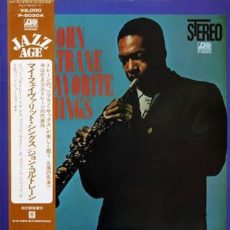
I was reading a few nights ago and wanted something to listen to before heading to bed, so I pulled out an old favorite that always transports me back to my childhood and still blows me away every time I hear it. This morning’s subject of discussion is My Favorite Things (Atlantic 1361/SD 1361) by John Coltrane that hit the stores in 1961. It is one of the most important albums in his discography and is a beloved record in my library. The personnel is a stellar one, Coltrane on soprano sax (tracks: A1, A2), tenor sax (tracks: B1, B2), McCoy Tyner on piano, Steve Davis on double bass, and Elvin Jones on drums. My copy used in this report is the 1971 Atlantic Jazz Age Series Japanese Stereo reissue (Atlantic P-6030A) by Warner-Pioneer Corporation.
Side One starts with a show tune from The Sound of Music (1959), My Favorite Things by Richard Rodgers and Oscar Hammerstein II. It became a huge hit for Coltrane and his signature song whenever he performed live. The trio opens with a highly contagious introduction, segueing into a beautifully constructed melody by the saxophonist. McCoy kicks off the first solo with a captivating reading that is a feast for the ears. John comes in slowly, then takes flight into the stratosphere with a joyously unrestrained statement that swings until it returns to earth for the climax. Everytime We Say Goodbye by Cole Porter is a beautiful song that Coltrane adapts as if it was written just for him with an elegantly graceful melody and opening statement. Tyner speaks with delicacy on the closing reading ahead of the foursome’s gentle ending.
Side Two takes off with a spirited version of Summertime by George and Ira Gershwin, and DuBose Heyward. John is ablaze from the start of the melody and ascends to an exhilarating height on the opening chorus. McCoy supplies the high-octane fuel for the second performance. Steve executes the next reading meticulously with great precision, and Elvin delivers a fierce attack on the finale into the quartet’s exit. But Not For Me by George and Ira Gershwin first appeared in the musical, Girl Crazy (1930). The quartet kicks off this energetic cooker with a vigorous theme. John builds the first interpretation with blazing heat to Steve’s bass and Elvin’s impressive timekeeping, then Tyner adds his imaginative ideas on the next statement into Trane’s aggressive improvisation during the closing chorus.
Nesuhi Ertegun supervised My Favorite Things, and the engineers are Phil Lehle and Tom Dowd. Together, both men provide a solid soundstage that is good enough to transport the listener to the studio with the musicians. For me, this album is an intriguing examination of the thin lines between Hard-Bop, Modal, and Free Jazz that still sounds as fresh today as when first released sixty years ago. If you are a fan of tenor sax or are just discovering the music of John Coltrane. I offer for your next vinyl hunt, My Favorite Things. An album of soothing and swinging music that I am sure will become a welcome addition to your library.
~ Everytime We Say Goodbye, Summertime, But Not For Me – Source: JazzStandards.com ~ My Favorite Things – Source: Wikipedia.org © 2021 by Edward Thomas Carter

More Posts: choice,classic,collectible,collector,history,instrumental,jazz,music,saxophone
Daily Dose Of Jazz…
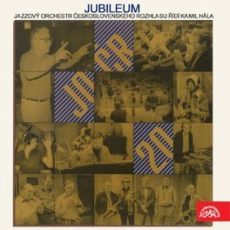
Kamil Hala was born on August 1, 1914 in Most, Czechoslovakia. During the late Fifties he led his own orchestra. He was a member of the Czechoslovak Radio Dance Orchestra beginning in 1960, starting as a pianist and later as its arranger and conductor. After the orchestra split in 1963 he was the conductor of the Czechoslovak Radio Jazz Orchestra until the 1990s.
Pianist composer, arranger, and conductor Kamil Hala passed away on October 29, 2014 in Prague, Czechoslovakia.

More Posts: arranger,bandleader,composer,conductor,history,instrumental,jazz,music,piano

Daily Dose Of Jazz…
William E. Clark was born July 31, 1925 in Jonesboro, Arkansas. He worked professionally starting shortly after World War II, playing drums with Jimmy Jones, Dave Martin, Mundell Lowe, and George Duvivier.
He was principally active in the 1950s, working with Lester Young, Mary Lou Williams, Lena Horne, Hazel Scott, Duke Ellington, Don Byas, Arnold Ross, Bernard Peiffer, George Shearing, Toots Thielemans, Ronnell Bright, Jackie Paris, and Rolf Kuhn. Later in his career Bill worked with Eddie Harris and Les McCann.
Drummer Bill Clark, known for his versatility playing Dixieland, swing, bebop, avant-garde and fusion, passed away on July 30, 1986 in Atlanta, Georgia.Share a dose of a Jonesboro drummer to inspire inquisitive minds to learn about musicians whose legacy lends their genius to the jazz catalog…
More Posts: drums,history,instrumental,jazz,music
Daily Dose Of Jazz…
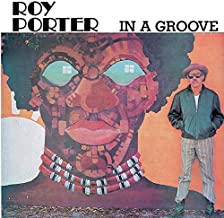
Roy Lee Porter was born on July 30, 1923 in Walsenburg, Colorado and when he was eight his family moved to Colorado Springs. He began playing drums in rhythm and blues bands while a teenager, then attended Wiley College in Texas briefly, where trumpeter Kenny Dorham was a fellow student.
Replacing Joe Marshall he joined Milt Larkin’s band in 1943. After military service, Roy settled in Los Angeles, California and soon was in demand by some of the pioneers of bebop. He worked with Teddy Bunn and Howard McGhee, making his first recordings with the latter. In 1946, he backed Charlie Parker on such Dial classics, A Night In Tunisia, Yardbird Suite, Ornithology and Lover Man.
Porter played on Los Angeles’ Central Avenue with such bebop players as Dexter Gordon, Wardell Gray and Teddy Edwards, and in San Francisco, California with Hampton Hawes and Sonny Criss. He organized a big band and went on the road in 1949 that included Art Farmer, Jimmy Knepper and Eric Dolphy.
During the 1950s he was inactive as a jazz musician due to drug problems and returned to music only infrequently afterwards. Drummer Roy Porter passed away on January 24 or 25, 1998 in Los Angeles.
More Posts: bandleader,drums,history,instrumental,music
The Quarantined Jazz Voyager
The Delta variant is causing a rise in new cases of Covid~19 and is much easier to contract. The modus operandi of the day is continuing my exercise of social distancing, quarantining myself at home and wearing my mask whenever I am in public places. I hope you are doing the same.
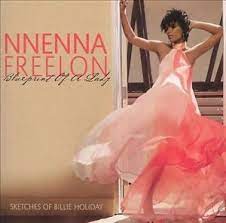
I offer up my latest selection is the tenth album and sixth on Concord from Nnenna Freelon. It is her 2005 album Blueprint Of A Lady: Sketches Of Billie Holiday. It was her tribute to the late great vocalist. The album was recorded March~April 2005 at the Fantasy Studio in Berkeley, California, and released on the Concord Jazz label that same year.
Though her arrangements may not reflect the melodies we are historically familiar with, Freelon has an inimitable way of taking us on a journey that brings her own sensibilities to interpret these songs with refreshing renditions that may appeal to old fans and hopefully garner new enthusiasts.
Track Listing | 1:02:46
- I Didn’t Know What Time It Was (Lorenz Hart, Richard Rodgers) ~ 4:18
- What a Little Moonlight Can Do (Harry M. Woods) ~ 5:13
- Don’t Explain (Billie Holiday, Arthur Herzog, Jr.) ~ 4:03
- God Bless the Child (Holiday, Herzog) ~ 5:21
- Strange Fruit (Abel Meeropol) ~ 2:20
- Willow Weep For Me (Ann Ronell) ~ 2:52
- Balm in Gilead (Traditional) ~ 4:49
- Them There Eyes (Maceo Pinkard, Doris Tauber, William Tracey) ~ 5:09
- Only You Will Know (Nnenna Freelon, Brandon McCune) ~ 3:41
- You’ve Changed (Bill Carey, Carl Fischer) ~ 5:24
- Now or Never (Billie Holiday, Curtis Reginald Lewis) ~ 2:55
- Lover Man (Jimmy Davis, Roger (Ram) Ramirez, James Sherman) ~ 4:14
- Left Alone (Billie Holiday, Mal Waldron) – 5:02
- Little Brown Bird (Interlude) (Nnenna Freelon, Brandon McCune) ~ 1:32
- All of Me (Gerald Marks, Seymour Simons) ~ 5:53
- Nnenna Freelon ~ arranger, producer, vocals
- Brandon McCune ~ arranger, fender rhodes, Hammond B3, piano, trumpet
- Beverly Botsford ~ arranger, percussion
- Wayne Batchelor ~ arranger, acoustic bass guitar, acoustic bass
- Kinah Boto ~ drums
- André Bush, Julian Lage ~ guitar
- Doug Lawrence ~ tenor saxophone
- Christian Scott ~ trumpet
- Jessica Ivry ~ cello
- Mary Fettig ~ alto flute, alto saxophone, baritone saxophone, rhythm arrangements
- John Clayton ~ horn arrangements
- Nnenna Freelon/Ed Keane – producer
- Josiah Gluck – engineer, audio engineer, mixing
- Jesse Nichols – assistant engineer, mixing
- Nick Phillips – audio production, producer
- George Horn – mastering
- Abbey Anna – art direction
- Terri Apanasewicz – hair stylist
- Rudy Calvo – make-up
- Danielle Brancazio – package design
- Randee Saint Nicholas – photography

More Posts: adventure,album,club,genius,jazz,museum,music,preserving,restaurant,travel,vocal