

Daily Dose Of Jazz…
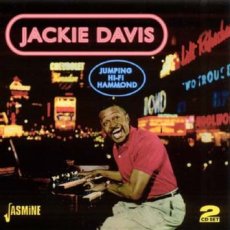
Jackie Davis was born on December 13, 1920 in Jacksonville, Florida. He first learned to play by spending hours poking at his grandmother’s piano. By the age of eight, he was playing with a local dance band. By the age of eleven, he’d earned enough from playing to buy his own piano, and music enabled him to pay his way through Florida A&M College, graduating in 1943.
After serving time in the Army, he worked as a pianist, usually as an accompanist for singers such as Dinah Washington, Sarah Vaughan, and Billy Daniels. Although he was attracted to the organ, he was intimidated at the prospect of playing jazz on it, particularly when his idol at the time was the lightning-fast Art Tatum. However, the Hammond Organ Company began selling electric organs in the late 40s, and in 1951 he bought his first organ. He appeared at Club Harlem in Philadelphia, and a two-week gig turned into nearly five months. Jackie became the first musician to popularize jazz on the Hammond organ, years before Jimmy Smith’s name became synonymous with organ jazz.
Davis signed with RCA to record a couple of 45s but no album so he went to Trend Records in Los Angeles and released a 10” album. He joined Louis Jordan’s outfit and learned stage presentation and in 1956 signed with Capitol Records, became their leading performer on the organ at a time when relatively few mainstream labels were willing to put a black musician on the cover of an album and released a total of nine albums. He went on to sign with Warner but that proved to be the end of his recording career.
Over the next thirty years of his career he performed in clubs from Vegas to Atlantic City, jazz festivals and restaurants, produced Ella Fitzgerald records, and was hired by Norman Granz for her Lady Time session, and was a regular fixture at a Hilton Head, South Carolina club. He worked with the likes of Paul Quinichette, Junior Mance, Eddie “Lockjaw” Davis, Clark Terry, Ray Brown, Keter Betts, Max Roach and many others.
In 1992 Hurricane Andrew wiped out his home in Florida causing a financial and physical strain on his health and he suffered a series of strokes. He attempted to perform but his health didn’t hold up and on November 15, 1999 pianist and organist Jackie Davis passed away in his hometown of Jacksonville.

Give A Gift Of Jazz – Share
Daily Dose Of Jazz…
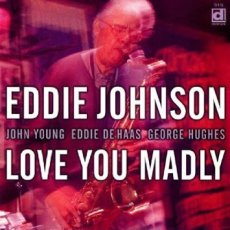
Eddie Johnson was born Edwin Lawrence Johnson on December 11, 1920 in Napoleonville, Louisiana. Gleaning his style from the pre-war tenor greats like Coleman Hawkins and Lester Young, he combined the big brawling sound with romantic lyricism to come into his own.
Settling in Chicago in 1941 the tenor saxophonist freelanced around town until joining Cootie Williams and His Orchestra in 1946, appearing on several Capitol and Majestic recordings. Leaving Williams to join the Louis Jordan outfit he would go on to play with Ella Fitzgerald and Duke Ellington, and regretfully turning down an offer to join the latter’s orchestra.
By the end of the 40’s Eddie retired from music, took a 9-5 job with the city to raise his family and didn’t pick up his horn until some 30 years later when he retired to music. He started playing at Andy’s in Chicago with a quintet and become a member of the Chicago Jazz Orchestra.
He soon became one of the city’s enduring tenor icons alongside Fred Anderson and Von Freeman. As a leader he released two albums, “Indian Summer” on the Nessa label and “Love You Madly” for Delmark. Tenor saxophonist Eddie Johnson passed away on April 7, 2010 at age 89.
Put A Dose In Your Pocket
More Posts: saxophone
Daily Dose Of Jazz…
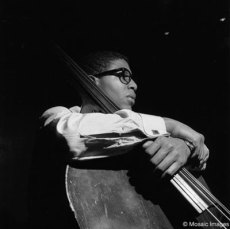
Bob Cranshaw was born Melbourne R. Cranshaw on December 10, 1932 in Evanston, Illinois and started on drums and piano before switching to the tuba and bass in high school. He was a founding member of Walter Perkins’ MJT +3 band in 1957 and it was Perkins who recommended Bob to Sonny Rollins as a replacement bassist for a gig at the first Playboy Jazz Festival in Chicago in 1959.
His long association with Rollins has spanned over five decades with their first recording of the album The Bridge in 1962. From the heyday of Blue Note Records to the present, though never a leader, Cranshaw has a long list of accolades performing and recording with such giants as Lee Morgan, Ella Fitzgerald, Dexter Gordon, Duke Pearson, Grant Green, Coleman Hawkins, Jimmy Heath, Joe Henderson, Shirley Scott, Horace Silver, Wayne Shorter, Hank Mobley, Wes Montgomery, Thelonious Monk, Oscar Peterson and the list goes on and on.
One of the early jazz bassists to trade his upright bass for an electric bass, Bob was criticized for this by jazz purists, who either never knew or cared that he was forced to switch due to a back injury incurred in a serious auto accident. Never stopping, he served as the sole session bassist for Sesame Street and The Electric Company and played on all songs, tracks, buttons and cue recorded by The Children’s Television Workshop under the tenure of songwriter and composer Joe Raposo.
Cranshaw has performed on Broadway, on hundreds of television shows such as the David Frost Show band under Dr. Billy Taylor and the original 70s Saturday Night Live, has worked on film and television scores, and appeared on The Blue Note Story documentary of the famous label. He has also recorded for Vee Jay, Prestige and other labels throughout his career as a sought after sideman. He remains an active performer and member of the New York Musicians Union.
More Posts: bass
Daily Dose Of Jazz…
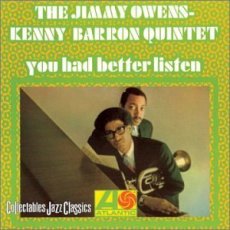
Jimmy Owens was born December 9, 1943 in New York City. In the 1960s, he was a member of the hybrid classical and rock band Ars Nova, and then became a member of the New York Jazz Sextet playing with at times were Sir Roland Hanna, Ron Carter, Billy Cobham, Benny Golson, Hubert Laws, and Tom McIntosh.
Between 1969 and 1972, Jimmy was a sideman on the David Frost Show under musical director Dr. Billy Taylor. During this stint he played alongside Frank Wess, Seldon Powell Barry Galbraith and Bob Cranshaw.
As an educator Jimmy is an active member of the jazz education community, sitting on the board of the Jazz Foundation of America and the Jazz Musicians’ Emergency Fund to help individual musicians.
Over the course of his career the trumpeter, composer, arranger, lecturer and music education consultant has performed and recorded as a leader and sideman with Lionel Hampton, Charles Mingus, Archie Shepp, Joe Zawinul, Gerald Wilson, Duke Ellington, Hank Crawford, Dizzy Gillespie, Count Basie and Herbie Mann among many others. Since 1969, he has led his own group, Jimmy Owens Plus.
Give The Gift Of Knowledge
More Posts: flugelhorn,trumpet

Daily Dose Of Jazz…
Cleo Brown was born in Meridian, Mississippi on December 8, 1905. As a child she sang in church until 1919 when her family moved to Chicago and she began studying piano. In the 1920s she began taking gigs in clubs and broadcasting on radio.
From the 1930s to the 1950s she toured the United States regularly, recording for Decca Records among other labels and recorded many humorous, ironic titles such as “Breakin’ in a Pair of Shoes”, “Mama Don’t Want No Peas and Rice and Coconut Oil” and “The Stuff Is Here and It’s Mellow”.
Cleo’s stride piano playing was often compared to Fats Waller. In the 1940s she started moving away from singing bawdy jazz and blues songs because of her deepening religious beliefs, and in 1953 she retired and became a nurse.
Rediscovered in the 1980s after being tracked down by Marian McPartland, she returned to record again and performed on National Public Radio.
Cleo Brown, jazz and blues vocalist and pianist died on April 15, 1995 in Denver, Colorado at age 85.
Take A Dose On The Road