

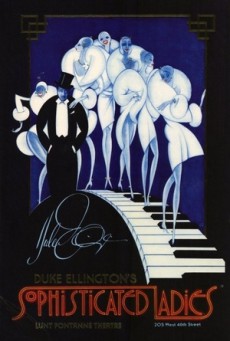
From Broadway To 52nd Street
Sophisticated Ladies had a preview run of 15 shows beginning February 16th prior to its official opening at the Lunt Fontanne Theatre on March 1, 1981 and ran for 767 performances. Duke Ellington composed the music for the revue with a cast that included Gregory Hines, Judith Jamison, Phyllis Hyman, Hinton Battle, Gregg Burge and Mercer Ellington. Hines’ older brother Maurice joined the cast later in the run.
The score includes classic jazz tunes “Mood Indigo,” “Take The “A” Train, I’m Beginning To See The Light, Hit Me With A Hot Note and See Me Bounce, It Don’t Mean A Thing (If It Ain’t Got That Swing), I Let A Song Go Out Of My Heart, Old Man Blues, In A Sentimental Mood, Sophisticated Lady, Don’t Get Around Much Anymore, Satin Doll and I Got It Bad And That Ain’t Good among numerous others.
Jazz History: In the 1980s the jazz community shrank dramatically and split. A mainly older audience retained an interest in traditional and straight-ahead jazz styles. Wynton Marsalis strove to create music within what he believed was the tradition, creating extensions of small and large forms initially pioneered by such artists as Louis Armstrong and Duke Ellington. In the early part of the decade, a commercial form of jazz fusion called pop fusion or smooth jazz became successful and garnered significant radio airplay.
Smooth jazz received frequent airplay with more straight-ahead jazz in “Quiet Storm” time slots (a format begun at Howard University’s WHUR by host Melvin Lindsay) at radio stations in urban markets across the United States. This helped to establish or bolster the careers of Grover Washington, Jr., Kenny G, Kirk Whalum, Boney James and David Sanborn and vocalists including Al Jarreau, Anita Baker, Chaka Khan and Sade.
In this same time period “Echoes of an Era” was released by the sextet comprised of Chaka Khan (vocal), Joe Henderson (saxophone), Freddie Hubbard (trumpet), Chick Corea (piano), Stanley Clarke (bass) and Lenny White (drums). The quintet released another “Echoes” enlisting the vocal talents of Nancy Wilson. The quintet would also release two albums titled “The Griffith Park Collection”.
Sponsored By

www.whatissuitetabu.com
Daily Dose Of Jazz…
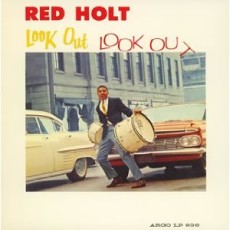
Redd Holt was Isaac Holt born on May 16, 1932 in Rosedale, Mississippi. His interest in drums and percussion began as a child and he bought his first drum set when he was a sophomore at Crane Technical High School. Graduating from high school in 1951, he attended the Cosmopolitan School of Music in Chicago and then received advanced musical instruction at the Chicago School of Music.
Between 1954 and 1966 Holt was part of the original Ramsey Lewis Trio that spawned the classic hit singles “Hang on Sloopy” and “In Crowd.” He was co-founder and leader of Young-Holt Unlimited from 1966 to 1974, creating another hit, “Soulful Strut,” and the successful single, “Wack Wack”, used in the movie Harriet the Spy and various other movies and commercials.
Redd has directed the Gumption Performing Artists Workshop, received the Jazz Master Award from the Midwest Arts, a Lifetime Achievement Award from Indianapolis Radio Sounds of Jazz, and the Grand Master of Time Award from the Jazz Institute of Chicago and the DuSable Museum of African American History.
As a jazz educator drummer Redd Holt has been active for many years in Urban Gateways, a nonprofit organization providing multicultural performing, and visual and literary arts programs. He continues to perform his percussion and vocal skills at jazz clubs, festivals, theaters and concerts around the world.

Give The Gift Of Knowledge
More Posts: drums
Daily Dose Of Jazz…
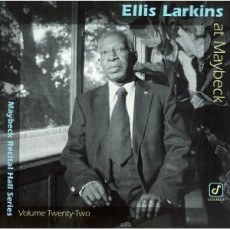
Ellis Larkins was born in Baltimore, Maryland on May 15, 1923. The pianist was the first African American to attend the Peabody Conservatory of Music in Baltimore and began his professional playing career in New York City after moving there to attend the Julliard School. Following school Larkins performed with Billy Moore and Edmond Hall.
He recorded with Coleman Hawkins, Mildred Bailey and Dickey Wells in the 1940s, Ruby Braff and Ella Fitzgerald in the Fifties recording “Ella Sings Gershwin” and “Songs In A Mellow Mood” with the latter. His 1960s work included recordings and/or performances with Eartha Kitt, Joe Williams, Helen Humes, George Gibbs and Harry Belafonte.
Though he was best known as an accompanist, Larkins recorded several solo albums in the 1950s. In the 1970s he performed regularly at several New York venues, including Gregory’s, a small bar in the east 70s. Next to Jimmy Jones, traditional jazz fans regard him as one of the most lyrical and romantic pianists in jazz history. Ellis Larkins passed away on September 30, 2002.
Take A Dose On The Road
More Posts: piano
Daily Dose Of Jazz…
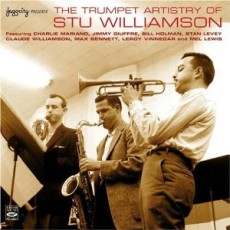
Stu Williamson was born on May 14, 1933 in Brattleboro, Vermont and is the younger brother of jazz pianist Claude Williamson. The trumpeter relocated to Los Angeles in 1949 and became a regular on the West Coast scene. He played with Woody Herman, Mel Lewis-Pepper Adams Quintet, Elmo Hope, Lennie Niehaus, Billy May and Charlie Barnet the first half of the Fifties.
Williamson played a significant role in Stan Kenton’s Orchestra, Howard Rumsey’s Lighthouse Café All-Stars and Terry Gibbs’s Dream Band. Between 1954 and 1958 Williamson played intermittently with Shelly Manne and was a ubiquitous session player up until 1968.
Although he had a beautiful, rich, round tone and his ability to create melodic solos full of invention, power and clarity gave him the opportunity to front small groups and big bands. Disappearing from the jazz scene after battling drug addiction for much of his life, including for years after he left the music. Trumpeter Stu Williamson passed away on October 1, 1991 in Studio City, California.
Dose A Day-Blues Away
More Posts: trumpet
Daily Dose Of Jazz…
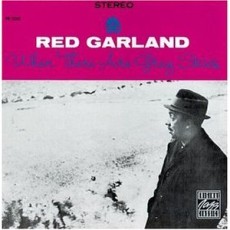
William “Red” Garland was born in Dallas, Texas on May 13, 1923. Showing an early interest in music, he began his musical studies on the clarinet and alto saxophone but switched to the piano. Garland spent copious amounts of time practicing and rapidly developed into a proficient player. A short early career as a welterweight boxer did not seem to hurt his playing hands and he fought a young Sugar Ray Robinson before making the switch to a full-time musician.
Garland’s trademark block chord technique, a style that would influence many forthcoming pianists in the jazz idiom and a commonly borrowed maneuver in jazz piano today, was unique and differed from the methods of earlier block chord pioneers such as George Shearing and Milt Buckner. His block chords were constructed of three notes in the right hand and four notes in the left hand, with the right hand one octave above the left. The right hand played the melody in octaves with a perfect 5th placed in the middle of the octave.
After WWII he performed with Roy Eldridge, Coleman Hawkins, Charlie Parker and Lester Young. He found steady work in Boston, New York and Philadelphia and by the late 40s he was touring with Eddie Vinson at the same time that John Coltrane was in Vinson’s band. His creativity and playing ability continued to improve, though he was still somewhat obscure. By the time he became a pianist for Miles Davis he was influenced by Ahmad Jamal and Charlie Parker’s pianist Walter Bishop.
Red Garland found fame in 1955 when he joined the Miles Davis Quintet along with John Coltrane, Philly Joe Jones and Paul Chambers and together they recorded several Prestige albums such as Workin’, Steamin’ Cookin’ and Relaxin’, that would later influence the free jazz movement. He would go on to play on ‘Round About Midnight and Milestones but would be eventually be fired by Miles.
In 1958 Garland formed his own trio. Among the musicians the trio recorded with Pepper Adams, Nat Adderley, Ray Barretto, Kenny Burrell, Eddie “Lockjaw” Davis, Jimmy Heath, Harold Land, Leroy Vinnegar and many others to numerous to list.
Red released some 46 albums as a leader, recording sessions for Prestige, Fantasy, Galaxy, Jazzland, Keystone, Xanadu, Alfa, Moodsville and New Jazz record labels. He sat in as a sideman for such greats as Arnett Cobb, Art Pepper, John Coltrane and Phil Woods.
Stopping his playing professionally for a number of years in the 1960s when jazz lost popularity to rock and roll, he returned to Dallas to care for his mother. Pianist Red Garland recorded sparsely through the 70s but continued recording and performing until his death of a heart attack on April 23, 1984 at the age of 61.
Inspire A Young Mind
More Posts: piano