

Daily Dose Of Jazz…
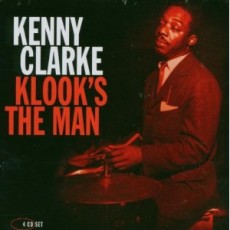
Born Kenneth Spearman Clarke on January 9, 1914 in Pittsburgh, Pennsylvania, Kenny Clarke grew up in a musical family, studied multiple instruments, including vibes and trombone, as well as music theory and composition while still in high school. As a teenager he played in the bands of Leroy Bradley and Roy Eldridge. He later toured around the Midwest for several years with the Jeter-Pillars band that also featured bassist Jimmy Blanton and guitarist Charlie Christian. By 1935, he was more frequently in New York, where he eventually moved and worked in groups led by Edgar Hayes and Lonnie Smith.
While working in the bands of Edgar Hayes and Roy Eldridge, Clarke started developing the rhythmic concepts that would later define his contribution to the music. He began experimenting with moving the time-keeping role from the combination of snare drum or hi-hat and bass drum to embellished quarter notes on the ride cymbal, the familiar “ding-ding-da-ding” pattern, which Clarke is often credited with inventing. One of these passages, a combination of a rim shot on the snare followed directly by a bass drum accent, earned Clarke his nickname, “Klook”, which was short for “Klook-mop”, in imitation of the sound this combination produced. This nickname was enshrined in “Oop Bop Sh’Bam”, recorded by Dizzy Gillespie in 1946 with Clarke on drums, where the scat lyric to the bebop tune goes “oop bop sh’bam a klook a mop.”
Clarke himself claimed that these stylistic elements were already in place by the time he put together the famous house band at Minton’s Playhouse, which hosted Monk, Parker, Gillespie, Russell, saxophonist Don Byas and many others while serving as the incubator of the emerging small group sound. While playing at Minton’s, Clarke made many recordings, most notably as the house drummer for Savoy Records. When the musicians from the Minton’s band moved to different projects, Clarke began working with a young pianist and composer John Lewis and vibraphonist Milt Jackson, and with the addition of bassist Ray Brown they formed the Modern Jazz Quartet or MJQ. The group pioneered what would later be called chamber jazz or third stream, referring to its incorporation of classical and baroque aesthetics as an alternative to hard bop.
Clarke stayed with the MJQ until 1955, relocating in Paris in 1956. As soon as he moved to Paris, he regularly worked with visiting American musicians in, as well as forming a working trio, known as “The Bosses”, with Bud Powell also a Paris resident and Pierre Michelot. In 1961 along with pianist Francy Boland, Kenny formed a regular big band “The Kenny Clarke-Francy Boland Big Band that lasted eleven years and featured leading European and expatriate American musicians, such as Johnny Griffin and Ronnie Scott.
Drummer Kenny Clarke continued recording and playing with both visiting U.S. musicians along with his regular French band mates until his death on January 26, 1985 in Montreuil-sous-bois. In 1988 he was inducted into the Down Beat Jazz Hall of Fame and his innovation set the stage for the development of the bebop combo, which relied heavily on improvised exchanges between drummer and soloist to propel the music forward.
More Posts: drums
Daily Dose Of Jazz…
Bobby Tucker was born Robert Nathaniel Tucker on January 8, 1923 in Morristown, New Jersey. His rise to recognition came On November 12, 1946 when during Billie Holiday’s stay at the Down Beat Club he was drafted to accompany Holiday because Eddie Heywood refused his opportunity. Billie’s stay at the Down Beat was so successful due to Tucker’s playing that she decided to keep him as her accompanist. The partnership lasted until 1949, where Tucker quit due to Holiday’s abusive lover, John Levy (not the bassist) threatening him.
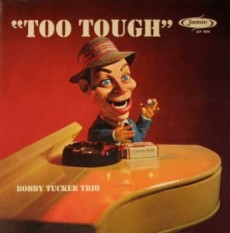
After leaving Holiday, Tucker began playing with Billy Eckstine, a partnership and friendship that last more than forty years. He recorded on multiple sessions with Billy but was featured on the 1960 album “No Cover, No Minimum”, in which he arranged and conducted the orchestra behind Eckstine. That same year Tucker also released his only known album under his own name “Too Tough”.
Bobby was especially sought out as an accompanist for singers among them Johnny Hartman, Lena Horne and Antonio Carlos Jobim. He was a musician’s musician whose quiet yet prolific career renders little biographical information, yet spanned the jazz age from the 40s to the 60s and beyond with his friend Billy Eckstine.
Pianist, arranger and conductor Bobby Tucker passed away of a heart attack on April 12, 2007 in his hometown of Morristown, New Jersey at the age of 85.
Daily Dose Of Jazz…
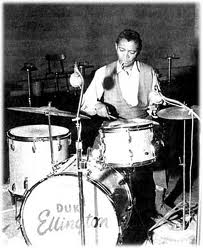
Sam Woodyard was born January 7, 1925 in Elizabeth, New Jersey. He learned to play the drums by teaching himself, with no instruction. He began playing locally around Newark, New Jersey area in the 1940s. Sam gigged with Paul Gayten in an R&B group, moving on in the early 50s to play with Joe Holiday, Roy Eldridge, and Milt Buckner. It was in 1955 that Woodyard would join Duke Ellington’s orchestra, remaining the ensemble’s drummer until 1966.
After his time with Ellington, Sam played behind Ella Fitzgerald prior to moving to Los Angeles, California. In the 1970s he played less due to health problems, but recorded with Buddy Rich and toured with Claude Bolling. In 1983 he played in a band with Teddy Wilson, Buddy Tate and Slam Stewart. His last recording was on Steve Lacy’s 1988 album “The Door”.
A little more than a month after this recording was completed, drummer Sam Woodyard passed away on September 20, 1988 in Paris, France.
More Posts: drums
Daily Dose Of Jazz…
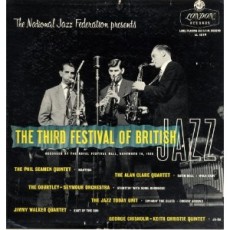
Keith Ronald Christie was born January 6, 1931 in Blackpool, England and began playing trombone at 14 while attending the Guildhall School of Music and Drama. He formed a band with his brother Ian in the late 1940s, and soon after the pair joined the band of Humphrey Lyttleton, recording copiously.
Keith served in the military early in the 1950s, reconvening to lead an ensemble with his brother in 1951 that lasted until 1953. He went on to work with other jazz musicians like John Dankworth, Cleo Laine, George Chisholm, Vic Ash and others in the mid 50s. He worked with Ted Heath as well as Allan Ganley in the Jazzmakers from the late 50s to early 60s, with brief stints in other bands through the end of the decade.
During this period he joined Benny Goodman on a European tour, also playing with Tubby Hayes, Paul Gonsalves, Kenny Wheeler, Ronnie Ross, and Bobby Lamb among others. In the mid-1970s Keith Christie suffered and recovered from a fall but his continuing battles with alcoholism eventually resulted in the trombonist’s early death on December 16, 1980 in London, England.
More Posts: bandleader,trombone
Daily Dose Of Jazz…
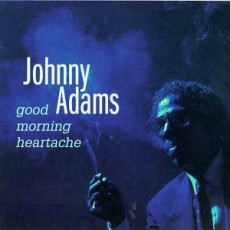
Laten John Adams was born in New Orleans, Louisiana on January 5, 1932 the oldest of ten children and became a professional musician after leaving school. He began his career-singing gospel with the Soul Revivers and Bessie Griffin’s Consolators, but crossed over to secular music in 1959. He recorded Dorothy LaBostrie’s “I Won’t Cry” on the RIC label and produced by teenager Mac Rebennack a.k.a. Dr. John who would later give him a #27 hit in 1962 with “A Losing Battle”.
In 1963, Adams went on to record for Modern Records and Watch Records with limited success until he signed with SSS International. Having three hits on the billboard charts and an album “Heart and Soul” he moved unsuccessfully to other labels like Atlantic and Ariola. During this period he held down a regular gig at Dorothy’s Medallion Lounge in New Orleans and toured the southern nightclub circuit.
In 1983 signing with Rounder Records, Johnny recorded a series of nine critically acclaimed albums beginning with “From the Heart” in 1984, encompassing a wide range of jazz, blues and R&B styles while highlighting Adams’ voice. By 1991 “The Real Me” album brought him a number of accolades, including a W.C. Handy Award. He began touring internationally, working and recording with such musicians as Aaron Neville, Harry Connick Jr. Lonnie Smith and Dr. John.
Johnny Adams, jazz, blues and gospel singer, passed away on September 14, 1998 in Baton Rouge, Louisiana after a long battle with prostate cancer.
More Posts: vocal