

Daily Dose Of Jazz…
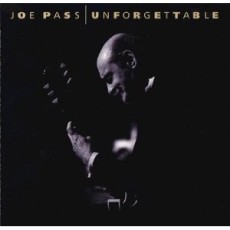
Joe Pass was born Joseph Anthony Jacobi Passalaqua on January 13, 1929 in Brunswick, New Jersey but was raised in Johnston, Pennsylvania. Inspired by Gene Autry’s portrayal of a guitar-playing cowboy. His father gave him his first guitar on his 9th birthday and encouraged him to pick up tunes by ear, play pieces not specifically written for guitar and practice scales leaving no spaces between the notes of the melody.
As early as 14, Joe started gigging with bands fronted by Tony Pastor and Charlie Barnet as he honed his guitar skills and learned the music business. He began traveling with small jazz groups, eventually ending up in New York City. Unfortunately, he fell victim to drug abuse spending a good portion of the 1950s in relative obscurity, reappearing only after a two-and-a –half year stay in rehab at Synanon that resulted in the 1962 album “The Sounds of Synanon”.
Throughout the sixties Pass recorded a series of albums for the Pacific Jazz label, received Downbeat magazine’s “New Star Award” in ’63, toured with George Shearing, was a sideman with Louis Bellson, Frank Sinatra, Sarah Vaughan, Joe Williams, Della Reese and Johnny Mathis, and worked on TV shows including The Tonight Show with Carson, Merv Griffin, Steve Allen and others.
By the early 1970s, Pass and guitarist Herb Ellis were performing together regularly at Donte’s in Los Angeles, a collaboration that led to the recording of Jazz/Concord with Ray Brown and Jake Hanna in tow. During this time he also collaborated on a series of music books, and his Joe Pass Guitar Style is considered a leading improvisation textbook for students of jazz.
In 1970 Norman Granz signed pass to his Pablo records in which he released as a leader and worked with Benny Carter, Milt Jackson, Herb Ellis, Zoot Sims, Duke Ellington, Dizzy Gillespie, Count Basie and many, many others. In 1974, along with Oscar Peterson and Niels-Henning Orsted Pederson they won a Grammy with their album “The Trio” for Best Jazz Performance by a group. Throughout the late 70sto mid 80s, Joe and Ella Fitzgerald would record six albums together as her career was nearing its end. In 1994, guitarist Joe Pass died from liver cancer in Los Angeles on May 23rd at the age of 65.
More Posts: guitar
Daily Dose Of Jazz…
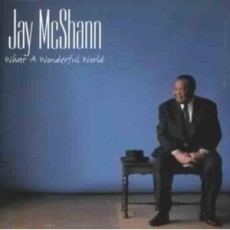
Jay McShann, born James Columbus McShann on January 12, 1916 in Muskogee, Oklahoma began played the piano from the age of 12. His primary education came from Earl “Fatha” Hines late-night radio broadcasts from the Grand Terrace Café. Leaving home he spent time at college and working with bands throughout Oklahoma, Arkansas, Arizona and New Mexico.
In the 1930 Jay moved to Kansas City working with both local groups and his own band with his 1938 band comprised of Charlie Parker, Bernard Anderson, Al Hibbler, Paul Quinichette, Earl Coleman, Ben Webster and Walker Brown, creating a music that would become known as the Kansas City sound.
Nicknamed Hootie, it was during the 1940s that he stood at the forefront of the blues and hard bop jazz musicians mainly from Kansas City. His first recordings were all with Charlie Parker, the first as “The Jay McShann Orchestra” on August 9, 1940. After World War II he began to lead small groups featuring blues shouter Jimmy Witherspoon. Witherspoon started recording with McShann in 1945, and fronting McShann’s band, and had a hit in 1949 with “Ain’t Nobody’s Business”.
Jay McShann was inducted into the Blues Hall of Fame, was nominated twice for a Grammy Award, performed regularly with violinist Claude Williams and continued to recording and touring into the nineties around Kansas City and Toronto, Ontario. The blues and jazz pianist Jay McShann, whose career spanned more than sixty years, passed on December 7, 2006, at St. Luke’s Hospital in Kansas City.

From Broadway To 52nd Street
No Strings opened the curtain at the 54th Street Theatre on March 15, 1962 and ran for 580 performances. The musical starred Richard Kiley and Diahann Carroll performing music composed by Richard Rodgers, and The Sweetest Sounds and Loads of Love went on to become part of the classic jazz lexicon.
The Story: In Paris, David Jordan, a prize-winning writer suffering from a long dry spell meets a black model, Barbara Woodruff. Their budding romance wilts when David learns that a wealthy admirer has kept Barbara. Later they resume their affair but after recognizing that an interracial marriage would be doomed, they go their separate ways.
Jazz History: When trumpeter Miles Davis, under the influence of James Brown, Sly Stone, and Jimi Hendrix, crossed over to a new rock-inflected form with his influential Bitches Brew album in 1970, the new sub-genre of jazz-rock fusion gained jazz legitimacy for about a decade. Numerous graduates of Davis’ experiment—including pianists Herbie Hancock, Keith Jarrett, Joe Zawinul, and Chick Corea, drummers Tony Williams and Jack DeJohnette, percussionist Airto Moreira, saxophonist Wayne Shorter, guitarist John McLaughlin, and bassist Dave Holland—went on to success as leaders or members of 70s fusion super groups like Weather Report, Return to Forever, Lifetime, and the Mahavishnu Orchestra. Fusion was followed by a lighter, radio-friendly style called smooth jazz, which ultimately diminished the legitimacy of fusion in the minds of jazz purists. Fusion was innovative in its time, however, for it brought electronics and a strong backbeat into jazz, while influencing an entire new generation to begin exploring the style.
Sponsored By

www.whatissuitetabu.com
Daily Dose Of Jazz…
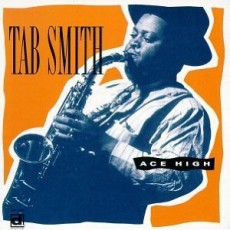
Talmadge (Tab) Smith was born in Kinston, North Carolina on January 11, 1909. He joined his first professional band, the Carolina Stompers, in 1929 and in the 1930s and 1940s he spent several years in the bands of Lucky Millinder and Count Basie as well as spending long periods freelancing both as a player and as an arranger. After WWII he led his own groups, which concentrated on rhythm and blues as jazz turned from swing to bop.
His biggest R & B hit was “Because of You”, recorded for United Records reached #1 on the R & B charts and number 20 on the pop charts, in 1951. His association with United lasted until 1957, put ting out 24 singles and a 10-inch LP for the company sometimes alternating on tenor saxophone.
During the 1950s, Smith was a significant rival to alto saxophone-playing bandleader Earl Bostic, and was also in competition with his own formative influence Johnny Hodges, until Hodges returned to Duke Ellington’s band.
His career never recovered from the closure of United Records. After brief stays at Checker and King Labels, Tab retired from the music business in the early 1960s. He sold real estate, and played piano part-time in a steakhouse.
Alto saxophonist Tab Smith, who concentrated on swing and R&B genres, passed away in St. Louis, Missouri on August 17, 1971.
More Posts: saxophone
Daily Dose Of Jazz…
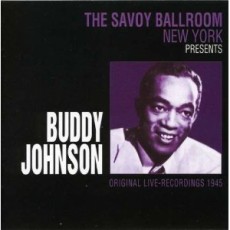
Buddy Johnson was born Woodrow Wilson Johnson on January 10, 1915 in Darlington, South Carolina. He took piano lessons as a child and classical music remained one of his passions. In 1938 he moved to New York and the following year toured Europe with the Cotton Club Revue, but was expelled from Nazi Germany. Later in 1939 he first recorded for Decca Records with his band, soon afterwards being joined by his sister Ella as vocalist.
In 1941 he assembled a nine-piece orchestra and soon began a series of R&B and pop chart hits that included “They All Say I’m The Biggest Fool” with Arthur Prysock on vocals and his sister Ella’s recording of “Since I Fell for You” in 1945, that would later become a jazz standard. In 1946 Buddy composed a Blues Concerto, which he performed at Carnegie Hall two years later. His orchestra remained a major touring attraction through the late 1940s and early 1950s, and continued to record in the jump blues style with some success for Mercury Records. By the end of the 50s Buddy switched to Roulette Records the next year, and bowed out with a solitary session for Hy Weiss’s Old Town label in 1964.
Buddy Johnson, jazz and blues pianist and bandleader passed away on February 9, 1977 in New York at the age of 62 from a brain tumor and sickle cell anemia.
More Posts: bandleader,piano