

Daily Dose Of Jazz…
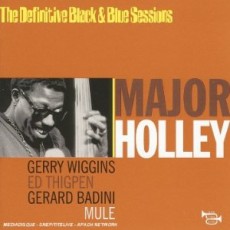
Major Holley was born on July 10, 1924 in Detroit, Michigan and started his music lessons playing violin and tuba at a young age. He started playing bass while serving in the Navy. In the latter half of the 1940s he played with Dexter Gordon, Charlie Parker, and Ella Fitzgerald. In 1950 he and Oscar Peterson recorded duets, and he also played with Peterson and Charlie Smith in a trio setting.
In the mid-1950s Major moved to England, working at the BBC. Upon returning to America he toured with Woody Herman in 1958 and with Al Cohn/Zoot Sims in 1959-60. A prolific studio musician, he played with Duke Ellington in 1964 and with the Kenny Burrell Trio, Coleman Hawkins, Lee Konitz, Roy Eldridge, Michel Legrand, Milt Buckner, Jay McShane and Quincy Jones during the Sixties and Seventies.
He was also noted for singing along with his arco (bowed) bass solos, a technique Slam Stewart also used. Holley and Stewart recorded together on two albums during the 1970s.
Never one far from the educational process, informal or formal, Holley was a professor and taught at the Berklee College of Music from 1967 to 1970. Upright jazz bassist Major Holley passed away on October 25, 1990 in Maplewood, New Jersey.
More Posts: bass
Daily Dose Of Jazz…
Colin James Bailey was born July 9, 1934 in Swindon, England and learned to play drums as a child, studying formally from age seven. Living in Australia from 1958 into the early 1960s, he played with Bryce Rohode and the Australian Jazz Quartet. While the AJQ toured the U.S., Bailey was hired by Vince Guaraldi to play alongside Jimmy Witherspoon and Ben Webster until 1963.
Settling in California, Bailey worked throughout the sixties with Claire Fischer, Victor Feldman, Joe Pass and Miles Davis; toured worldwide with Benny Goodman and George Shearing, played on a television program with Terry Gibbs and played with Chet Baker, Ray Brown, Joao Gilberto and Blossom Dearie in 1975.
In 1970, Bailey became an American citizen and spent six years as Ed Shaughnessy’s backup in the Tonight Show band, and starred in Fernwood Tonight in a drumming role in 1977-78. After a move to Texas in 1979, he became a faculty member at North Texas State University from 1981-84.
Drummer Colin Bailey’s later work includes time with Richie Cole, Jimmy Rowles, Red Mitchell, Stefan Scaggliari, Ron Affif, John Pisano, Weslia Whitfield, George H. Russell, Shelly Manne, Victor Feldman and re-teaming with Joe Pass.
More Posts: drums
Daily Dose Of Jazz…
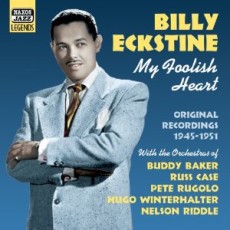
William Clarence Eckstine was born on July 8, 1914 in Pittsburgh, Pennsylvania but grew up in Washington, DC of Prussian and African American heritage. He began singing at the age of seven, entering amateur talent shows while dreaming of a football career that was sidelined when he broke his collarbone. Focusing on music he worked his way west to Chicago, joining Earl Hines’ Grand Terrace Orchestra as vocalist and occasionally trumpeter from1939 – 1943. During his tenure he made a name for himself through the Hines band’s radio shows with such jukebox hits as “Stormy Monday Blues” and his own “Jelly Jelly”.
Eckstine formed the first bop big band in 1944 making it a fountainhead for young musicians who would reshape jazz by the end of the decade, including Dizzy Gillespie, Dexter Gordon, Miles Davis, Art Blakey, Charlie Parker, Fats Navarro and Sarah Vaughn, with Tadd Dameron and Gil Fuller were among the band’s arrangers. Billy hit the charts often during the mid-’40s, with Top Ten entries including “A Cottage For Sale” and “Prisoner of Love”.
Breaking down barriers throughout the Forties as a leader of the original bop big band and as the first romantic black male in popular music, Mr. B, as he was affectionately known, went solo in 1947. His seamless transition to string-filled balladry saw him recording more than a dozen hits by the end of the decade and winning numerous awards from Esquire, Down Beat and Metronome magazines. His 1950 appearance at New York’s Paramount Theatre greatly surpassed Sinatra’s audience draw at the same venue.
Over the course of the next two decades Billy appeared on every major television variety show from Ed Sullivan to Nat King Cole, Jack Paar, Steve Allen, Joey Bishop, Flip Wilson and Playboy After Dark. After a long series of hit tunes and recordings by the 70’s Billy’s recordings came sparingly although he still performed before adoring audiences throughout the world. He made his final Grammy-nominated recording singing with Benny Carter in 1986.
Billy Eckstine, vocalist, bandleader, trumpeter, valve trombonist and guitarist passed away on March 8, 1993, at age 78, in his hometown of Pittsburgh.
More Posts: bandleader,guitar,trombone,trumpet,vocal
Daily Dose Of Jazz…
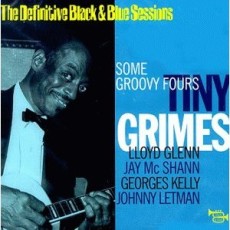
Lloyd “Tiny” Grimes was born on July 7, 1916 in Newport News, Virginia and began his career playing drums and one-fingered piano. In 1938 he took up the electric 4-string tenor guitar and two years later joined the Cats and a Fiddle as guitarist and singer. 1943 saw him as part of the Art Tatum Trio making a number of recordings and this early configuration recorded some of the more interesting early examples of Tiny Grimes’ guitar work.
After leaving Tatum, Grimes recorded with his own groups in New York and he recorded with a long list of leading musicians, including Billie Holiday. He made four recordings with Charlie Parker that are considered excellent examples of early bebop jazz: “Tiny’s Tempo”, “Red Cross”, “Romance Without Finance” and “I’ll Always Love You”. He was to become one of the 52nd Street regulars during this period.
Towards the end of the decade Tiny scored a hit on a jazzed up version of “Loch Lomond”. His band was billed as Tiny “Mac” Grimes and the Rocking Highlanders, appearing in kilts and included top tenor sax man Red Prysock and big-voiced baritone singer Screaming Jay Hawkins. Grimes continued to lead his own groups into the later 1970’s recording for Prestige in a series of strong blues-based performances with Coleman Hawkins, Illinois Jacquet, Pepper Adams, Roy Eldridge, Earl Hines and others of note.
With Paul Williams he co-headlined the first “Moondog Coronation Ball”, promoted by Alan Freed in Cleveland, Ohio on March 21, 1952, often claimed as the first rock and roll concert. It is also generally considered he played on the first rock and roll record with a group called The Crows one-hit wonder “Gee”.
Tiny Grimes, a jazz and R&B guitarist most noted for playing a four-string electric tenor guitar, passed away on March 4, 1989.
More Posts: guitar
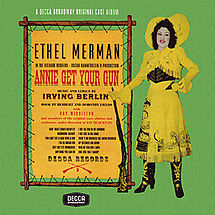
From Broadway To 52nd Street
Annie Get Your Gun rose its curtain for the first time at the Imperial Theatre on May 16, 1946. Irving Berlin composed the music for its stars Ethel Merman and Ray Middleton. The show set a record with a run of one thousand, one hundred and forty-seven performances. From the musical came three tunes that entered into the jazz lexicon – Anything You Can Do, There’s No Business Like Show Business and They Say It’s Wonderful.
The Story: Annie Oakley is poor but happy country girl and an infallible shot. This sharpshooting lands her in Buffalo Bill’s Wild West Show. She falls in love with rival sharpshooter Frank Butler, who tells her the girl that he marries must be a dainty thing, which Annie is not. It seems the only thing they can agree on is that when folks talk about love it’s wonderful. A shooting match is arranged between the two, Sitting Bull tells her that to win her man she must lose the match. Although Annie boast anything you can do I can do better, she loses the match anyway and the man.
Broadway History: Though Broadway was becoming less of an industry and more of a loose array of individuals, in the next four years this would have positive aspects. America would soon fall prey to increasing intolerance and political persecution but Broadway would continue to express unorthodox opinions without fear of government retaliation. Broadway would lose some of its scope but retain its liveliness and joyfulness in an increasing corporate environment. In a country that now required conformity, Broadway preserved a sense of freedom of speech and action, ideals on which this nation was founded. This was no less rewarded with the establishment of the private club of the “blockbuster musical” has offered entry to only a chosen few that have had more than a thousand performances. The first to join this esteemed club is this weeks feature Annie Get Your Gun.
Sponsored By

www.whatissuitetabu.com