

Daily Dose Of Jazz…
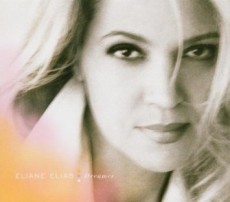
Eliane Elias was born on March 19, 1960 in Sao Paulo, Brazil and her musical talents began to show at an early age. She started studying piano at age seven, and by age twelve was transcribing solos from the great jazz masters. Fifteen, saw her teaching piano and improvisation and her performing career began at age seventeen, working with Brazilian singer/songwriter Toquinho and the poet Vinicius de Moraes.
In 1981, she headed for New York and a year later landed a spot in the acclaimed group Steps Ahead. In 1988 she was voted Best New Talent in the Critics Poll of Jazziz magazine, together with Herbie Hancock she was nominated for a Grammy in the “Best Jazz Solo Performance” category for her 1995 release, Solos and Duets, received the Downbeat Readers Poll’s “Best Jazz Album” for her recording The Three Americas and has been named in five other categories: Beyond Musician, Best Composer, Jazz Pianist, Female Vocalist, and Musician of the Year.
Elias has recorded with RCA Victor, Bluebird, Denon, Manhattan, Blue Note, EMI, Concord/Picante, ECM and Savoy Jazz spanning over twenty albums to date. She has recorded two albums solely dedicated to the works of the composer, Plays Jobim and Sings Jobim. Her 1998 release, Eliane Elias Sings Jobim, winning Best Vocal Album in Japan and was awarded Best Brazilian Album in the Jazziz Critics Poll. She has been featured in a Calle 54 documentary, received several Grammy nominations for Best Latin Jazz Album, and recorded with Denyce Graves on The Lost Days.
On her first album titled “Amanda” released in 1984 she collaborated with Randy Brecker and shortly thereafter she began her solo career. She has also collaborated with bassist Marc Johnson on the album Swept Away. Pianist, singer, arranger and songwriter Eliane Elias, known for her distinctive blend of her Brazilian roots with voice, jazz and classical music, continues to compose, record, perform and tour.

Dose A Day – Blues Away
Daily Dose Of Jazz…
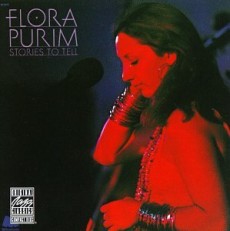
Flora Purim was born on March 6, 1942 in Rio de Janeiro to Jewish parents who were both classical musicians, her father a violinist and her mother a pianist. She discovered jazz when her mother played 78 vinyl rpms of Dinah Washington, Billie Holiday, Frank Sinatra, Bill Evans, Oscar Peterson, and Erroll Garner while her husband was out of the house.
Purim began her career in Brazil during the early 1960s. During this period, she made a recording of bossa nova standards by Carlos Lyra and Roberto Menescal titled Flora e M.P.M. Later in the decade she became lead singer for the Quarteto Novo, led by Hermeto Pascoal and Airto Moreira.
Flora mixed jazz with radical protest songs to defy the repressive Brazilian government of that time and a 1964 military coup led to censorship of song lyrics. Shortly before leaving Brazil she married Airto and arriving in New York in 1967, they became immersed in the emerging Electric Jazz. They toured Europe with Stanley Clarke, Stan Getz and Gil Evans. In 1972, alongside Clarke and Joe Farrell, they were, for the first two albums, members of Return To Forever. That year the band released their debut self-titled album Return To Forever, followed the same year as Light as a Feather.
In 1973, Purim released her first solo album in the United States, titled Butterfly Dreams. She was chosen by the Down Beat reader’s poll as one of the top five jazz singers. She worked with Carlos Santana and Mickey Hart and throughout the 1970s, Flora released a string of albums for the Milestone label, became involved with the Uruguayan band Opa, (which means “hi” in Uruguay), Purim collaborated in vocals in the band’s second album Magic Time, and in return, Opa played in “Corre Niña” on Flora’s album Nothing Will Be as It Was…Tomorrow .
In the 1980s Purim toured with Dizzy Gillespie’s United Nation Orchestra, culminating with Gillespie’s Grammy Award-winning album Dizzy Gillespie and the United Nation Orchestra – Live at the Royal Festival Hall, London. The Nineties saw her singing on the Grammy Award-winning album Planet Drum by Mickey Hart, the release of her own album and world tour, Speed of Light and a new band with contributions from Billy Cobham, George Duke, Alphonso Johnson, Giovanni Hidalgo and others.
Through the 1990s, Purim worked on a number of Latin projects, collaborated with P.M. Dawn on the album Red Hot + Rio. She has a huge catalogue of music that showcases her rare six-octave voice renders a vocal style influenced by Sarah Vaughan and Ella Fitzgerald, drifting from lyrics to wordlessness without ever losing touch with the melody and rhythm. She broadened her repertoire to include traditional mainstream jazz, bebop and doing numbers in 4/4 time instead of the traditional Brazilian 2/4 beat. She is a 4-time winner Down Beat’s Best Female Jazz Vocalist and 2-time Grammy nominee for Best Female Jazz Performance and has been named “Order of Rio Branco” by Brazil President Fernando Henrique Cardoso. She continues to perform, record and tour.
Take A Dose On The Road
More Posts: vocal
Daily Dose Of Jazz…
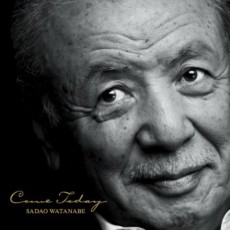
Sadao Watanabe was born on February 1, 1933 in Utsunomiya, Japan and first began learning music at the age of 18. He started performing professionally in 1953. By 1958 he had established himself as a world-class saxophonist having performed with leading musicians and quartets. In 1962 he left Japan to study at Berklee College of Music in Boston.
Known for his bossa nova recordings, Sadao’s work encompasses a large range of styles with collaborations from musicians all over the world. Of his 72 albums to date, he has had 13 albums reach the top 50 Billboard charts and two within the Top 10. He has also had numerous albums reach number one on the jazz charts.
Watanabe has been awarded the Order of the Rising Sun – the imperial medal of honor, the Fumio Nanri Award, and an honorary Doctorate Degree from Berklee College of Music.
In addition to his musical career, alto and soprano saxophonist and flutist Sadao Watanabe is also a published photographer with six books to his credit in Japan. He is also a U.S. citizen sharing his time between his homeland and Los Angeles, California as he continues to perform, record and tour.
Jazz Is Global – Share
Daily Dose OF Jazz…
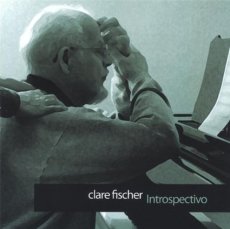
Clare Fischer was born October 22, 1928 in Durand, Michigan and started general music study in grade school with violin and piano as his first instruments. By age 7 he was picking out four-part harmony on the piano and by 12 was composing classical music and creating instrumental arrangements for dance bands.
In high school he added cello, clarinet and saxophone to his arsenal of instruments and studied music theory, harmony and orchestration privately. He started his own band at 15, writing all the arrangements, went on to college studying music composition and theory as a piano major. After graduation and a stint in the Army as the arranger for the U.S. Military Academy Band at West Point, N.Y., he returned to Michigan State and received his Masters in 1955.
He went on to arrange for the vocal quartet Hi-Lo’s that would later become a major influence on Herbie Hancock, would record under his own name in 1962 for Pacific Jazz, play with Bud Shank, Joe Pass and Cal Tjader among others, arrange for Sergio Mendes and Willy Ruff, began playing organ and composed his most famous compositions, Pensativa and Morning.
By the mid-‘70s Fischer was pioneering the electric keyboard, reconnected with Tjader started his group Salsa Picante, won a Grammy for his album 2+2 and Free Fall, forayed into R&B doing orchestral sweeteners, worked with Rufus with Chaka Khan, The Jacksons, Earl Klugh, The Debarges, Shot-gun and Atlantic Starr and pop artists such as Paul McCartney, Prince, Celine Dion and Robert Palmer, picking up numerous gold records.
From the Eighties on Clare has been commissioned to score symphonic work using Duke Ellington and Billy Strayhorn themes, working with Branford Marsalis, the Netherlands Metropole Orchestra, arranged for Spike Lee’s Girl 6, has conducted clinics and master classes at numerous universities, and continued to record in small group and orchestral settings until his death in Los Angeles, California on January 26, 2012 at age 82..
Take A Dose On The Road
More Posts: arranger,bandleader,composer,keyboard,piano,saxophone,synthesizer
Daily Dose Of Jazz…
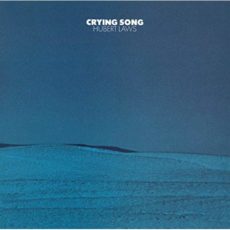
Hubert Laws was born November 10, 1939 in the Studewood section of Houston, Texas, the second of eight children. He grew up across the street from a honky-tonk called Miss Mary’s Place where his grandfather played harmonica and his mother, a pianist, played gospel music. He began playing flute in high school after volunteering to substitute for the school orchestra’s regular flutist. Becoming adept at jazz improvisation he played in the Houston-area jazz group the Swingsters, which eventually evolved into the Modern Jazz Sextet, the Night Hawks, and The Crusaders. At age 15, he was a member of the early Jazz Crusaders while in Texas from 1954–60. Multi-talented, he also played classical music during those years.
A scholarship to Juilliard School of Music in 1960 saw him studying music in the classroom and with master flutist Julius Baker. Laws went on to play with both the New York Metropolitan Opera Orchestra (member) and the New York Philharmonic Orchestra during the years 1969–72. In 971 he recorded renditions of classical compositions by Fauré, Stravinsky, Debussy, and Bach on the CTI album Rite of Spring with strings and enlisted the talents of Airto Moreira, Jack DeJohnette, Bob James, and Ron Carter.
During his years at Juilliard he played flute with Mongo Santamaría and began recording as a bandleader for Atlantic in 1964, releasing the albums The Laws of Jazz, Flute By-Laws, and Laws Cause. He has worked with In the Seventies he can also be heard playing tenor saxophone on some recordings.
The 1980’s saw the minor hit Family on CBS Records getting played on many UK soul radio stations. In the 1990s Hubert resumed his career, recording with opera singers Kathleen Battle and Jessye Norman. His albums on the Music Masters Jazz label—My Time Will Come in 1990 and Storm Then Calm in 1994 show a return to his old form of his early 1970s albums.
Over the course of his career he also recorded with Herbie Hancock, McCoy Tyner, Nancy Wilson, Quincy Jones, Paul McCartney, Paul Simon, Aretha Franklin, Ella Fitzgerald, Sarah Vaughan, Lena Horne, Leonard Bernstein, James Moody, Jaco Pastorius, Sérgio Mendes, Bob James, Carly Simon, George Benson, Clark Terry, Stevie Wonder, J. J. Johnson, The Rascals, Morcheeba Ashford & Simpson, Chet Baker, George Benson, Moondog, his brother Ronnie, Gil Scott-Heron, among others, and was a member of the New York Jazz Quartet. .
Laws has been honored with the Lifetime Achievement Awards from the National Flute Association and the National Endowment for the Arts in the field of jazz, as well as a recipient of the NEA Jazz Masters Award and three Grammy nominations. Flautist and tenor saxophonist Hubert Laws continues to compose, record and perform.
