Daily Dose Of Jazz…
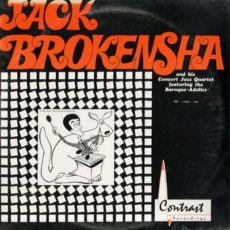
Jack” Brokensha was born John Joseph Brokensha on January 5, 1926 in Nailsworth, South Australia. He studied percussion under his father, and played xylophone in vaudeville shows and on radio. He played with the Australian Symphony Orchestra during the war years from 1942–44, and then joined a band in the Air Force from 1944 to 1946.
Forming his own group, Jack began performing in Melbourne in 1947, moving around Australia and playing in Sydney from 1949 to mid–50, Brisbane later in 1950 and Adelaide in 1951. By 1953 he had moved to Windsor, Ontario, Canada with Australian pianist Bryce Rohde and together they formed the Australian Jazz Quartet/Quintet. They enlisted fellow Australian bassoonist/saxophonist Errol Buddle and American saxophonist/flutist/bassist Dick Healey to complete the ensemble that toured together until 1958 and often grew to quintet /sextet to record.
Leaving Canada for Detroit, Michigan, Brokensha was hired by Berry Gordy of Motown Records as a percussionist, becoming one of the few white members of Motown’s Hitsville U.S.A. recording studio’s house band, The Funk Brothers. He was given the nickname “White Jack”, to distinguish him from Jack Ashford, an African American percussionist nicknamed “Black Jack”.
During the 1970s he ran “Brokensha’s”, a steakhouse high up in a Downtown Building whilst working at Motown. Though relatively small, the club had good food and Jack’s great music, with occasional appearance by his friend and pianist Detroit resident, pianist Bess Bonnier. Following tours of Australia with Sammy Davis, Jr. and Stan Freberg, he founded his own music production company and did a session with Art Mardigan in 1963. Jack then became more active in radio as a disc jockey and writing music for television. He recorded as a leader again in 1980 and continued to lead his own group well into the 1990s. The Australian Jazz Quartet also reunited for tours and recording in 1994, leaving a small collection of some thirteen albums as a leader and member of the quartet.
Vibraphonist Jack Brokensha moved to Sarasota, Florida, where he passed away due to complications from congestive heart failure, at age 84 on October 28, 2010.

#preserving genius
More Posts: drums,vibraphone
Daily Dose Of Jazz…
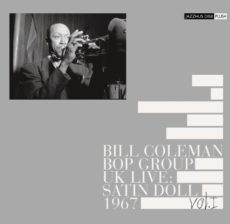
Alan Littlejohn was born Albert John Alan Littlejohns on January 4, 1928 in Highgate, London, England. Taking up the trumpet in 1946, he trained as an accountant after the War but also played semi-professionally with bands such as the Blue Note Swingtet and the Galleon Jazz Band. In 1952 he joined Cy Laurie and then a year later moved to play with Eric Silk. Moving to Manchester for eight months he worked with Ron Simpson and the Saints Jazz band in 1954, but then returned to London to work with Eric Silk again.
1955 saw Littlejohn taking a residency at the Putney Jazz Club and a further residency in Chelsea in 1960. In 1963 he led a quintet with trombonist Tony Milliner, pianist Mat Mathewson, bassist Bucky Cowman and Terry Cox on drums, emulating the style of the Bob Brookmeyer/Clark Terry band. Cox and Cowman were soon replaced by Max Cutlan and Dave Holland, respectively.
Over the course of his career Alan would play with Mal Cutlan, Lew Hooper, Jimmy Hamilton, Matt Methewson, Cat Anderson, Peanuts Hucko, Earl Warren, Sonny Dee, the Georgia Jazz Band and to be the support band for Dave Brubeck at his Festival Hall gig. From 1973 to 1978, he played with Alvin Roy’s Band which had a residency at The Prospect of Whitby in London.
When not in residency at clubs in London Littlejohn toured Spain and Germany, guest appeared with the Merseysippi Jazz Band and during the Eighties played as a full-time professional musician for a short period. From 1990 he worked with Laurie Chescoe’s Good Time Jazz until a month before his death. Trumpeter, flugelhornist and bandleader Alan Littlejohn, most notable for his work with artists such as Ben Webster, Earl Hines, Billy Butterfield and recording with Bill Coleman, passed away on November 12, 1995 in Barnet in Hertfordshire.

Uplift Someone’s World

#preserving genius
More Posts: flugelhorn,trumpet
Daily Dose Of Jazz…
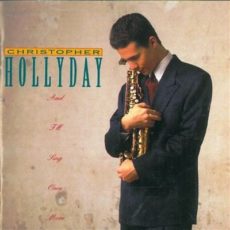
Christopher Hollyday January 3, 1970 in New Haven, Connecticut. He started playing alto when he was nine, developed quickly, and was playing in clubs by the time he was 14 years old. That same year he recorded his first album on his own Jazzbeat label. During his childhood years he was heavily influenced by Charlie Parker, but a few years later he almost sounded like a clone of Jackie McLean.
In 1988, he took a group into the Village Vanguard, and the following year he toured with Maynard Ferguson’s big band. One of the “Young Lions” at the end of the Eighties, his notoriety rose with his recording of four albums between 1989 and 1992 for the RCA Novus label. On his debut self titled album he enlisted Wallace Roney, Cedar Walton, David Williams and Billy Higgins, bringing in among others John Lockwood, Larry Goldings and Brad Mehldau .
In January 1992 he released his final album And I’ll Sing Once More with John Clark, Mark Feldman, Scott Colley, Kenny Werner, Scott Robinson and Douglas Purviance. After that, his recording career was interrupted abruptly when his record contract was not renewed at RCA Novus.
In 1997 he began a career as an educator, teaching first at the Orange Glen High School in Escondido, California, then switching to the Valley Center High School in Valley Center, California. Alto saxophonist Christopher Hollyday is currently teaching and working with jazz ensemble classes and the school band and continues to perform.
Jazz Is Global – Share
#preserving genius
More Posts: saxophone
Daily Dose Of Jazz…
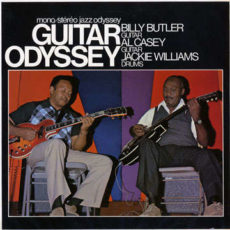
Jackie Williams was born on January 02, 1933 in Harlem, New York City, New York. Growing up in the fertile jazz atmosphere of the city, he also absorbed the dance grooves of rhythm and blues. Citing Papa Joe Jones as one of his greatest influences, by the mid 1950s he was playing for dancers and soon became a first call musician for recording sessions. He is a recipient of Yale University’s Duke Ellington Fellowship Medal
For 18 years Jackie played with Doc Cheatham at Greenwich Village’s Sweet Basil and performed and recorded with Buck Clayton on a U.S. State Department tour of the Middle East and Africa. He has also been a sideman with Bobby Hackett, Illinois Jacquet, Earl Hines, Duke Ellington, Alberta Hunter, Buddy Tate, Billy Butler, Al Casey, Stéphane Grappelli, Johnny Guarnieri, Jimmy Shirley, Buddy Tate, Slam Stewart, Barbara Morrison, Milt Hinton, Dizzy Gillespie, Maxine Sullivan, Vic Dickenson, Jay McShann, Bobby Short, Teddy Wilson and Errol Garner to name a few.
At one time or another during his career Williams was a member of The Cliff Smalls Septet, The Dan Barrett Octet, The Howard Alden / Dan Barrett Quintet, Warren Vaché Quartet, Warren Vaché, Jr. And His All-Stars, Statesmen of Jazz, The Floating Jazz Festival Trio and many others.
Drummer Jackie Williams is currently a member of the Junior Mance Trio.
Sponsored By
Voices From The Community
#preserving genius
More Posts: drums
Daily Dose Of Jazz…
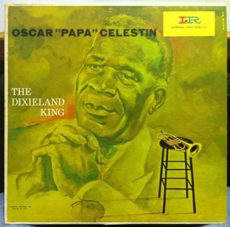
Oscar “Papa” Celestin was born on January 1, 1884 in Napoleonville, Louisiana to a Creole family. As a youth he worked on rural Louisiana plantations but eager for a better life, he worked as a cook for the Texas & Pacific Railroad, saved up money and bought used musical instruments. He played guitar and trombone before deciding on cornet as his main instrument. He took music lessons from Claiborne Williams, who traveled down the Bayou Lafourche from Donaldsonville.
Celestin played with the Algiers Brass Band by the early 1900s, and with various small town bands before moving to New Orleans in 1904, at age 20. There he played with the Imperial, Indiana, Henry Allen senior’s Olympia Brass Band, and Jack Carey’s dance band. Early in his career he was sometimes known as Sonny Celestin. Around 1910 he landed a job as leader of the house band at the Tuxedo Dance Hall on North Franklin St. at the edge of Storyville.
Keeping the name Tuxedo as the band’s name after the Dance Hall closed, they dressed in tuxedos and became one of the most popular bands hired for society functions, both black and white. He co-led the Tuxedo Band with trombonist William Ridgely and made their first recordings during the Okeh Records field trip to New Orleans in 1925. Following a fallout with Ridgely, the two led competing Tuxedo bands for about five years. Celestin’s Original Tuxedo Orchestra had Louis Armstrong, Bill Mathews, Octave Crosby, Christopher Goldston, Joe Oliver, Mutt Carey, Alphonse Picou and Ricard Alexis as a members over the years and made an additional series of recordings for Columbia Records through the 1920s. He also led the Tuxedo Brass Band, one of the top brass bands in the city.
Forced out of the business by depression economics, Papa worked in a shipyard until putting together another band after the World War II. The new Tuxedo Brass Band was tremendously popular and became a New Orleans tourist attraction. By 1953 he appeared in the travelogue Cinerama Holiday, became a regular feature at the Paddock Lounge on Bourbon Street and gave a command performance for President Eisenhower at the White House. He made regular radio broadcasts, television appearance, and more recordings with his last recording was singing on Marie LaVeau in 1954.
Bandleader, trumpeter, cornetist and vocalist Papa Celestin passed away in New Orleans, Louisiana on December 15, 1954, amassing 4000 people who marched in his funeral parade. The Jazz Foundation of New Orleans had a bust made and donated to the Delgado Museum in New Orleans, in honor of his contributions to the genre. #preserving genius
Give A Gift Of Jazz – Share