

Daily Dose Of Jazz…
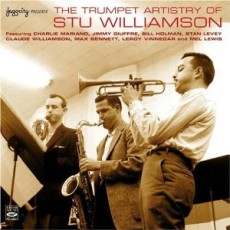
Stu Williamson was born on May 14, 1933 in Brattleboro, Vermont and is the younger brother of jazz pianist Claude Williamson. The trumpeter relocated to Los Angeles in 1949 and became a regular on the West Coast scene. He played with Woody Herman, Mel Lewis-Pepper Adams Quintet, Elmo Hope, Lennie Niehaus, Billy May and Charlie Barnet the first half of the Fifties.
Williamson played a significant role in Stan Kenton’s Orchestra, Howard Rumsey’s Lighthouse Café All-Stars and Terry Gibbs’s Dream Band. Between 1954 and 1958 Williamson played intermittently with Shelly Manne and was a ubiquitous session player up until 1968.
Although he had a beautiful, rich, round tone and his ability to create melodic solos full of invention, power and clarity gave him the opportunity to front small groups and big bands. Disappearing from the jazz scene after battling drug addiction for much of his life, including for years after he left the music. Trumpeter Stu Williamson passed away on October 1, 1991 in Studio City, California.

Dose A Day-Blues Away
More Posts: trumpet
Daily Dose Of Jazz…
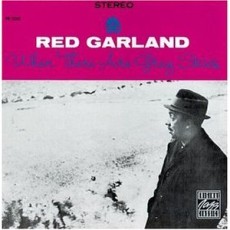
William “Red” Garland was born in Dallas, Texas on May 13, 1923. Showing an early interest in music, he began his musical studies on the clarinet and alto saxophone but switched to the piano. Garland spent copious amounts of time practicing and rapidly developed into a proficient player. A short early career as a welterweight boxer did not seem to hurt his playing hands and he fought a young Sugar Ray Robinson before making the switch to a full-time musician.
Garland’s trademark block chord technique, a style that would influence many forthcoming pianists in the jazz idiom and a commonly borrowed maneuver in jazz piano today, was unique and differed from the methods of earlier block chord pioneers such as George Shearing and Milt Buckner. His block chords were constructed of three notes in the right hand and four notes in the left hand, with the right hand one octave above the left. The right hand played the melody in octaves with a perfect 5th placed in the middle of the octave.
After WWII he performed with Roy Eldridge, Coleman Hawkins, Charlie Parker and Lester Young. He found steady work in Boston, New York and Philadelphia and by the late 40s he was touring with Eddie Vinson at the same time that John Coltrane was in Vinson’s band. His creativity and playing ability continued to improve, though he was still somewhat obscure. By the time he became a pianist for Miles Davis he was influenced by Ahmad Jamal and Charlie Parker’s pianist Walter Bishop.
Red Garland found fame in 1955 when he joined the Miles Davis Quintet along with John Coltrane, Philly Joe Jones and Paul Chambers and together they recorded several Prestige albums such as Workin’, Steamin’ Cookin’ and Relaxin’, that would later influence the free jazz movement. He would go on to play on ‘Round About Midnight and Milestones but would be eventually be fired by Miles.
In 1958 Garland formed his own trio. Among the musicians the trio recorded with Pepper Adams, Nat Adderley, Ray Barretto, Kenny Burrell, Eddie “Lockjaw” Davis, Jimmy Heath, Harold Land, Leroy Vinnegar and many others to numerous to list.
Red released some 46 albums as a leader, recording sessions for Prestige, Fantasy, Galaxy, Jazzland, Keystone, Xanadu, Alfa, Moodsville and New Jazz record labels. He sat in as a sideman for such greats as Arnett Cobb, Art Pepper, John Coltrane and Phil Woods.
Stopping his playing professionally for a number of years in the 1960s when jazz lost popularity to rock and roll, he returned to Dallas to care for his mother. Pianist Red Garland recorded sparsely through the 70s but continued recording and performing until his death of a heart attack on April 23, 1984 at the age of 61.
Inspire A Young Mind
More Posts: piano
Daily Dose Of Jazz…
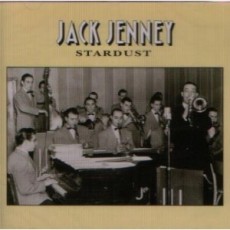
Jack Jenney was born Truman Eliot Jenney May 12, 1910 in Mason City, Iowa and started playing in his father’s band from the age of 11. The trombonist’s first professional work began with Austin Wylie in 1928 but he would go on to work with Isham James, Red Norvo, Artie Shaw, Mal Hallett and Waring’s Pennsylvanians.
Jack led his own band for a year in 1939-40, which included Peanuts Hucko, Paul Fredricks and Hugo Winterhalter. Although this band received good reviews it was a financial failure. Best known for instrumental versions of the song Stardust, he won the Down Beat Reader’s Poll for trombone in 1940 and would appear in the 1942 film “Syncopation”.
After his return from being drafted into the United States Navy, trombonist Jack Jenney died of complications related to appendicitis in Los Angeles, California on December 16, 1945.
Give A Gift Of Jazz – Share
More Posts: trombone
Daily Dose Of Jazz…
Julian Joseph was born May 11, 1966 in London, England. As a jazz pianist, bandleader, composer, arranger and broadcaster he has worked solo, in his all-star big band, trio, quartet, forum project band or electric band.
Joseph’s style combines a respect for the modern developments in jazz piano with its history and works in both contemporary and traditional situations with his music. He is also active in jazz education helping to form the jazz syllabus for the Associated Board of the Royal Schools of Music in Great Britain.
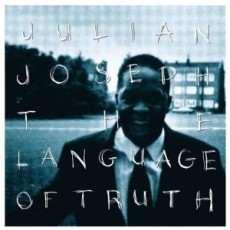
Starting with his first album The Language of Truth in 1991, Julian has a total of seven albums to date, one single, and a soundtrack to his credit, and a baker’s dozen as a sideman. He has focused on live performance such as, at the London Jazz Festival, also broadcasting as he hosts several radio shows on BBC Radio 3, including Jazz Line-up and the celebrated Jazz Legends as well as composing and teaching.
He has also made two jazz television series for Meridian, a jazz series for Sky TV’s Artsworld Channel and the documentary A Festival of Jazz Piano for the BBC in Wales directed by Celia Lowenstein. He continues to perform and record.
Jazz Is Global – Share
More Posts: arranger,broadcaster,composer,educator,piano

From Broadway To 52nd Street…
Evita opened at the Broadway Theatre on September 25, 1979 and ran 1,567 performances. The musical starred Patti Lupone, Mandy Patinkin, Bob Gunton, Mark Syers, Jane Ohringer singing music composed by Andrew Lloyd Webber with lyrics by Tim Rice. The show began as a rock opera concept album released in 1976. Its success led to productions in London’s West End in 1978, and on Broadway a year later, both of which enjoyed considerable success. A major 1996 film of the musical was made, starring Madonna and Antonio Banderas. The musical was revived in London in 2006. Evita has had numerous professional tours and worldwide productions, and numerous cast albums have been recorded, and won a 1980 Grammy. “Don’t Cry For Me Argentina” has become an entry into the catalogue of jazz standards.
The Story: Evita is a musical that concentrates on the life of Argentine political leader Eva Peron, the second wife of Argentinian President Juan Peron. The story follows Evita’s early life, rise to power, charity work, and eventual death.
Broadway History: The Booth Theatre was given its name in recognition of one of the great contributors to American theatre. However, the current Booth Theatre does not get its name from an accomplished actor, playwright, or producer. It comes instead from the original Booth Theatre, which was originally located on 23rd Street and 6th Avenue. The original Booth Theatre, which opened on February 3, 1869 with a production of Romeo and Juliet, derived its name from Edwin Booth, an accomplished Shakespearean actor, who unfortunately happens to be the brother of infamous actor/assassin John Wilkes Booth. Although demolished only fourteen years later in 1883, the theatre revolutionized American drama by incorporating hydraulic ramps to change scenery, an electric device that allowed changes in lighting, and a sprinkler system. Fun fact, the top floor of the original theatre’s adjoining shop and rehearsal space was reserved as Edwin’s personal apartment.
Sponsored By

www.whatissuitetabu.com