Daily Dose Of Jazz…
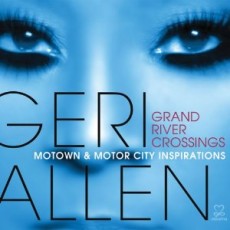
Geri Allen was born on June 12, 1957 in Pontiac, Michigan and received her early jazz education at Cass Technical High School in Detroit and the Jazz Development Workshop under the mentorship of Marcus Belgrave. In 1979 she graduated fro Howard University with a jazz studies degree, moved to New York and studied with Kenny Barron. She went on to get a degree in ethnomusicology from the University of Pittsburgh, returned to New York and joined the Brooklyn based M-Base crowd, recording several albums with Steve Coleman, beginning in 1985.
Geri’s 1984 debut album “The Printmakers” showcased the pianist’s more avant-garde tendencies, followed by “Etudes” and “Twenty-One” in 1995 in which she was the first recipient of Soul Train’s Lady of Soul Award for jazz album of the year. She has played with a luminous list of musicians not the least Ron Carter, Tony Williams, Charlie Haden, Anthony Cox, Betty Carter, Ornette Coleman, Jack DeJohnette, Mary Stallings and Charles Lloyd.
Geri Allen currently teaches as Associate Professor of Jazz Piano & Improvisation Studies at the University of Michigan as well as recording and touring with Charles Lloyd; and in 2007 participated in the documentary film titled “Live Music, Community & Social Conscience” that looks at how music connects us to our humanity, and to each other regardless of borders, politics, culture economics, or religion. She was the 2008 recipient of a Guggenheim Fellowship.
Allen has received many awards such as the “African-American Classical Music Award”, “A Salute to African-American Women: Phenomenal Woman”, nominations in 2011 for the NAACP Image Award for Best Jazz Album, “Geri Allen & Timeline Live” and for both The 10th Annual Independent Music Awards for “Live Performance Album” and for “Best Jazz Pianist”, by the Jazz Journalists Association.
As an educator Geri has taught Jazz & Contemporary Improvisation at the School Of Music Theatre & Dance, at the University Of Michigan and was a curator in New York City at the STONE. Since 2013 she’s been teaching at her alma mater, the University of Pittsburgh, as an Associate Professor of Music and as the Director of the Jazz Studies Program.
Pianist Geri Allen continued to perform, tour and record until she passed away on June 27, 2017, two weeks after her 60th birthday in Philadelphia, Pennsylvania after losing her battle with cancer..

Inspire A Young Mind
More Posts: piano
Daily Dose Of Jazz…
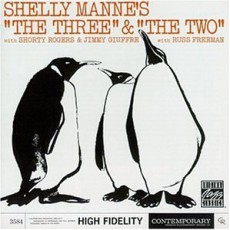
Shelly Manne was born Sheldon Manne in New York City on June 11, 1920. His father and uncles were drummers, he got tips from drummer Billy Gladstone as a teenager and soon he rapidly developed his style in the 52nd Street clubs in the late 30s and 40s. He got his first professional job with the Bobby Byrne Orchestra and was soon recording with Coleman Hawkins, Charlie Shavers, Don Byas, Duke Ellington, Johnny Hodges, Harry Carney and Rex Stewart.
Manne rose to stardom when he became part of the bands of Woody Herman and Stan Kenton in the late 1940s and early 1950s, winning awards and developing a following at a time when jazz was the most popular music in the United States. When the bebop movement began to change jazz in the 1940s, Manne loved it and adapted to the style rapidly, performing with Dizzy Gillespie, Charlie Parker, Flip Phillips, Charlie Ventura, Lennie Tristano and Lee Konitz.
In the early 1950s, Manne left New York, settled permanently on a ranch outside Los Angeles, where he and his wife raised horses. This began his important role in the West Coast school of jazz, performing on the Los Angeles jazz scene with Shorty Rogers, Hampton Hawes, Red Mitchell, Art Pepper, Russ Freeman, Frank Rossolino, Chet Baker, Leroy Vinnegar and many others.
Shelly led a number of small groups that recorded under his name and leadership, recording his now famous live Black Hawk sessions and for Contemporary Records. He played in styles of Dixieland, swing, bebop, avant-garde jazz and fusion, as well as contributing to the musical background of hundreds of Hollywood films and television programs, collaborating with Henry Mancini on such films as Breakfast At Tiffany’s, Hatari and The Pink Panther and tv shows like Peter Gunn and Mr. Lucky.
Shelly Manne passed away of a heart attack on September 26, 1984 shortly before the popular revival of interest in jazz had gained momentum.
Give A Gift Of Jazz – Share
More Posts: drums
Daily Dose Of Jazz…
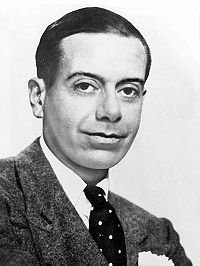
Cole Albert Porter was born into wealth on June 9, 1891 in Peru, Indiana. His musical training began at an early age, learning the violin at age six, the piano at eight and wrote his first operetta, with help from his mother at 10. His father, an amateur poet, may have influenced his son’s gifts for rhyme and meter. He matriculated through Yale writing student songs went on to Harvard law, switched to the music faculty, where he studied harmony and counterpoint.
Classically trained, he was drawn towards musical theatre. After a slow start, he began to achieve success in the 1920s, and by the 1930s he was one of the major songwriters for the Broadway musical stage. Unlike most successful Broadway composers, Porter wrote both the lyrics and the music for his songs.
After a serious horseback riding accident in 1937, Cole was left disabled and in constant pain, but he continued to work. His shows of the early 1940s did not contain the lasting hits of his best work of the 1920s and 30s, but in 1947 he made a triumphant comeback with his most successful musical, Kiss Me Kate.
Porter wrote numerous songs that have come to be jazz standards such as Night and Day, Anything Goes, I Get A Kick Out Of You and I’ve Got You Under My Skin, It’s De-Lovely, Begin the Beguine, Just One of Those Things and In The Still of the Night. He also composed scores for films from the 1930s to the 1950s.
Cole Porter, composer and lyricist, noted for his sophisticated, suggestive lyrics, clever rhymes and complex forms, contributed to the great American songbook, passed away of kidney failure on October 15, 1964.
Put A Dose In Your Pocket
More Posts: composer,songwriter
Daily Dose Of Jazz…
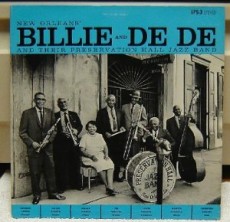
Billie Pierce was born Wilhelmina Goodson on June 8, 1907 in Marianna, Florida. She was born into a family of pianists with both parents and seven-sisters playing, notably her sister Ida Goodson.
Early in the 1920s, Billie played with Bessie Smith and later in the decade played in the bands of Alphonse Picou, Emile Barnes and George Lewis. By the 1930s she was playing the Blue Jay Club, where she met trumpeter De De Pierce; the two fell in love, married, and co-led their own ensemble, which served as the house band at Luthjen’s Dance Hall in the 1950s.
She played in the Preservation Hall Jazz Band and was a regular on the New Orleans jazz scene in the 1950s through the early Seventies. Pianist and singer Billie Goodson died on September 29, 1974 in New Orleans, Louisiana at the age of 67.
Give The Gift Of Knowledge
More Posts: vocal
Hollywood On 52nd Street
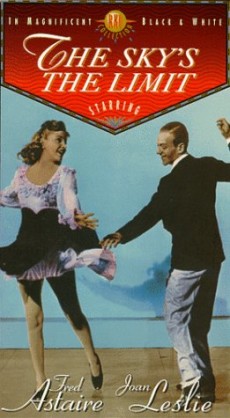
My Shining Hour and One For My Baby (And One More For The Road) are from a 1943 musical comedy movie titled “The Sky’s The Limit”. Harold Arlen composed the music and Johnny Mercer wrote the lyrics. It starred Fred Astaire and Joan Leslie.
My Shining Hour was introduce by Sally Sweetland and was nominated for an Academy Award for Best Song. It is believed that the opening line “this will be my shining hour” to have been a reference to Winston Churchill’s famous rallying call to British citizens during the war: “This will be our finest hour”.
One For My Baby (And One For More The Road) took two and a half days to shoot, after seven days of full set rehearsal. After a drunken rendition of the song, he furiously tap dances up and down the bar, pausing only to smash stacked racks of glasses and a mirror. The number was first performed in the film by Fred Astaire but popularized by Frank Sinatra.
Sponsored By

www.whatissuitetabu.com