

Daily Dose Of Jazz…
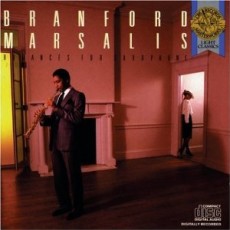
Branford Marsalis was born August 26, 1960 in Breaux Bridge, Louisiana into a musical family led by the patriarch, Ellis. In the summer of 1980, while still at Berklee College of Music, Marsalis toured Europe playing alto and baritone saxophone in an art Blakey large ensemble that led to big band experience with Lionel Hampton and Clark Terry with a return the Art Blakey in the Jazz Messengers with his brother Wynton.
By 1985 he released his first recording, Scenes in the City, as well as guest appearances with Miles Davis and Dizzy Gillespie. In 1985 he joined Sting and The Police along with jazz drummer Omar Hakim, bassist Darryl Jones and keyboardist Kenny Kirkland, recording and performing until 1999.
Branford is primarily known for his work in jazz as the leader of his own quartet, with original member Jeff “Tain” Watts drums, bassist Eric Revis replacing Robert Hurst on bass and pianist Joey Calderazzo replacing Kenny Kirkland after his death. The quartet has toured and recorded extensively, receiving a Grammy in 2001 for its album “Contemporary Jazz”.
After a two-decade association with Columbia Records serving as Creative Consultant and producer for jazz recordings between 1997 and 2001, Marsalis founded his own Marsalis Music label in 2002. producing and releasing his own band along with Harry Connick Jr., Miguel Zenon, Doug Wamble, Alvin Batiste, Michael Carvin, Jimmy Cobb, Bob French and soon to be released Claudia Acuna.
Marsalis has placed great emphasis on his classical music endeavors since the 2001 release of the album “Creation” and symphony orchestra and chamber ensemble performances worldwide became a significant part of his itinerary, touring the U.S. with Philarmonia Brasileira. He has won a 2010 Drama Desk Award for “Outstanding Music in a Play” and was nominated for a 2010 Tony for August Wilson’s Broadway revival of Fences.
Branford has been an educator on the university level at Michigan State, San Francisco State and presently at North Carolina Central University. After Hurricane Katrina he joined forces with Harry Connick Jr. and created the Musician’s Village, undertaken by New Orleans Area Habitat for Humanity in the upper 9th ward, providing dozens of musicians of modest means with the opportunity to own decent, affordable housing. They received the Jefferson Awards for Public Service.
More Posts: saxophone
Daily Dose Of Jazz…
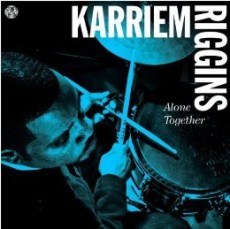
Karriem Riggins was born on August 25, 1975 in Detroit, Michigan and growing up often played drums with his father Emmanuel’s group. He began producing hip hop in middle school and continued through Southfield High School, studying music while attending. At 17 he joined Betty Carter’s band “Jazz Ahead” soon after graduating.
In 1994 when he was 19, Karriem moved to New York City joining the Ray Brown Trio in 1998. He has also recorded and performed with Herbie Hancock, Donald Byrd, Hank Jones, Mulgrew Miller, Diana Krall, Milt Jackson, Oscar Peterson, Cedar Walton, Roy Hargrove and Bobby Hutcherson.
Aside from jazz, Riggins has done production work for hip-hop artists including Erykah Badu, Common, Kanye West, Talib Kweli, The Roots and Dwele among others. He has collaborated with J. Dilla until his death in 2006, finishing the posthumously released album “The Shining”, and with the hip hop multi-instrumentalist Madlib, performing on his 2007 album Yesterday’s Universe. He also produced a portion of the soundtrack for the 2007 film Smokin’ Aces.
His debut album on the Stone Throw label was released in three parts, the first half “Alone” was released digitally and on vinyl on July 31, 2012, the second half “Together” on October 2, with the complete release “Alone Together” later that same year on October 22. Karriem Riggins, jazz drummer, hip hop producer and sometime rapper currently performs, records and tours.
Karriem Riggins: 1975 / Drums
More Posts: drums
From Broadway To 52nd Street
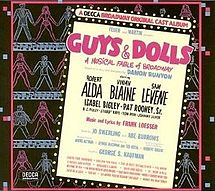
The music composed for Guys & Dolls by Frank Loesser was first heard on the stage at the 46th Street Theatre on January 24, 1950. It became a part of the blockbuster club with a total of 1200 performances. The show starred Robert Alda, Sam Levene and Vivian Blaine, the latter who would go on to star in the 1955 movie version with Frank Sinatra, Marlon Brando, Jean Simmons and Stubby Kaye. Coming out of the play into jazz prominence were the songs If I Were A Bell, I’ll Know, I’ve Never Been In Love Before and Luck Be A Lady Tonight.
The Story: New York gambler, Nathan Detroit, tries to set up a floating crap game since the highest of the high rollers, Sky Masterson, is in town. All the while the police are putting on the heat to prevent the game from happening. Nathan bets Sky that he cannot woo any girl he chooses. He picks Salvation Army’s Sister Sarah and off to Cuba she and Sky go. Ultimately the game takes place in the empty Salvation Army headquarters. Nathan has promised his girl Adelaide that he has quit gambling and will marry her. Romance ensues for all and both Nathan and Sky marry in the end.
Although Guys and Dolls was selected as the winner of the 1951 Pulitzer Prize for Drama, the prize was not awarded because writer Abe Burrows was being investigated by the House Un-American Activities Committee. Do to these troubles with HUAC, the Trustees of Columbia University vetoed the selection, and no Pulitzer for Drama was awarded that year.
Jazz History: In 1950, Charlie Parker, despite a severe drug problem, was at the height of his career. It was during that same year that he became the first jazz musician to record with a string ensemble, which produced the album Charlie Parker With Strings. The year also saw the beginning point were a series of singles on Capitol Records of a nonet led by trumpeter Miles Davis, collected and released first on a ten-inch and later a twelve-inch as the Birth of the Cool. Cool jazz recordings by Chet Baker, Dave Brubeck, Bill Evans, Gil Evans, Stan Getz and the Modern Jazz Quartet usually have a “lighter” sound that avoided the aggressive tempos and harmonic abstraction of bebop. Cool jazz later became strongly identified with the West Coast jazz scene, but also had a particular resonance in Europe, especially Scandinavia, with emergence of such major figures as baritone saxophonist Lars Gullin and pianist Bengt Hallberg. However, blind Chicago pianist Lennie Tristano set out the theoretical underpinnings of cool jazz. Its influence stretches into such later developments as bossa nova, modal jazz, and even free jazz.
Sponsored By

www.whatissuitetabu.com
Daily Dose Of Jazz…
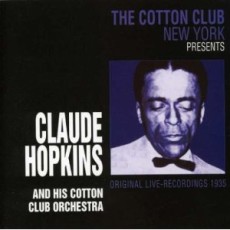
Claude Driskett Hopkins was born on August 24, 1903 in Alexandria, Virginia to Howard University faculty parents. A highly talented stride piano player and arranger, he left home at 21 as a sideman with the Wilbur Sweatman Orchestra but stayed less than a year. In 1925, he left for Europe as the musical director of The Revue Negre that starred Josephine Baker with Sidney Bechet in the band.
Returning to the USA in 1927, Hopkins based himself in Washington, toured the TOBA circuit with The Ginger Snaps Revue before heading once again to NYC where he took over the band of Charlie Skeets. Between 1932-36 he led a fairly successful Harlem band employing many jazz musicians who were later to become famous in their own right such as Edmond Hall, Jabbo Smith and Vic Dickerson. This was his most successful period with long residencies at the Savoy and Rosewood ballrooms, and at the Cotton Club. In 1937 he took his band on the road with a great deal of success but by 1940 dissolved the band.
Using his arranging talents, Claude began working for several non-jazz bandleaders and for CBS. In 1948/9 he led a “novelty” band briefly but took a jazz band into The Cafe Society in 1950. From 1951 up until his death, he remained in NYC working mostly as a sideman with Dixieland bands playing at festivals and various New York clubs and recording. Often under-rated in later years, he was one of jazz’s most important bandleaders and has yet to be given full recognition for his achievements. Claude Hopkins passed away on February 19, 1984 a disillusioned and dispirited man.
More Posts: piano
Daily Dose Of Jazz…
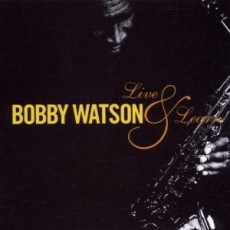
Bobby Watson was born in Lawrence, Kansas on August 23, 1953 but grew up in Kansas City, Kansas. He attended the University of Miami along with fellow students Pat Metheny, Jaco Pastorius and Bruce Hornsby. After graduating in 1975, he moved to New York City and joined Art Blakey’s Jazz Messengers. He performed with the Jazz Messengers from 1977 to 1981, eventually becoming the musical director for the group. He also founded the 29th Street saxophone Quartet with alto saxophonist Ed Jackson, tenor saxophonist Rich Rothenberg, and baritone saxophonist Jim Hartog.
Following his tenure as a Jazz Messenger, Watson became a much-sought after musician, working along the way with many notable musicians, including: drummers Max Roach and Louis Hayes, fellow saxophonists George Coleman and Branford Marsalis, multi-instrumentalist Sam Rivers and his trumpeter brother Wynton. In addition Bobby supported vocalists including Joe Williams, Dianne Reeves, Lou Rawls, Betty Carter and Carmen Lundy as well as being a sideman for Carlos Santana, Rufus & Chaka Khan, Bob Belden and John Hicks.
Watson along with Curtis Lundy and Victor Lewis started “Horizon” an acoustic quintet; led the a tribute band to Johnny Hodges called the “High Court of Swing”; and the “Tailor-Made Big Band”. He composed a song for the soundtrack of Deniro’s “A Bronx Tale”; has been an adjunct professor at William Patterson University and the Manhattan School of Music; and is currently involved with the Thelonious Monk Institute’s “Jazz in America” high school outreach program.
Watson was selected as the first William D. and Mary Grant/Missouri, Distinguished Professorship in Jazz Studies. The past six years he has served as the director of jazz studies at the University of Missouri-Kansas City Conservatory of Music and the alto saxophonist, composer, producer and educator still manages to balance recording of 26 albums as a leader, hundreds of co=led or sideman recordings, along with live engagements around the world with his teaching responsibilities. Watson’s ensembles at UMKC have garnered several awards and national recognition.
Bobby Watson, post-bop jazz alto saxophonist, composer, producer, and educator, now has 26 recordings as a leader. He appears on nearly 100 other recordings as either co-leader or in a supporting role and has recorded more than 100 original compositions and his long-time publisher.
More Posts: saxophone