

Daily Dose Of Jazz…
René McLean was born on December 16, 1946 in New York City, the son of altoist Jackie McLean. He started playing guitar before receiving his alto saxophone and instruction from his father at age nine. He made his debut with his father’s band in the mid Sixties as well as leading his own bands. His debut as a bandleader and producer began at the age of 16 in 1963.
He later studied music with the Jazz Arts Society, Haryou Act Cultural Program, and the Jazz Mobile, New York College of Music, the University of Massachusetts at Amherst and privately with George Coleman, Sonny Rollins, Frank Foster, Kenny Dorham and Barry Harris among others. By the mid -1970’s McLean played in a quintet with Woody Shaw and Louis Hayes and toured with Hugh Masekela in 1978.
René has performed and recorded extensively as a leader and featured sideman with the Dizzy Gillespie Big Band, Lionel Hampton All Stars, Tito Puente Orchestra, Horace Silver, Dr. Bill Taylor, Hugh Masekela, Miriam Makeba, Abbey Lincoln, Dexter Gordon, James Moody, Yusef Lateef, Jaco Pastorius and Jerry Gonzales’ Forte Apache Band, as well as collaborating with poet-activist Amiri Baraka.
As a music educator McLean has performed, conducted workshops and lectured at numerous universities and cultural programs in the U.S. and Caribbean (including Cuba), as well as in South America, Europe, Lebanon, Japan, Indonesia, South Africa, Lesotho, Botswana, Swaziland, Namibia, Mozambique, Zimbabwe, Madagascar and Mauritius and is presently Professor of African American music of the Jackie McLean Institute at The Hartt School, University of Hartford and Master Artist-in-Residence of Music at the Artists Collective in Hartford, Connecticut.

More Posts: saxophone
From Broadway To 52nd Street
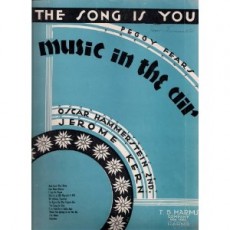
On November 8, 1930 at the Alvin Theatre, the curtain rose for Music In The Air starring Walter Slezak, Natalie Hall, Tullio Carminetti and Katherine Carrington. Running for 342 performances and the tune, The Song Is You was written and composed by Jerome Kern and Oscar Hammerstein becomes a jazz classic standard.
The Story: We follow Karl who writes a song and along with his Bavarian villages trek to Munich to have it published. In Munich, Karl is pursued by a flirtatious prima donna, while composer Bruno falls in love with Karl’s sweetheart. Her indifference to Bruno only lends to fuel Bruno’s ardor and he confesses to her that no matter what melody he creates, it’s always her. The romance and high hopes prove fruitless, so all return home together.
Jazz History: Art Tatum was to become one of The Street’s brightest stars and legendary giants with a following that brought him the highest paid salary to any performer. He moved between The Onyx, The Three Deuces and The Downbeat and was always in great demand for private parties and was once paid a hundred dollars at a George Gershwin shindig to perform during his sixty-minute intermission at the club. With his vision limited to 25% in one eye, he would often ask a friend to walk him down to Hanson’s Drugstore at 51st and 7th, New York’s equivalent to Schwab’s in Hollywood, where it became a gathering place of theatre-goers, celebrities and hopefuls and where Walter Winchell regularly stopped by. Tatum always took a seat at the L-shaped counter and when it was full he would ask someone to drop a handful of coins on the counter and impress the onlookers with his acuteness of hearing by identifying each coin. Art Tatum lived, drank and died with the prodigality that characterized his keyboard pyrotechnics. Frequently he stayed up for days at a time with only catnaps to sustain him or slept long stretches only to awake instantly the moment his hand was touched. Of the 46 pianists queried after his death, 30 named him as their favorite pianist.
Sponsored By

www.whatissuitetabu.com
More Posts: broadway
Daily Dose Of Jazz…
Eddie Palmieri was born of Puerto Rican parentage on December 15, 1936 in Bronx, New York and when he was only 8 years old, he would musically accompany his older brother Charlie and together they entered and participated in many talent contests
Palmieri continued his education in the city’s public school system where he was constantly exposed to music, specifically jazz. He took piano lessons and performed at Carnegie Hall when he was 11 years old. Influenced by Thelonious Monk and McCoy Tyner and inspired by his brother he formed his own band in 1950 at age 14.
In 1961, Palmieri formed the band Conjunto La Perfecta, featuring legendary singer Ismael Quintana and replaced the traditional violins with trombones to create a more robust sound by including a touch of jazz in his recordings and incorporating a popular Cuban rhythm known as Mozambique.
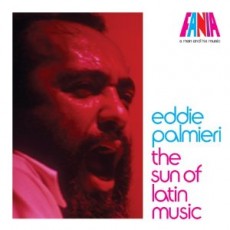
Eddie disbanded the band in 1968 but three years later was recording with his brother and in 1974 was the first Latin musician to win a Grammy Award for Best Latin Recording with The Sun of Latin Music. Through the Eighties he continued performing and recording, winning two Grammys for his Palo Pa Rumba and Solito albums.
In the 1990s Palmieri was part of various concerts and recordings with the Fania All-Stars and the Tico All-Stars; he introduced La India with the production of Llego La India via Eddie Palmieri released in 1992. In 2000, Palmieri announced his retirement from the world of music. He recorded Masterpiece with Tito Puente, won 2 Grammys and was also named the “Outstanding Producer of the Year” by the National Foundation of Popular Culture. Palmieri has won a total of 9 Grammy Awards in his career, most recently for his 2006 album with Brian Lynch – Simpatico.
Palmieri teamed up with longtime trumpeter and band member Brian Lynch, has worked with Phil Woods, Lila Downs, Donald Harrison, Conrad Herwig, Gregory Tardy, Edsel Gomez and Rubén Rodríguez among others. With more than three-dozen albums to his credit he continues to perform and tour.

More Posts: piano
Daily Dose Of Jazz…
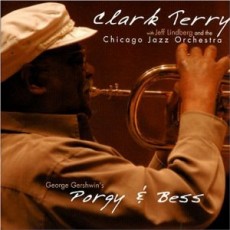
Clark Terry was born on December 14, 1920 in St. Louis, Missouri. After high school he started his professional career in the early 40s playing in local clubs, and then served as a bandsman in the U.S. Navy during World War II. He influenced both Quincy Jones and Miles Davis, teaching the later while in St. Louis.
Terry’s years with Basie and Ellington in the late 1940s and 1950s established him as a world-class jazz artist, blending the St. Louis tone with contemporary styles. After leaving Ellington, Clark’s international recognition soared when he became NBC’s first African-American staff musician. He a ten-year member of The Tonight Show band where his unique “mumbling” scat singing became famous when he scored a hit with “Mumbles.”
Terry continued to play with musicians such as J. J. Johnson and Oscar Peterson, and led a popular group with Bob Brookmeyer in the early 1960s. In the 1970s he concentrated on the flugelhorn, performed studio work and teaching at jazz workshops, toured regularly in the 1980s with small groups and performed as the leader of his Big B-A-D Band.
At the behest of Billy Taylor, early in his career he and Milt Hinton bought instruments and gave instruction to young hopefuls and the idea was planted the seed that became Jazz Mobile in Harlem. He toured with the Newport Jazz All Stars and Jazz at the Philharmonic, recorded for the Red Hot + Rhapsody and Red Hot + Indigo albums, composed more than two hundred songs, performed for seven U.S. Presidents, has been both leader and sideman on more than three hundred albums performing with Clifford Brown, Gary Burton, Charlie Byrd, Tadd Dameron, Eddie “Lockjaw” Davis, Lionel Hampton, Paul Gonsalves and Milt Jackson among others, recorded with symphonies and orchestras and established the Clark Terry Archive at William Paterson University.
Swing and bop trumpeter, pioneer of the flugelhorn and educator Clark Terry has received over 250 awards, medals and honors including a NEA Jazz Masters Award, has received a Grammy Lifetime Achievement Award, 16 honorary degrees, a knighthood, keys to several cities, the French Order of Arts and Letters and over the course of a seventy year career is the most recorded trumpet player of all time appearing on more than 900 known recording sessions.
Trumpeter, and flugelhorn player Clark Terry passed away from complications from advanced diabetes on February 21, 2015 at the age f 94 in Pine Bluffs, Arkansas.

More Posts: flugelhorn,trumpet
Daily Dose Of Jazz…
Ben Tucker was born on December 13, 1930 in Nashville, Tennessee. By age twelve he began on trumpet and later on the bass, quickly making a name around town. In high school he taught himself to play the tuba and at Tennessee State learned the fundamentals of bass violin on his own. Following a stint in the Air Force, he settled in California playing with Art Pepper and Shorty Rogers, among others and the legendary “Jazz of Two Cities”.
By the early 1960’s, he was regularly performing and recording with Herbie Mann, Billy Taylor, Dexter Gordon, Buddy Rich, Quincy Jones, Marian McPartland, and Mel Torme. He would go on to play with Gerry Mulligan, Peggy Lee, Tommy Flanagan, Ellis Marsalis, Cy Coleman and Red Norvo among others.
A prodigious composer of over 300 titles, many are jazz standards like “Comin’ Home Baby”, “Devilette”, “The Message,” “ Right Here, Right Now” and his most famous discovery and publishing being the Bobby Hebb tune “Sunny”.
Bassist Ben Tucker was named as one of the world’s Top Ten Bass Players in 1959 by Metronome Magazine, was appointed to the Advisory Committee of the Kennedy Center for the Arts, formed his own production company, bought a radio station, received a Clio, produced “Multiplication Rock”, the musical education tool, and created the Telfair Jazz Society and opened and operated Hard-Hearted Hannah’s, a Savannah jazz club.
Bassist Ben Tucker passed away on on June 4, 2013 of a traffic collision on Hutchinson Island, Georgia.

More Posts: bass