
Daily Dose Of Jazz…
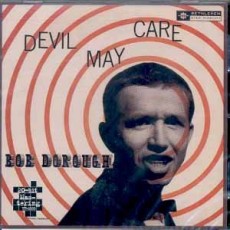
Bob Dorough, born December 12, 1923 in Cherry Hill, Arkansas, he grew up in Texas. He learned to play piano and would play in an Army band during World War II. After discharge he attended North Texas State University, majoring in composition and minored in piano.
Around 1950 Bob moved to New York City and was playing piano in a Times square tap studio where he was introduced to the boxer sugar Ray Robinson, who was putting together a song and dance revue. He was hired, became the show’s music director and toured the U.S. and Europe. Leaving the revue in Paris in 1954, he recorded with singer Blossom Dearie during that time. Returning to the U.S. and moving to Los Angeles, he played various gigs, including a job between sets by comedian Lenny Bruce. Dorough released his first album, Devil May Care, in 1956 that contained a version of Charlie Parker’s “Yardbird Suite”.
Dorough penned the lyrics for Miles Davis on the Christmas song “Blue Xmas” and a few years later recorded “Nothing Like You” that is on the Sorcerer album. He worked with Allen Ginsberg, and his adventurous style influenced Mose Allison among other singers. He is perhaps best known as a voice and primary composer of many of the songs used in “Schoolhouse Rock!” during the Seventies and Eighties.
The cool jazz pianist and composer he has penned with bassist Ben Tucker the tune “Comin’ Home Baby” that earned Mel Torme two Grammy nominations and a Top 40 hit. A vocalese singer, he has released 28 vocal jazz albums as a leader, four singles and 17 as a sideman and/or guest over the last 50 years. Bob Dorough received an honorary degree from East Stroudsburg University of Pennsylvania with a Doctor of Fine Arts, was named Artist of the Year in 2002 by the Pennsylvania Governor’s Awards for the Arts. He garnered a Grammy nomination for Best Recording for Children and was inducted into the Arkansas Jazz Hall of Fame prior to passing away on April 23, 2018 in Mount Bethel, Pennsylvania at age 94.


Daily Dose Of Jazz…
Jack Purvis was born John Purvis on December 11, 1906 in Kokomo, Indiana. After his mother’s death in 1912 his behavior became uncontrollable, and, as a result of many acts of petty larceny that would remain a part of his adult life, he was sent to a reform school. While there, he discovered that he had an uncanny musical ability, and soon became proficient enough to play both the trombone and trumpet professionally. This also enabled him to leave the reformatory and continue his high school education, while he was playing paying gigs on the side.
One of the earliest jobs he had as a musician was with a band led by the Royal Canadian Mounted Police and not long afterward he was working with the Hal Denman dance band. After high school he played with the Original Kentucky Night Hawks, then Bud Rice, Whitey Kaufman’s Original Pennsylvanians, Arnold Johnson’s orchestra, and then traveled to France with the George Carhart band. The balance of the decade he spent recording as a leader and sideman with several bands.
In 1930, Purvis led a couple of racially mixed recording sessions including the likes of J.C. Higginbotham and Adrian Rollini. He would work with the Dorsey Brothers, Fletcher Henderson, Fred Waring, Charlie Barnet and the New Orleans Symphony Orchestra. His move to California had him in radio broadcasting, working at Warner Studios and with the George Stoll Orchestra.
By the mid Thirties he was back in New York playing with Frank Froeba’s Swing Band but this engagement and subsequent recordings were the end of his recording career. He disappeared from the music world, ultimately being sent to jail in Texas for robbery. After his second conviction and release Purvis worked as a chef, aviator, carpenter, radio repairman and even a mercenary in South America.
One account of trumpeter Jack Purvis’ death is that he gassed himself in San Francisco, California on March 30, 1962. However, his death certificate indicates the cause of death to be fatty degeneration of the liver. He was best known as the composer of Dismal Dan and Down Georgia Way, also played trombone, harp and a number of other instruments, and was one of the earliest trumpeters to incorporate the innovations pioneered by Louis Armstrong.

Daily Dose Of Jazz…
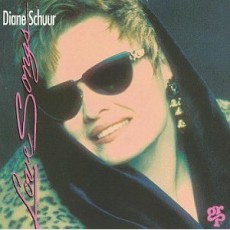
Diane Schuur was born December 10, 1953 in Tacoma, Washington and was blinded at birth due to retinopathy of prematurity. Encouraged by both her parents to sing, she started when she was a two-and-a-half and by age nine was getting professional gigs. Early heroines were Sarah Vaughan and Dinah Washington but while attending Washington State School for the Blind she began performing original material and by sixteen had revealed a distinctive voice and began performing.
Diane’s big break came when Stan Getz heard her at the 1979 Monterey Jazz Festival and became a positive influence. In 1982 he invited her to join him at a White House performance and Nancy Reagan invited her back to perform with Count Basie. She began recording in 1984 on her nickname titled album “Deedles” with Getz performing and on her next two albums.
Pianist and vocalist Diane Schuur has performed with Quincy Jones, Stan Getz, B.B. King, Dizzy Gillespie, Maynard Ferguson, Ray Charles, Joe Williams, Barry Manilow, Alan Broadbent, Harvey mason, Peter Erskine and Stevie Wonder among others. She has been nominated five times and won two Grammy Awards, and her catalogue of recordings is too extensive to enumerate. Her staying power is evident in her continual performance, touring and recording of both studio and live performances.

Daily Dose Of Jazz…
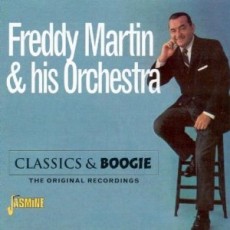
Freddy Martin was born Frederick Alfred Martin on December 9, 1906 in Cleveland, Ohio. Raised largely in an orphanage and with various relatives, he started out playing drums, then switched to C-melody saxophone and later the tenor saxophone that he would come to be identified with. He led his own band in high school, played in several local bands and took that money to enroll in Ohio State University.
After working on a ship’s band, Martin joined the Mason-Dixon band, then joined Arnold Johnson and then Jack Albin, with whom he would make his first recording with the “Hotel Pennsylvania Music” for Columbia’s Harmony, Velvet Tone, and Clarion 50 cent labels in 1930. However it was while filling in for Guy Lombardo one night that kick started his career. It was in 1931 at the Bossert Marine Room in Brooklyn, New York that Freddy pioneered the “Tenor Band” style that swept the sweet-music industry. With his own tenor sax as melodic lead, Martin fronted an all-tenor sax section with just two brasses and a violin trio plus rhythm.
The Martin band recorded first for Columbia, Brunswick and RCA’s Bluebird and Victor, backed singers, played hotels and became a staple on NBC’s Maybelline Penthouse Serenade. His adaptation of a Tchaikovsky tune released as Tonight We Love became his biggest hit.
Freddy Martin was nicknamed “Mr. Silvertone” by saxophonist Johnny Hodges and Chu Berry has named him his favorite saxophonist. He used the banner “Music In The Martin Manner.” Having a good ear for singers at one time or another, Martin employed Helen Ward, Stuart Wade, Merv Griffin, Buddy Clark as well as pianists Sid Appleman and Terry Shand, violinist Eddie Stone and many others.
Martin’s popularity as a bandleader led him to Hollywood in the 1940s where he and his band appeared in a handful of films, in the 1950s and 1960s he continued to perform on the radio, appear on television, be the musical director for Elvis Presley’s first Vegas appearance, and continue his hotel gigs. He would continue to lead his band until the early 80s, although by then, he was semi-retired. Bandleader and tenor saxophonist Freddy Martin passed away on September 30, 1983, in a Newport Beach hospital after a lingering illness. He was 76 years old.

More Posts: bandleader,saxophone
From Broadway To 52nd Street
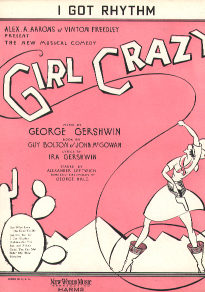
Girl Crazy opened on October 14, 1930 at the Alvin Theatre with a run of 272 performances starring Ethel Merman and Ginger Rogers singing music composed by the Gershwin Brothers. Two songs emerged from this musical to become jazz classics – Embraceable You and I Got Rhythm.
The Story: A tale where Danny Churchill, in an attempt to flee nightclubs, gambling casinos and women, hires a NY taxi driver to take him to Custerville, Arizona. There he hopes to rest on a dude ranch. Before long he has transformed the ranch into a club with gambling rooms and bevies of girls. He woos and wins the heart of one of the girls, Ginger, who is the daughter of the local saloonkeeper.
Broadway History:Though the Depression was in full swing, stars were still being made as musicals and revues continued to emerge on Broadway. From 1931 – 42 this decade made stars of Ray Bolger and Bert Lahr, who went on to fame as the Scarecrow and Cowardly Lion in The Wizard Of Oz; the double act of Gaxton & Moore, who were part of the comic backbone of vaudeville, got their individual starts on Broadway when Gaxton, having mastered the character of a loveable, oblivious bumbler resembling Elmer Fudd with a Porky Pig personality, performed in George M. Cohan’s Forty-Five Minutes From Broadway in 1906, and the much younger Moore was the romantic lead in Rodgers and Hart’s A Connecticut Yankee in 1927. They were paired in Gershwin’s “Of Thee I Sing” and continued their successful partnership well into the ‘40s. The tradition of the double act was later upheld by the likes of Abbott & Costello, Lewis & Martin and Burns & Allen.
Sponsored By

www.whatissuitetabu.com
More Posts: broadway