

Daily Dose Of Jazz…
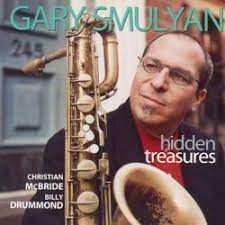
Gary Smulyan was born in Bethpage, New York on April 4, 1956. He studied at Hofstra University before working with Woody Herman. His biggest influence is Pepper Adams. When Adams died, Smulyan recorded an album titled which included eight pieces composed by Adams.
Smulyan has played with the Vanguard Jazz Orchestra, the Mel Lewis Big Band, the Dave Holland Big Band and Octet, the Dizzy Gillespie All Star Big Band. He has performed and recorded with Carla Bley’s Big Band.
He has recorded thirteen albums as a leader, as a sideman seventy-six with Harry Allen, David Byrne, Michel Camilo, Carnegie Hall Jazz Band, Freddy Cole, George Coleman, Dena DeRose, Bill Evans, Gil Evans, Jon Faddis, John Fedchock, Don Friedman, Benny Green, Tom Harrell, Gene Harris, Jimmy Heath, Joe Henderson, Conrad Herwig, Freddie Hubbard, Denise Jannah, B.B. King, Mike LeDonne, Joe Lovano, Joe Magnarelli, Kevin Mahogany, Mark Masters, Mingus Big Band, Grachan Moncur III, Eddie Palmieri, Charlie Parker, Charlie Persip, Diana Ross, Rob Schneiderman, John Scofield, Don Sickler, Mark Soskin, Dave Stryker, Roseanna Vitro, Walt Weiskopf, and Gerald Wilson.
Baritone saxophone Gary Smulyan leads a trio with bassist Ray Drummond and drummer Kenny Washington.
More Posts: bandleader,history,instrumental,jazz,music,saxophone
Daily Dose Of Jazz…
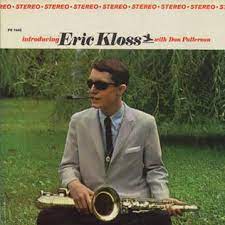
Eric Kloss was born April 3, 1949 in Greenville, Pennsylvania near Pittsburgh, and attended the Western Pennsylvania School for the Blind, which was run by his father. When he was 10, he started on saxophone, and two years later he was playing in night clubs with professional musicians such as Bobby Negri, Charles Bell, and Sonny Stitt. At 16, he recorded his debut album, Introducing Eric Kloss on the Prestige label in 1965, with Don Patterson and Pat Martino.
On his third album, Grits & Gravy, he recorded with musicians over twice his age: Jaki Byard, Richard Davis, and Alan Dawson. He continued recording and performing while a student at Duquesne University. A fan of Elvis Presley and The Ventures, he was attracted to the growth of jazz fusion in the 1960s and ’70s, and eventually played with fusion musicians Chick Corea, Dave Holland, and Jack DeJohnette. He also collaborated with Richie Cole and Gil Goldstein, and did sessions with Cedar Walton, Jimmy Owens, Kenny Barron, Jack DeJohnette, Booker Ervin, Barry Miles, and Terry Silverlight.
By the 1980s, Kloss was teaching at Rutgers University, then Duquesne and Carnegie Mellon. He and his wife, a vocalist, collaborated in a group called Quiet Fire. Saxophonist Eric Kloss has performed and recorded rarely since the Eighties due to health problems.
More Posts: bandleader,history,instrumental,jazz,music,saxophone
Daily Dose Of Jazz…
Salvatore Nistico was born on April 2, 1940 in Syracuse, New York. He started playing alto saxophone, switching to tenor in 1956, and briefly played baritone saxophone. From 1959 to 1961, he played with the Jazz Brothers band, with Chuck Mangione and Gap Mangione.
Nistico played in the 1962–65 Woody Herman group, considered one of his best bands, with Bill Chase, Jake Hanna, Nat Pierce, and Phil Wilson. In 1965, he joined Count Basie but returned on many occasions to play with Herman. Around that time he was also a member of Dusko Goykovich’s sextet with other musicians associated with the Herd, such as Carl Fontana, Nat Pierce, and Michael Moore.
He also played with Nat Adderley, Don Ellis, Buddy Rich, and Stan Tracey. Moving to Europe in his latter years he worked with mostly European musicians as Joe Haider, Isla Eckinger, Billy Brooks, Fritz Pauer. He went on to record with the Larry Porter/ Allan Praskin Band and Three Generations Of Tenor Saxophone with Johnny Griffin, Roman Schwaller, Paul Grabowsky, Roberto DiGioia, Thomas Stabenow, Joris Dudli and Mario Gonzi. The first live performance from 1985 was released under the band’s name on JHM Records Switzerland.
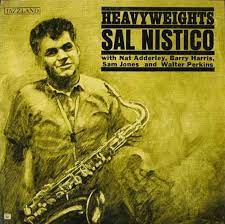
Nistico’s solo work is a contrast to his big band work, with his solo work more oriented towards bebop, as heard on the Heavyweights recording on Riverside Records. Tenor saxophonist Sal Nistico, who was associated for many years with Woody Herman’s Herd, passed away on March 3, 1991, in Berne, Switzerland.
More Posts: bandleader,history,instrumental,jazz,music,saxophone
Daily Dose Of Jazz…
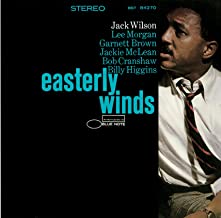
Garnett Brown, born January 31, 1936 in Memphis, Tennessee and graduated from the University of Arkansas at Pine Bluff and later studied film scoring and electronic music at University of California Los Angeles. Winning the DownBeat Reader’s poll for trombonists, he appeared on the classic 1976 recording Bobby Bland and B.B. King Together Again…Live.
As a sideman he recorded with Chico Hamilton, Charles Lloyd, Roland Kirk, Art Blakey, Booker Ervin, Lou Donaldson, Teddy Edwards, Frank Foster, Duke Pearson, George Benson, Charles Tolliver, Johnny Hodges, Houston Person, Louis Armstrong, Gene Ammons, Modern Jazz Quartet, Gil Evans, Jackie and Roy, Airto Moreira, Hubert Laws, Dakota Staton, Reuben Wilson, Charles Earland, Don Sebesky, Lou Donaldson, Charles McPherson, Joe Chambers, Yusef Lateef, Jack McDuff, Rusty Bryant, Les McCann, Billy Cobham, Arif Mardin, Herbie Hancock, Charles Tolliver, Richard “Groove” Holmes, Eddie Harris, Horace Silver, Ahmad Jamal, and Gerald Wilson Orchestra of the 80’s among others.
He has worked as a composer in film and television due to his training in the field. In 1989 he was the conductor and orchestrator for Harlem Nights. Trombonist Garnett Brown, having been diagnosed with dementia, he is now retired and living in West Hollywood, California.
More Posts: history,instrumental,jazz,music,trombone

Daily Dose Of Jazz…
James Otis Wyble was born on January 25, 1922 in Port Arthur, Texas and in his early years worked for a radio station in Houston. He and guitarist Cameron Hill played Western swing, an outgrowth of jazz, in a band led by Burt “Foreman” Phillips. The sound of two guitars attracted Bob Wills, another fan of Western swing, and he hired both men for his band, the Texas Playboys.
His career interrupted by World War II, he served in the Army from 1942 to 1946, but returned to music after he came home. Jimmy continued to play in Western swing bands, but his interest in jazz surfaced on his 1953 debut album, The Jimmy Wyble Quintet. He would soon work with Barney Kessel and Benny Goodman, and then played with Red Norvo for eight years, including on a tour of Australia accompanying Frank Sinatra.
During the 1960s Wyble took a job as a studio musician in Los Angeles, California working as a guitarist for movies and television, playing on movie soundtracks, including The Wild Bunch, Ocean’s Eleven, Everything You Always Wanted to Know About Sex and Kings Go Forth, and played on TV shows such as The Flip Wilson Show and Kraft Music Hall.
He became an educator after taking classical guitar lessons from Laurindo Almeida, teaching guitar to Larry Koonse, Howard Roberts, Howard Alden and Steve Lukather among others. The 1970s saw Jimmy developing a two-line contrapuntal approach to guitar and composed numerous etudes in this style, publishing Classical/Country, The Art of Two-Line Improvisation, and Concepts for the Classical and Jazz Guitar.
During the 1980s, he left the music business, returning to performance in 2005. Larry Koonse, his former student, issued the album What’s in the Box with compositions by Wyble based on his book of etudes.
Guitarist, composer, and educator Jimmy Wyble continued to perform, record and teach until his death on January 16, 2010.
More Posts: composer,educator,guitar,history,instrumental,jazz,music