

Requisites
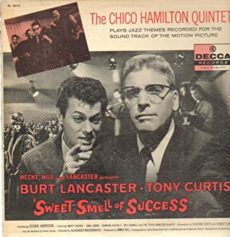
With Sweet Smell Of Success drummer Chico Hamilton got his first brush (no pun intended) with Hollywood in 1957. Riding high on the popularity of his adventurous quintet of the time – reed/flutist Paul Horn, bassist Carson Smith, cellist Fred Katz, guitarist John Pisano, he and the band were cast in the film after being watched around the country for six months to insure they were drug free, on the heels of Gerry Mulligan’s recent release from jail on similar charges.
This gritty black-and-white film about a ruthless Walter Winchell-style, New York City tabloid-gossip columnist, J.J. Hunsecker, played by a dour Burt Lancaster, who wields his power like a club from Club 21. The plot of this sharp-edged media satire thickens when J.J.’s younger sister, played by Susan Harrison, begins dating the clean-cut young jazz guitarist in the Chico Hamilton Quintet, Steve Dallas, played by Martin Milner. Tony Curtis turns in a brilliant performance as the unctuous Broadway press agent Sidney Falco, who would sell his own mother to get an item in J.J.’s column. It’s your basic “guitarist finds girl, guitarist loses girl, guitarist loses gig but ends up with girl” story.
The music composed by Elmer Bernstein, Fred Katz and Chico Hamilton and performed by Elmer Bernstein Orchestra and the Chico Hamilton Quintet. The personnel in the group are Chico Hamilton – drums, Paul Horn – tenor saxophone, alto saxophone, flute, clarinet, Fred Katz – cello, John Pisano – guitar and Carson Smith on bass. They appear on the soundtrack on compositions by Hamilton and Katz: Hot Dogs and Juice (Goodbye Baby), Hunsecker Operates (Goodbye Baby), Goodbye Baby Blues and Love Scene (Susan – The Sage).
The group also performed Jazz Themes composed by Hamilton and Katz: Goodbye Baby, Cheek to Chico, Susan (The Sage), Sidney’s Theme, Jam, Night Beat and Concerto of Jazz Themes from the Soundtrack of “Sweet Smell of Success.

More Posts: collectible,drums
Requisites
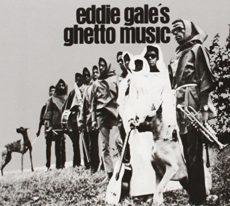
Ghetto Music is the 1968 debut album recorded by trumpeter Eddie Gale and released on the Blue Note label. The album seamlessly blends the new jazz of the ’60s with gospel, soul, and the blues. It was very much representative of the upheaval and turbulence in America at that time, being recorded just five months after the assassination of Martin Luther King Jr.
The Allmusic Guide awarded the album 5 stars and stated “The aesthetic and cultural merits of Eddie Gale’s Ghetto Music cannot be overstated. This is some of the most spiritually engaged, forward-thinking, and finely wrought music of 1968”.
Recorded at Rudy Van Gelder Studio, Englewood Cliffs, New Jersey on September 20, 1968. All five compositions are Gale originals: The Rain, Fulton Street, A Understanding, A Walk With Thee and The Coming of Gwilu.
The Band: Eddie Gale – trumpet, thumb piano, steel drum, bird whistle, Russell Lyle – tenor saxophone, flute, Jo Ann Gale Stevens – guitar, vocals, James “Tokio” Reid, Judah Samuel – bass, Richard Hackett, Thomas Holman – drums, Elaine Beener – lead vocals, Sylvia Bibbs, Barbara Dove, Evelyn Goodwin, Art Jenkins, Fulumi Prince, Edward Walrond, Sondra Walston, Mildred Weston, and Norman Wright – vocals.
More Posts: collectible,trumpet
Requisites
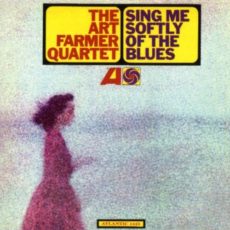
On March 12, 16 and 30, 1965 four men walked into the recording studio at Atlantic Records and laid down the tracks that would become Sing Me Softly Of The Blues. Produced by Arif Mardin, this Art Farmer Quartet album was released that same year. It is just 34 minutes and 50 seconds long and Farmer’s twentieth album and his 4th recording for Atlantic.
The album is comprised of just six songs: Sing Me Softly of the Blues (Carla Bley) – 6:44, Ad Infinitum (Bley) – 6:21, Petite Belle (Traditional) – 4:08, Tears (Pete LaRoca) – 5:45, I Waited for You (Walter Gil Fuller) – 5:55 and One for Majid (LaRoca) – 5:57.
The quartet personnel are: Art Farmer/flugelhorn, Steve Kuhn/piano, Steve Swallow/bass and Pete LaRoca/drums.
More Posts: collectible,flugelhorn
Requisites
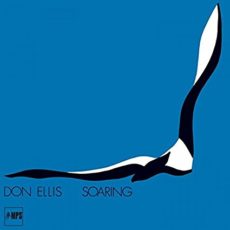
Soaring is an album recorded in 1973 by trumpeter Don Ellis and released on the MPS label. The album features Hank Levy’s composition which provided the title for, and was the title song for the 2014 film Whiplash. The film stars Miles Teller, J. K. Simmons, Paul Reiser, and Melissa Benoist and depicts the relationship between an ambitious jazz student (Teller) and an aggressive, abusive instructor (Simmons).
Four of the eight tracks are composed by Ellis and include Whiplash, Sladka Pitka by Milcho Leviev, The Devil Made Me Write This Piece, Go Back Home composed by Sam Falzone, Invincible, Image of Maria, Sidonie by Alexej Fried and closes out with Nicole.
Twenty multi-instrumentalists and four arrangers comprised the orchestra that brought this session to life playing a myriad of instruments, making it one for the collection. They are Don Ellis, Fred Seldon, Vince Denham, Sam Falzone, Gary Herbig, Jack Caudill, Bruce Mackay, Gil Rathel, Sidney Muldrow, Mike Jamieson, Ken Sawhill, Doug Bixby, Jay Graydon, Milcho Leviev, Dave McDaniel, Ralph Humphrey, Ron Dunn, Lee Pastora, Earle Corry, Joel Quivey, Renita Koven, Pat Kudzia, Alexej Fried and Hank Levy.
More Posts: collectible,trumpet
Requisites
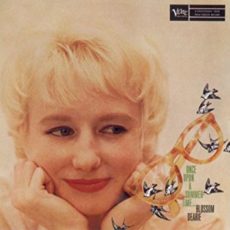
Once Upon A Summertime is an album by Blossom Dearie, recorded and released in 1959 on Verve Records. The third in a series of six albums recorded by the vocalist for the label.
When Norman Granz called and asked Blossom to make another album with Tom Nola, he had Ray Brown playing bass, Mundell Lowe playing guitar, and Ed Thigpen playing drums.e told her she could pick the songs and write the arrangements so how could a girl go wrong? So, by twisting my arm a few times he seemed to persuade her to go ahead with it… even though she says, she resisted stubbornly.
The lineup of compositions are: Tea For Two, The Surrey With the Fringe On Top, Moonlight Saving Time, It Amazes Me, If I Were a Bell, We’re Together, Teach Me Tonight, Once Upon a Summertime, Down With Love, Manhattan, Doop-Doo-De-Doop (A Doodlin’ Song) and Our Love is Here to Stay.
More Posts: collectible,vocal