

Requisites
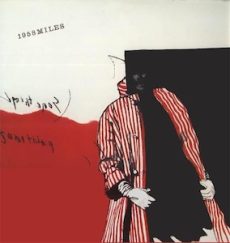
1958 Miles ~ Miles Davis | By Eddie Carter
Throughout his career, Miles Davis was widely regarded not only as a leading figure in jazz but as a monumental presence in music as a whole. He consistently demonstrated his influence by producing an impressive array of records that have remained influential over the years, offering critics, listeners, and fellow musicians more to consider and appreciate than most artists across any musical style. This morning’s album up for discussion is 1958 Miles (CBS/Sony 20AP 1401). Interestingly, this record did not see a complete release in Japan until 1974. Tracks: A1 to A3 were initially released on “Jazz Track” in 1958. Track B1 later appeared on the 1975 double album “Black Giants, ”while track B2 appeared twice in 1973, on the compilations “Basic Miles—The Classic Performances of Miles Davis” and the CBS/Sony Japanese release “The Miles Davis Quintet & Sextet.”
By the time he recorded this album, Davis had brought in some new talented musicians to his group. Red Garland and “Philly” Joe Jones had left, and in their places, pianist Bill Evans and drummer Jimmy Cobb joined the band. Rounding out the ensemble are Julian “Cannonball” Adderley on alto sax (tracks: A1, A2, B1), John Coltrane on tenor saxophone (tracks: A1 to B2), Bill Evans (tracks: A1 to A3, B1), and Red Garland on piano (track: B2). On bass, Paul Chambers is featured on track B2, while Jimmy Cobb (tracks: A1 to A3, B1) and “Philly” Joe Jones (track: B2) keep the rhythm going on drums. The copy of the album I used for this report is the 1979 Japanese Mono Reissue.
Side One kicks off with the timeless song On Green Dolphin Street by Bronislaw Kaper and Ned Washington.Initially written for the 1947 film “Green Dolphin Street”, it’s Miles Davis’s version that truly made it a jazz standard we cherish today. He starts his soulful dialogue on the muted horn, with the trio providing a relaxed, friendly groove around the melody. His energetic lead solo radiates positive vibes, sizzling at a comfortable medium heat, while Coltrane responds with a lively, lyrical interpretation. Cannonball adds his beautiful touch on the third reading, and Evans plays just as wonderfully, culminating in a joyful moment before Miles wraps up the song with a satisfying finish.
Fran-Dance is a heartfelt tribute from Miles to his second wife, Frances Taylor. I first heard this beautiful tune on the 1961 live album, “Miles Davis In Person, Saturday Night at The Blackhawk, San Francisco, Volume 2.” Miles, playing a gently muted trumpet, creates a beautifully dreamy theme that feels warm and inviting, ending with a rich, mellow note. Coltrane’s opening is so lush that it feels like it melts right into your heart. Cannonball's tender, slightly fragile tone adds a delicate touch to the next performance, and Evans approaches the finale with such fingertip delicacy that it becomes one of his most touching ballad performances.
The 1944 jazz classic Stella By Starlight, by Victor Young with lyrics by Ned Washington, provides a graceful ending to the album’s first side and stands as a cherished staple of The Great American Songbook. Cannonball takes a reflective moment to appreciate this enduring masterpiece, highlighting the remarkable solos by Miles, Coltrane, and Evans. The enchanting atmosphere is set immediately with the opening chorus, as the muted trumpet conveys each phrase with deep emotion. Coltrane delivers a powerful, regal rendition, seamlessly leading into Evans’ exquisite solo, which builds to a memorable climax.
Love For Sale, by Cole Porter, made its first appearance in the 1930 musical “The New Yorkers.” The song’s lyrics paint a vivid image of a streetwise woman offering love for purchase, and it has become one of Porter’s most frequently covered songs. Notably, Cannonball and Miles recorded their own rendition just two months earlier for the 1958 album “Somethin’ Else.” Miles opens with a brisk, upbeat introduction, playing with a mute and delivering a truly memorable highlight. Following that, Cannonball takes over and shines brilliantly. Evans then immerses himself in the closing statement, providing a remarkable performance before the group’s theme reprise concludes.
Jackie McLean’s composition Little Melonae made its debut on his 1955 album, “Presenting Jackie McLean”, and is dedicated to his daughter. Cannonball Adderley also doesn’t perform on this track. The quintet introduces the tune with a unified statement of the melody, followed by a captivating solo from Miles Davis, who opens with the mute off, adding a striking touch. John Coltrane responds with heartfelt sincerity in the following statement. Red Garland impresses with refined technique and elegance on his only appearance on the album. Paul Chambers briefly steps into the spotlight, after which the quintet brings the song to a close together.
Teo Macero produced the album, and Larry Keyes carefully engineered each recording session. The sound quality is absolutely stunning across all ranges—treble, midrange, and bass—creating a rich, immersive experience. The sextet’s performance surrounds your favorite listening spot with a beautifully solid soundstage from the instruments, making every note feel alive. Since this is a Japanese release, 1958 Miles might be a bit tricky to track down on your next vinyl hunt. But with a little patience, you’ll be rewarded with an extraordinary album that would make an excellent addition to the Hard-Bop section of your library. It also offers a fresh perspective on Miles Davis’s sound in the Modal style, which reached its peak a year later with “Kind of Blue!”
~ Basic Miles-The Classic Performances of Miles Davis (Columbia KC 32025); Black Giants (Columbia KG 33402); Jazz Track (Columbia CL 1268); Kind of Blue (Columbia CL 1355/CS 8163); Miles Davis In Person, Saturday Night at The Blackhawk, San Francisco, Volume 2 (Columbia CL 1670/CS 8470); Presenting Jackie McLean (AdLib 6601); Somethin’ Else (Blue Note BLP 1595/BST 81595); The Miles Davis Quintet & Sextet (CBS/Sony SOPM-140) – Source: Discogs.com
~ On Green Dolphin Street, Love For Sale – Source: JazzStandards.com
© 2025 by Edward Thomas Carter

More Posts: choice,classic,collectible,collector,history,instrumental,jazz,music,trumpet