

Daily Dose Of Jazz…
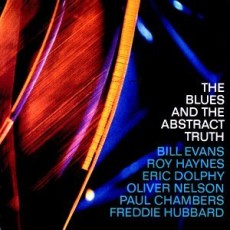
Oliver Edward Nelson was born on June 4, 1932 in St. Louis, Missouri. His brother played sax with Cootie Williams and his sister sang and played piano. He began playing the piano when he was six, the saxophone by eleven and by age 15 he was playing in territory bands around St. Louis. In 1950 he joined Louis Jordan’s big band, playing alto saxophone and arranging.
After military service Nelson returned to Missouri to study music composition and theory at Washington and Lincoln University graduating in 1958. He married, had a son, divorced, moved to New York City, and began playing with Erskine Hawkins and Wild Bill Davis, and arranged for the ApolloTheatre. In 1959 he briefly worked the West coast with Louie Bellson’s big band and played tenor for Quincy Jones.
After six albums as leader between 1959 and 1961 for Prestige with Kenny Dorham, Johnny Hammond Smith, Eric Dolphy, Roy Haynes and others. Oliver’s big break came with his Impulse album The Blues and The Abstract Truth featuring his now classic standard “Stolen Moments”. Propelling him into prominence as a composer and arranger, it opened up opportunities to arrange for Cannonball Adderley, Irene Reid, Sonny Rollins, Billy Taylor, Wes Montgomery, Johnny Hodges and many others.
Moving to Los Angeles in 1967 Nelson spent a great deal of time composing for television shows like Colombo, Ironside, Bionic Woman and films like Death of a Gunfighter and Last Tango In Paris. He produced for Nancy Wilson, James Brown, the Temptations and Diana Ross.
Less well-known is the fact that Nelson composed several symphonic works, and was also deeply involved in jazz education, returning to his alma mater, Washington University, in the summer of 1969 to lead a five-week long clinic that also featured such performers as Phil Woods, Mel Lewis, Thad Jones, Sir Roland Hanna, and Ron Carter.
Oliver Nelson, saxophonist, clarinetist, pianist, arranger and composer died of a heart attack on October 28, 1975, aged 43.
Daily Dose Of Jazz…
Lennie Niehaus was born June 1, 1929 in St. Louis, Missouri. A musical family heralded a concert pianist sister and a father who was an excellent violinist who started his son on the violin at seven, then switched to the bassoon. At 13 he began learning the alto saxophone and clarinet.
Always interested in composing and writing music Lennie studied music in college and in 1946 began playing professionally with Herb Geller, Herbie Steward and Teddy Edwards in 1946. Six months later he joined Stan Kenton, then drafted in 1952 but two years late rejoined Kenton after his discharge.
Leaving Kenton in 1959, Niehaus began composing, moved back to Los Angeles and arranged for the King Sisters, Mel Torme, Dean Martin, and Carol Burnett. Three years later saw him orchestrating for film composer Jerry Fields, a relationship that yielded more than sixty TV shows and films.
He orchestrates his own pieces and never forgets his jazz roots in film, writing jazz and using jazz musicians like Marshall Royal, Bill Perkins, Pete Jolly, Mike Land, and Clint Eastwood. He was the musical director for the Charlie Parker bio-feature, Bird.
After many years of not playing his alto saxophone at all, Niehaus returned to performing, reportedly in top form. He continues to arrange, compose and play alto on the West Coast jazz scene.

Daily Dose Of Jazz…
Willis Leonard Holman was born on May 21, 1927 in Olive, California. Known to the jazz world as Bill Holman, he has worked primarily in the jazz idiom as a songwriter, conductor, composer, arranger and saxophonist.
Through his acquaintance with composer Gene Roland he was introduced to Stan Kenton and in the early fifties was hired as a tenor sax player. Beyond his sax playing, Holman had the ability to integrate counterpoint and dissonance in subtle yet distinctive ways thus making Kenton’s band swing. He became Kenton’s chief arranger writing much of Kenton’s late 1950s repertoire and continued to write for Kenton, on and off, throughout the 1960s and 70s.
In addition to working for Kenton, Bill provided charts for Woody Herman, Doc Severinsen, Buddy Rich, Terry Gibbs, Count Basie, Gerry Mulligan, The Association, The Fifth Dimension and Natalie Cole among others. In 1975 he formed his own band that continues to perform in the U.S. and worldwide. In 1997 he won a Grammy for his recording Brilliant Corners: The Music of Thelonious Monk. He continues to create his legacy in jazz.

Daily Dose Of Jazz…
Oscar Castro-Neves was born one of triplets on May 15, 1940 in Rio de Janiero. Discovering his interest in music at an early age, by six he was playing the little viola and the cavaquinho and forming a band with his brothers. He found his musical interest in the synthesis of European classical influenced altered chords with the bittersweet samba-cancao.
He would learn from Johnny Alf who was deeply influenced by jazz, as would all musicians who chose the path to bossa nova. However it wasn’t until the 60s that it would catch on and in 1962 he was part of the historic Carnegie Hall Bossa Nova Festival.
Soon after he befriended Paul Winter and recorded his debut Oscar! on Paul’s label Living Music. That recording led to other sessions as a leader and performances with the likes of Vinicius de Moraes, Dorival Caymmi, and Quarteto em Cy. In 1966 he recorded with Tom Jobim on his Apresenta album before joining Sergio Mendes and Brazil 66 and recording Fool On The Hill. Having recorded three albums, he had already gained immediate fame blending commercially Brazilian, jazz and American pop.
As an arranger he has worked for Quincy Jones, Flora Purim, Laurindo Almeida, Joao Gilberto, played with Yo Yo Ma, Michael Jackson, Barbra Streisand, Toots Thielemans, Stevie Wonder, John Klemmer and Stan Getz and been involved in projects with Dave Grusin, Herbie Hancock and Michael Brecker.
Guitarist Oscar Castro-Neves continues to record, compose, arrange, score movies and television, perform and tour worldwide.
Daily Dose Of Jazz…
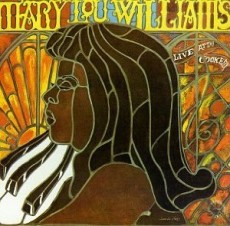
Mary Lou Williams was born Mary Elfrieda Scruggs in Atlanta, Georgia on May 8, 1910 but grew up in the East Liberty neighborhood of Pittsburgh, PA. As a very young child she taught herself to play the piano and one of her greatest influences was Lovie Austin. She had her first public performance at the age of six and went on to help support her ten half-brothers and sisters playing for parties. Mary Lou began performing publicly at the age of seven becoming admiringly known as “the little piano girl of East Liberty”.
In 1924 at age 14 she was taken on the Orpheum Circuit. The following year she played with Duke Ellington and his early small band, the Washingtonians. A year later she was jamming with McKinney’s Cotton Pickers at Harlem’s Rhythm Club and Louis Armstrong stopped in, listened to her picked her up and gave her a kiss. By 1929 she was married to John Williams and composing, arranging and playing piano for Andy Kirk’s Twelve Clouds of Joy, an association that would last until 1942.
Returning to Pittsburgh she put together a group that included Art Blakey, went on the road with Duke Ellington, moved to New York taking a job at Café Society and became closely associated with the bebop generation. She lived in Europe for two years in the fifties and upon her return took a hiatus from performing and began composing religious jazz music.
Throughout the seventies her career flourished recording both group and solo settings and commentating The History of Jazz. She toured extensively playing concerts and festivals, accepting an artist-in-residence appointment at Duke University and performed at the White House in 1978.
Mary Lou Williams was much more than a pianist. She was a composer and arranger who wrote hundreds of compositions and arrangements and recorded more than a hundred records. She wrote and arranged for Duke Ellington and Benny Goodman, and was friend, mentor and teacher to Thelonious Monk, Charlie Parker and Dizzy Gillespie.
Mary Lou Williams died of bladder cancer on May 28, 1981 in Durham, North Carolina at the age of 71. Looking back over her career at the end of her life Mary Lou Williams was known to have said, “I did it, didn’t I? Through muck and mud.”