


Requisites
Yuko Mabuchi Trio, Volume 2 | By Eddie Carter
I’d reached the end of a very long day and was ready to relax and unwind with some piano jazz. I went to the library and came across Yuko Mabuchi Trio, Volume 2 (Yarlung Records YAR71621-161V). The second LP from the trio’s live performance at The Brain and Creativity Institute’s Cammilleri Hall with bandmates, Del Atkins on bass and Bobby Breton on drums. The concert honored the 25th Anniversary of The Los Angeles and Orange County Audio Society, plus President and CEO, Bob Levi’s 70th Birthday. My copy used in this report is the 2018 45-rpm Stereo Audiophile release.
Yuko starts Side One with a trio of solo standards, All The Things You Are by Jerome Kern and Oscar Hammerstein II, Take The “A” Train by Billy Strayhorn, and Satin Doll by Duke Ellington, Strayhorn, and Johnny Mercer. She begins with a stunningly beautiful interpretation capturing the song’s romanticism. Yuko then takes a vivaciously playful ride on The “A” Train with zestful excitement. She wraps up the trilogy with an invigorating interpretation of Satin Doll receiving an ovation from the audience at the song’s end.
The ensemble begins a Japanese Medley trilogy next, Hazy Moon by Teiichi Okano, Cherry Blossom, the Japanese folk tune from the Edo period, and Look At The Sky by Hachidai Nakamura. Yuko opens with a gentle introduction developing into a subtle collective theme. The mood of this first melody is incredibly tender, and the soothing splendor of her solo is purely captivating. She also dominates on the second segment, bringing out the musical substance and expressive beauty in an attractive reading culminating with a regal coda. The finale picks up the pace with the trio fitting together like fingers in a glove on the lively theme. Her technique is assured and quite confident in a dazzling exhibition against the backdrop set up perfectly by Del and Bobby.
Side Two starts with Sona’s Song, the pianist’s very touching tribute to a beautiful young girl in her family. The threesome makes the most of this original with seamless pacing and execution. Yuko demonstrates a mature elegance and heartfelt love in every note of her reverently lush performance before a serene summation. The group takes the audience and listener to the Caribbean on Sonny Rollins’ signature song, St. Thomas with a festive holiday atmosphere right from the start. Yuko invites everyone to enjoy the ride on a jubilantly cheerful lead statement with Atkins and Breton sustaining the rhythm. The drummer adds some buoyant brushwork for a propulsive reading before Yuko puts the finishing touches on a memorable, jazz-filled celebration.
Like its companion, Yuko Mabuchi Trio, Volume 2 has an outstanding soundstage across the highs, midrange, and low end, making it a good choice to show off a high-end audio system. This album was engineered by Bob Attiyeh and Arian Jansen, and mastered by Attiyeh, and Steve Hoffman. The 45-rpm remastering is by Bernie Grundman. The trio’s musicianship is excellent throughout the album and they shift gears as smoothly as a sports car. I’ll leave you with what I think is an ideal ending for my report, it comes from an old 1960 LP by The Joyce Collins Trio: Girl Here Plays Mean Piano. Yuko Mabuchi does this very well and if you’re discovering her for the first time, you’re in for a treat!
~ All The Things You Are, Satin Doll, Girl Here Plays Mean Piano (Jazzland JLP 24), Take The “A” Train – Source: Discogs.com
~ St. Thomas – Source: Wikipedia.org © 2020 by Edward Thomas Carter
More Posts: choice,classic,collectible,collector,history,instrumental,jazz,music,piano
Requisites
Pure Getz ~ The Stan Getz Quartet | By Eddie Carter
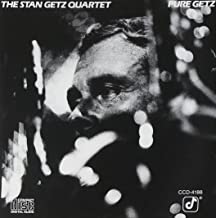
I enjoy listening to jazz when I’m reading and one of my favorite musicians to hear is Stan Getz. He became a favorite of mine after hearing The Girl From Ipanema and Corcovado from the 1964 album, Getz/Gilberto. I also got to see him perform live as a member of the 1972 Newport Jazz Festival All-Stars at Music Hall on July 6, 1972, in New York City. This morning’s choice from the library is Pure Getz (Concord Jazz CJ-188) featuring his quartet at the time, Jim McNeely on piano; Marc Johnson on bass; Billy Hart (tracks: A3, B1, B2) and Victor Lewis (tracks: A1, A2, A4, B3) on drums. My copy used in this report is the 1982 US Stereo release.
The album opens with an uptempo tune by Jim McNeely, On The Up and Up. The ensemble starts with an invigorating melody, then Stan moves right into a sizzling lead statement. Jim swings hard on the next solo with a bouncy effervescence and spirited lyricism. Marc responds with an impressive presentation that appeals at every turn, and Victor keeps the rock-solid beat flowing into a quick climax.
The pace slows down for Blood Count by Billy Strayhorn, originally written as a three-part work for Duke Ellington titled Blue Cloud. It was Strayhorn’s final composition for Duke before succumbing to cancer on May 31, 1967. Ellington himself only performed the tune twice after Billy’s passing. First at a Carnegie Hall concert later that year in August and on his touching 1968 tribute album in memory of Strayhorn, And His Mother Called Him Bill. The quartet delivers an evocatively moving melody and Getz blows a passionately delicate performance culminating with a compassionate coda.
Very Early by Bill Evans is a pretty tune written early in the pianist’s career that was featured on his 1962 album, Moon Beams. The quartet presents this song at an easy, relaxing tempo with Billy Hart on drums. Marc opens with a tenderly expressive solo, then Jim turns in an enchanting interpretation next. Stan weaves a gentle spell of tenderness on the closing statement with a wonderful warmth and presence.
Sipping at Bell’s by Miles Davis begins with a three-instrument chat between Getz, Johnson, and Lewis. McNeely joins the discussion for the informal melody, then Johnson carves out a clever opening reading. Getz is formidable on the next presentation with a sharp, crisp attack. McNeely permits his fingers full sway on an effectively swift performance, and Lewis connects with a lightness of touch on a brief statement that’s exceptionally smooth.
Side Two starts with I Wish I Knew, written in 1945 by Harry Warren and Mack Gordon. This is a very enjoyable rendition taken at midtempo with the solo order, Getz, McNeely, and Johnson with Hart behind the drums. Stan swings into a soulful tenor solo sticking close to the melody. Jim comes next for a delightfully pleasant reading, then Marc makes an indelible impression on the finale with an inspired statement.
Come Rain or Come Shine by Harold Arlen and Johnny Mercer was written in 1946 for the Broadway musical, St. Louis Woman and is a jazz and pop favorite with numerous recordings since its inception. The trio opens with a gentle introduction evolving into an emotional communication on the melody. Getz’s sound is perfectly suited to this ballad as he demonstrates on the lead solo with a beautiful tone and thoughtful musicality. McNeely handles the next interpretation with meticulous care, and Johnson closes with a gorgeous bass solo ahead of the leader’s sensuous ending.
Tempus Fugit, aka Tempus Fugue-it, was written in 1949 by Bud Powell and is a play on words meaning “time flies”. The quartet takes off at a torrid tempo on the opening chorus, Jim swings at a ferocious pace on the scintillating first solo. Stan exemplifies boundless energy on the second reading with breakneck speed, then Marc gives the third reading a serious jolt of electrical energy. Victor wraps up the album with some bouncy brushwork before the quartet makes a spirited sprint to the finish line.
The album was recorded by Ed Trabanco and Phil Edwards, and the more I listened, the more I became impressed with the record’s soundstage. The instruments leap out of your speakers with outstanding detail. Stan Getz was one of the master tenor men with a career spanning nearly five decades from the forties to 1990. If you’re a fan of Bebop and Cool Jazz, I offer for your consideration, Pure Getz by The Stan Getz Quartet. An entertaining album that any jazz fan would appreciate!
~ And His Mother Called Him Bill (RCA LSP-3906); Getz/Gilberto (Verve Records V-8545/V6-8545); Moon Beams (Riverside RLP 428/RLP 9428) – Source: Discogs.com
~ Come Rain or Come Shine – Source: JazzStandards.com
~ Blood Count, Tempus Fugit – Source: Wikipedia.org
© 2020 by Edward Thomas Carter
More Posts: choice,classic,collectible,collector,history,instrumental,jazz,music,saxophone
Requisites
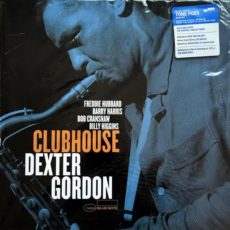
Clubhouse ~ Dexter Gordon | By Eddie CarterAny opportunity I get to discuss an album by tenor saxophonist Dexter Gordon is always welcome, so I begin September with a recent addition to the library. Clubhouse (Blue Note Classic LT-989) is a date from 1965 that also produced the album, Gettin’ Around, but was shelved until 1979. The ensemble is a stellar one, Freddie Hubbard on trumpet; Barry Harris on piano; Bob Cranshaw on bass and Billy Higgins on drums. My copy used in this report is the 2019 Blue Note Tone Poet Series Stereo Audiophile reissue (Blue Note B0029356-01 – LT-989).
The quintet gets into some Hanky Panky to begin Side One with a melody march. Dexter swings with a bluesy beat on the opening statement. Freddie takes over for a neatly paced reading next. Barry ices the closer with a laid-back attitude into a marvelous finale. I’m A Fool To Want You is from 1951 by Frank Sinatra, Jack Wolf, and Joel Herron. Sinatra co-wrote the lyrics and recorded it for Columbia that year. Gordon expresses personal thoughts of lyrical reflection on the opening chorus and first solo. Hubbard and Harris also arouse tender emotions on two beautiful readings before the luxurious coda.
Devilette is by bassist Ben Tucker and was first heard on the 1971 live album, The Montmartre Collection, Vol. 1. This midtempo swinger makes a wonderful vehicle for the quintet to swing easily on the melody. Dexter struts smoothly into the first solo, then Freddie speaks proficiently next. Barry closes with an articulate, passionate interpretation ahead of the conclusion. The quintet convenes inside Gordon’s Clubhouse to start Side Two for a laid-back meeting offering everyone a solo opportunity. Harris gives a charming introduction blossoming into the ensemble’s collective theme. Gordon starts with a soulfully, mellow statement, then Hubbard offers some rhythmically incisive ideas. Harris follows for a melodic mix of grace and fire that’s especially effective. Bob has a definitive moment on the fourth interpretation and Billy wraps things up in a brief exchange with the front line. Jodi is a thoughtfully provocative tribute to Gordon’s wife at the time. Dexter opens with a perfect evocation of love on the melody and first solo. Freddie creates a concise mood of ecstasy next, and Barry adds a touch of sweet lyricism preceding the romantic ending.
The album ends with a tune by guitarist Rudy Stevenson that I first heard on the 1961 album Two Feet In The Gutter, Lady Iris B. The solo order is Gordon, Hubbard, Harris, Cranshaw, and their messages are full of joy and happiness into an immensely satisfying ending that’s positive and upbeat. Clubhouse was produced by Joe Harley of Music Matters Jazz and mastered by Kevin Gray of Cohearent Audio from Rudy Van Gelder’s original analog master tape utilizing 180-gram audiophile vinyl.
The Blue Note Tone Poet Series reissues include high-definition gatefold photos that are worthy of wall art and superb packaging of the covers. The music is simply amazing, and the sound is reference quality with a breathtaking soundstage that’s thrilling, to say the least. Dexter Gordon was a jazz master in every sense as a bandleader, composer, and tenor saxophonist. Clubhouse is nearly forty-minutes of exceptional jazz and an excellent choice for Blue Note to rescue from oblivion for any fan who loves Hard-Bop that you shouldn’t miss on your next vinyl hunt!
~ Gettin’ Around (Blue Note BLP 4204/BST 84204); I’m A Fool To Want You (Columbia 39425); The Montmartre Collection, Vol. 1 (Black Lion BL-108); Two Feet In The Gutter (Epic LA 16021/BA 17021) – Source: Discogs.com
~ I’m A Fool To Want You – Source: Wikipedia.org
© 2020 by Edward Thomas Carter
More Posts: choice,classic,collectible,collector,history,instrumental,jazz,music,saxophone
Requisites
Dancing In The Dark ~ The Fred Hersch Trio | By Eddie Carter
I recently reacquainted myself with one of the most accomplished pianists in jazz. Fred Hersch has been playing since he was four, composing music since he was eight, and recorded over seventy original tunes. Fred’s worked with many great musicians and vocalists, performed as a classical soloist with orchestras and in chamber settings plus led his own groups. He’s also appeared at the Jazz Standard and Village Vanguard, has an extensive discography, and has been nominated for several Grammy Awards including one for the album I’m discussing this morning.
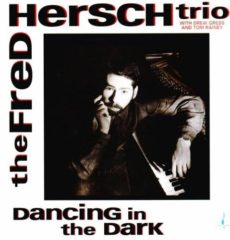
I first heard this record at the 1994 Consumer Electronics Show in Las Vegas. It was one of the most auditioned audiophile LP’s heard on the turntables of various high-end manufacturers. Dancing In The Dark (Chesky Records JR 90) is a stellar album by The Fred Hersch Trio that I’m really happy to have in my library. Joining the pianist are Drew Gress on bass and Tom Rainey on drums. My copy used in this report is the 1993 US Stereo Audiophile pressing.
Side One starts with Dancing In The Dark, written by Arthur Schwartz and Howard Dietz. The song’s first appearance was in the 1931 musical revue, The Band Wagon. It was later reprised in the 1953 film version. Fred displays a delicate touch on the trio’s graceful melody, then goes right to the heart with a strong statement expressing happiness enhanced by Drew and Tom’s supportive energy into a tender fade. I Fall In Love Too Easily is a 1944 song by Jule Styne and Sammy Cahn first heard in the film Anchors Aweigh a year later. The threesome eases into a tranquil opening chorus. Gress starts with a slow, seductive groove of beguiling warmth, then Hersch gradually builds gentle cascades into a passionately tender performance.
Secret Love by Sammy Fain and Paul Francis Webster was first recorded in 1953 by Doris Day who also sang it in the musical film, Calamity Jane. The group takes this tune for a midtempo spin and each member gives an entertaining interpretation. The first side concludes with If I Should Lose You, composed in 1935 by Ralph Rainger and Leo Robin. This song comes from the 1936 film, Rose of The Rancho. Hersch makes this a solo showcase, beautifully characterizing the melody into an intimate dialogue that casts a spell of sensual beauty ahead of an exquisite ending.
Side Two starts with a spirited rendition of the 1948 Cole Porter composition, So In Love, first heard in the Broadway musical, Kiss Me, Kate. The mood is jubilant from the start of the trio’s theme treatment, and Fred swings into an enthusiastic workout before the slow-tempo out-chorus. For All We Know is a song composed in 1934 by J. Fred Coots and Sam M. Lewis that’s very popular among jazz and pop vocalists. Hersch lovingly performs the first chorus solo, then Gress and Rainey add their sinuous support to the remainder of the melody. Fred’s infectiously grooving interpretation showcases the pianist’s dazzling dexterity.
My Funny Valentine by Richard Rodgers and Lorenz Hart is one of the most beautiful songs ever written. It premiered in the 1937 Broadway musical, Babes In Arms. The trio paints on a subtle palette for the nostalgically tender theme. Fred’s lead solo is thoughtfully elegant and Drew crafts a deliciously inviting reading preceding the pianist’s reprise and soft summation. Dancing In The Dark was produced by David Chesky and Fred Hersch.
The album was recorded by Bob Katz, engineered by David Merrill, Jeremy Kipnis, and Peter Cho. It was mastered at Record Technology Incorporated and pressed on premium 180-gram audiophile vinyl. It’s a great demonstration record for your audio system with crystal-clear highs, a sharp midrange, and deep bass for a stunning soundstage. If you’re a fan of piano jazz and enjoy the standards, I invite you to go Dancing In The Dark with The Fred Hersch Trio. Your ears will be rewarded with an extremely enjoyable album that’s just right for a romantic evening with that special someone!
~ Dancing In The Dark, For All We Know, I Fall In Love Too Easily, If I Should Lose You, My Funny Valentine – Source: JazzStandards.com
~ Fred Hersch, Secret Love (Columbia 40108), So In Love – Source: Wikipedia.org
© 2020 by Edward Thomas Carter
More Posts: choice,classic,collectible,collector,history,instrumental,jazz,music,piano
Requisites
Something In Common ~ Sam Jones | By Eddie Carter
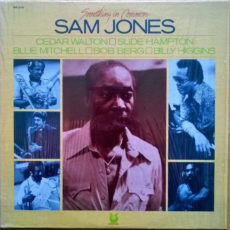
Up next from the library is a 1978 album by bassist Sam Jones titled Something In Common (Muse Records MR5149). If you’re unfamiliar with him, he’s recorded as a leader for East Wind, Interplay, Riverside, SteepleChase, and Xanadu. For five years, he was an essential member of the quintet and sextet of Cannonball Adderley. He’s also appeared on some of the most important jazz LP’s ever recorded and worked with Nat Adderley, Gene Ammons, Donald Byrd, Al Cohn, Arnett Cobb, Lou Donaldson, Kenny Dorham, Red Garland, Dizzy Gillespie, Johnny Hodges, Clifford Jordan, Duke Jordan, Yusef Lateef, Thelonious Monk, Sonny Stitt, and Bobby Timmons among others. For this date, Jones assembled an excellent quintet, Blue Mitchell on trumpet; Slide Hampton on trombone; Bob Berg on tenor sax; Cedar Walton on piano and Billy Higgins on drums. My copy used in this report is the original US Stereo release.
The briskly paced Slide Hampton tune, Every Man Is A King kicks off Side One with Sam presenting a gentle solo introduction that evolves into a swinging affair on the melody. The solo order is Hampton, Mitchell, Berg, Walton, Higgins, and the front line’s strength is in evidence on three exhilarating readings. Cedar kicks it up a notch when his turn comes, followed by Billy who makes a brief closing comment. For All We Know is a jazz and pop standard that was written in 1934 by Fred Coots and Sam Lewis. The ensemble begins with a very pretty melody reminiscent of the cool jazz sound Miles Davis, Gil Evans, and Gerry Mulligan achieved on the LP, Birth of The Cool. Sam shapes the opening statement thoughtfully into an elegant interpretation. The beat moves upward for a brief reading by Blue into the ensemble’s soothing coda.
Mitchell’s Blue Silver ends the first side with the group taking the main theme at a speedy velocity. Blue takes flight first with a joyously, happy lead solo. Bob, Slide, and Cedar follow with three brief energetic interpretations, then Higgins takes the final bow exchanging short riffs with all four soloists preceding the out-chorus. Something In Common is the first of two tunes from Cedar’s pen and starts Side Two swinging from the melody with the sextet showing off their chemistry. Walton opens with an aggressive solo, then Berg shines on a marvelous statement that’sa knockout. Mitchell responds to the saxophonist with exuberant energy next. Hampton follows, making an authoritative entrance into the fourth presentation with passionate emotion. Higgins delivers the final performance with aggressive incisiveness, providing the perfect counterpoint to each artist.
Bolivia, one of Cedar’s most famous compositions made its debut on the 1975 album, Eastern Rebellion with Jones, Higgins, and George Coleman joining the pianist. Blue is featured during the robust melody and end theme but does not solo here. Slide jumps out the box first with enthusiastic authority, then Cedar gives a fiery display on a jubilant statement. Bob makes a bold statement of robust wailing on the next reading. Sam completes the solos with luminous intensity ahead of the ensemble’s reprise and fadeout. Jones’ Seven Minds is the longest track on the album, affording solo opportunities for everyone except Mitchell and Higgins. Sam opens auspiciously with an extended solo vamp, developing into the sextet’s expedient theme. Walton opens with a fiercely, exciting first statement. Hampton demonstrates the tools of a master craftsman with a cooking reading next. Berg follows, producing incandescent heat, then Jones culminates the set with a delightful improvisation.
This release was recorded by one of the best engineers in the business, Chuck Irwin whose list of credits includes many albums across several genres. The LP also has a fine tonal balance of treble, midrange, and bass with superb sound quality as though we’re in the studio with the musicians, eavesdropping. If you’re a fan of Hard-Bop, or Post-Bop, or are looking for an album showcasing superb bass, I offer for your consideration and also recommend Something In Common by Sam Jones. It’s a great set of excellent jazz that should become an essential addition to any library!
~ Birth of The Cool (Capitol Records T-762); Eastern Rebellion (Timeless SJP 101) – Source: Discogs.com
~ For All We Know – Source: Wikipedia.org © 2020 by Edward Thomas CarterAs you listen to this version of the album, be mindful that three songs, Shoulders, One for Amos, and You Are the Sunshine of My Life, have been added to the compact disc release of this album that are not included on the original release. For what reason I am not aware.
More Posts: choice,classic,collectible,collector,history,instrumental,jazz,music