

Requisites
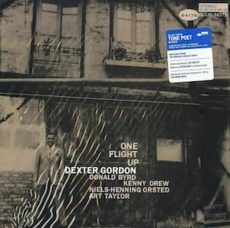
It happened like this; I was choosing several albums to listen to for my next column when a delightful surprise showed up at my door. After auditioning it, I wanted to share my thoughts with you. I first heard this morning’s subject of discussion by Dexter Gordon, One Flight Up (Blue Note BLP 4176/BST 84176) in 1967 during one of my Saturday visits to Record Rendezvous in Cleveland, Ohio. This was his sixth Blue Note album and his second release since moving overseas from the United States. Dexter was a staple on the jazz scene since the forties when he was a member of Billy Eckstine’s Big Band. He was a major influence for two other tenor giants, John Coltrane, and Sonny Rollins. He moved abroad because he was treated more fairly and as an equal than in the US. There was also plenty of work for him and other musicians in some of the best jazz clubs Europe and France had to offer.
In this album, the tenor saxophonist leads a first-class ensemble of Donald Byrd on trumpet, Kenny Drew on piano, Neils-Henning Orsted Pedersen on bass, and Art Taylor on drums. My copy used in this report is the 2021 Blue Note Tone Poet Series Stereo Audiophile reissue sharing the original catalog number. Side One is occupied by Donald Byrd’s Tanya allowing the tenor, trumpet, and piano three lengthy solo opportunities. The rhythm section opens with a brief introduction segueing into a dreamy collective theme. Dexter works his magic first on nearly six minutes of immaculate execution. Donald follows, appealing at every turn on the next reading. Kenny speaks proudly with a firm articulation on the finale that keeps us captivated by Neils-Henning’s and Art’s stylish foundation ahead of the quintet’s closing chorus and gentle dissolve.
Side Two starts with Kenny Drew’s, Coppin’ The Haven. The trio eases into the song with a brief introduction leading to Byrd and Gordon stating the melody to the rhythm section’s infectious beat. Dexter crafts the opening solo with a touch of the blues that sustains its momentum until the conclusion. Donald comes in next with an exquisite reading as smooth as glass. Kenny serves up an impressive final statement preceding the climax. The album ends with the beautiful 1939 standard, Darn That Dream by Jimmy Van Heusen and Eddie DeLange. This is a gorgeous quartet performance opening with a gentle trio introduction. Dexter is the centerpiece here and he produces a beautifully seductive melody and tender first reading. Kenny expresses a gentle warmth on the second interpretation, then Gordon returns to close with a sensuously smooth ending.
One Flight Up was recorded by the French engineer, Jacques Lubin. This Tone Poet reissue was supervised by Joe Harley, and the mastering is by Kevin Gray at Cohearent Audio. The sound quality is spectacular with refreshing clarity and a stunning soundstage that transports the musicians to your listening room. The record was pressed on 180-gram audiophile vinyl and is silent until the music starts. Then, the gatefold photos inside could adorn any wall proudly. Over his nearly forty-year career, Dexter recorded for a host of labels, Bethlehem, Columbia, Decca, Dial, Dootone, Prestige, Savoy, and SteepleChase. However, it was the five years he was at Blue Note (1961-1966) that are among his finest records in my opinion. He passed away on April 25, 1990, at age sixty-seven from kidney failure and cancer of the larynx. If you’re a Hard-Bop fan, I highly recommend One Flight Up by Dexter Gordon. It’s an excellent album where the music speaks to you in a way that’s rewarding listening for any jazz library!
~ Darn That Dream – Source: JazzStandards.com ~ Dexter Gordon – Source: Wikipedia.org © 2021 by Edward Thomas Carter

More Posts: choice,classic,collectible,collector,history,instrumental,jazz,music,saxophone
Requisites
My One And Only Love ~ Franco D’Andrea | By Eddie Carter
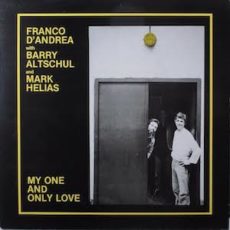
This morning’s choice from the library is My One and Only Love (Red Record NS 201), a recent acquisition introducing me to the Italian pianist, Franco D’Andrea. His career began in 1963 with bandleader Nunzio Rotondo. He’s also played with Franco Ambrosetti, Gato Barbieri, Conte Candoli, Dave Douglas, Johnny Griffin, Lee Konitz, Steve Lacy, Max Roach, Frank Rosolino, Phil Woods, and other Italian musicians. D’Andrea is one of Italy’s most famous pianists and has an extensive discography of two hundred albums as a leader and sideman. Franco also taught at Conservatorio “F.A. Bonporti” from 1994 to 2006 and currently teaches at Mitteleuorpean Jazz Academy and Siena Jazz. On this date, he’s joined by Mark Helias on bass and Barry Altschul on drums. My copy used in this report is the 1983 Italian Stereo pressing.
Side One begins with the first of three tunes from the pianist’s pen, Nord E Sud is a pretty composition that starts slowly but grows to a medium tempo with Franco displaying fine finger work on the opening chorus. He continues holding our attention on an enchanting performance with consummate pacing ascending to a gorgeous climax. Mark takes over for a brief display of creative imagination on the closing solo before the threesome concludes exhibiting a simple lyrical beauty. The pace picks up for the medium-fast blues, Slalom Speciale beginning with a quick introduction by Altschul segueing into a brisk theme and superbly crafted, adventurous first reading by D’Andrea. The pianist and Altschul share a spirited interchange of ideas next, then the drummer breaks loose with a majestic interpretation ahead of the trio’s return to the theme.
Quiet Children, a delicately gentle ballad describing boys and girls at their most peaceful, when they’re sleeping starts Side Two. The ensemble embarks upon a lovely melody transmitting their joy collectively. The leader delves deeply into each child’s dreams with elegant warmth on the first solo. Mark follows with a thoughtful interpretation culminating with the threesome’s serene ending. My One and Only Love by Guy Wood and Robert Mellin is a 1953 jazz standard allowing each member ample solo space. The opening statement by D’Andrea provides an ideal setting to display his talents with delightful humor as it unfolds. Helias follows with a neatly paced reading expressing fervent admiration for the beautiful woman the lyrics describe. Altschul adds some marvelous energy to the final statement before the group’s reprise ends with a bit of collective free jazz improvisation.
The man behind the dials on My One and Only Love is Italian engineer, composer, and multi-instrumentalist, Giancarlo Barigozzi. His work has created a beautiful pressing with stunning stereo separation where the instruments come alive in your listening room crystal clear. Now that I’ve been introduced to this superb pianist, I’ll be looking for some of his other releases for my library. If you’re in the mood for some contemporary jazz, I submit for your consideration, My One and Only Love by Franco D’Andrea. The trio is strong in all three positions with bass and drums participating equally with the piano and their interplay working seamlessly. This album scores on all counts, and in my opinion, should not be overlooked on your next vinyl hunt!
~ My One and Only Love – Source: JazzStandards.com © 2020 by Edward Thomas Carter
More Posts: choice,classic,collectible,collector,history,instrumental,jazz,music,piano
Requisites
Sugar ~ Stanley Turrentine | By Eddie Carter
The landscape of jazz was changing as it entered the seventies. Miles Davis began pushing the envelope from Hard-Bop and Post-Bop to Jazz Fusion with In A Silent Way (1969), and Bitches Brew (1970) would take it further in that direction. Due to his commercial success with Bitches Brew, some musicians also moved from those styles into Avant-Garde and Free Jazz. Still, others began a journey toward what would eventually be labeled Smooth Jazz. Stanley Turrentine, a veteran Soul-Jazz tenor saxophonist since the fifties had just ended a decade-long association with Blue Note that began with his debut, Look Out (1960), and was looking to build his audience. He signed with CTI Records in 1970, the independent label owned by producer Creed Taylor which originally began as a subsidiary of A&M Records in 1967.
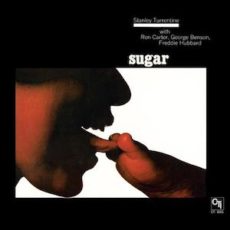
Though no one knew it at the time, Sugar (CTI Records CTI 6005) would become the biggest selling album of Stanley’s career and the title song, a phenomenal hit earning him the nickname, “The Sugar Man”. The record’s success was also instrumental in changing the direction for future CTI releases toward more Jazz-Funk and Funk-Soul albums. Stanley is joined by an impressive supporting cast, label mate Freddie Hubbard on trumpet, Lonnie Liston Smith (track: A1) on electric piano, Butch Cornell (tracks: A2, B1) on organ, George Benson on guitar, Ron Carter on bass, Billy Kaye on drums, and Richard “Pablo” Landrum (tracks: A2, B1) on congas. My copy used in this report is the 2009 Pure Pleasure Records UK Stereo Audiophile reissue (PPAN CTI 6005).
Side One starts with Stanley’s original, Sugar. The rhythm section begins at mid~tempo with an infectious introduction hooking you from the opening notes. The front line presents the melody with a lightly swinging beat. Stanley strides confidently into a danceable lead solo. Freddie settles into a funky groove on the second statement. George tells the next story with some bluesy guitar work and assistance from both horns providing a rhythmic supplement for one chorus. The ensemble reprises the melody and disappears into a slow fade.
Sunshine Alley by Butch Cornell opens with Cornell leading the rhythm section fueled by Kaye’s hypnotic drums and Landrum’s soulful conga. Both horns take it from there on the bluesy theme. Cornell, who I was unfamiliar with before his appearance here, easily holds his own with a convincing lead solo. Benson gives a splendid performance with the rhythm section slipping neatly alongside. Hubbard cooks up something good next, then Turrentine adds some soul food to the final solo that reaches a peak of inspiration preceding the ensemble taking the song out.
The group closes with a vigorous blowing rendition of John Coltrane’s Impressions occupying Side Two. Butch starts the song with a soulful introduction. The front line provides the spark on the main theme to “get this party started” as my wife likes to say. Stanley takes off first at a hard-swinging gallop. Butch comes in next for a vigorous interpretation with both horns humming behind him. Freddie brings an electrically charged dynamism to the third solo with compelling intensity. George adds a bit of excitement to the final reading with some high-voltage licks. Stanley punctuates the closing chorus with final phrases of white heat into an energetic fadeout.
The impeccable rhythm section of Ron Carter, Billy Kaye, and Richard “Pablo” Landrum is the power station behind each soloist, giving the album its depth. The remastering of Rudy Van Gelder’s original recording by Kevin Gray and Steve Hoffman is exemplary. The vinyl is quiet until the music starts, and the LP is a sonic treat for your ears with a spacious soundstage that’s stunning. There’s something for everyone on Sugar by Stanley Turrentine. It’s a Soul-Jazz buffet of his tenor sax, a swinging group, and an irresistible groove that’s sure to make it a favorite in any jazz library!
~ Bitches Brew (Columbia GP 26), In A Silent Way (Columbia CS 9875), Look Out (Blue Note BLP 4039/BST 84039) – Source: Discogs.com © 2021 by Edward Thomas Carter
More Posts: choice,classic,collectible,collector,history,instrumental,jazz,music,saxophone
Requisites
Soul Message ~ Richard “Groove” Holmes | By Eddie Carter
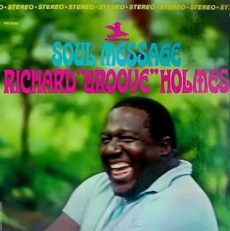
This morning’s choice from the library is an album I first heard on our then R&B station in Cleveland, Ohio, WJMO 1490 AM. I knew the song Misty from my uncle’s weekend jazz listening sessions but had never heard it played on the organ before. I called the station and that’s how I discovered organist Richard “Groove” Holmes. Soul Message (Prestige PR 7435/PRST 7435) serves up six delicious tunes of Soul-Jazz that are something special. Gene Daniels on guitar and Jimmie Smith complete the trio, and my copy used in this report is the 1965 US Stereo pressing. Daniels played with Holmes on two earlier albums in 1961 and 1962, Groovin’ With Jug and After Hours. This was Smith’s only time recording with Richard, but he would go on to enjoy a successful career playing with Toshiko Akiyoshi, Benny Carter, Eddie “Lockjaw” Davis, Erroll Garner, Gene Harris, Terry Gibbs, and Joe Pass.
Groove’s Groove, a soulful blues by Holmes starts with an infectious melody compelling one to snap their fingers and tap their toes right away. Richard hits a groove immediately with a marvelous interpretation. Gene follows with a statement as succulent as a huge Sunday meal from Mom’s or Grandma’s kitchen. Holmes returns for a brief anecdote ahead of the finale. Dahoud by Clifford Brown moves the tempo up to a tropical flavor in the opening chorus. Daniels emerges first with a perfectly constructed opening solo. Holmes delves down into the tune’s roots, stating his point with excellent enunciation into the trio’s reprise. Misty by Erroll Garner and Johnny Burke begins on an upbeat note with Richard soaring at length after the melody. Gene and Jimmie propel the song forward into a charming climax. Misty became Richard’s biggest hit and his signature song whenever he performed live.
Side Two starts with the trio easing into the melody of Song For My Father by Horace Silver. Daniels brings blues-rooted energy to the first solo, then Holmes builds on the momentum with a happy performance that he manages tastefully. The Things We Did Last Summer is a beautiful song by Jule Styne and Sammy Cahn. The trio cultivates an irresistible warmth on this 1946 evergreen with a remarkably respectful opening chorus. Richard approaches every note of the lead and closing solos softly and tenderly. Gene completes the gentle mood with a lovely interpretation of romantic reflection before the trio’s delightfully delicate ending. The title track, Soul Message wraps up this set with a cheerful sermon by Holmes who preaches a concise mellow statement with light and airy verses after the catchy melody.
Soul Message was recorded by Rudy Van Gelder and it’s a good recording, but not perfect. On Groove’s Groove during Richard’s second solo, and on Misty, the microphone picks up a bit of distortion in the upper register lasting about one verse on Groove’s Groove and during the second, third and fourth verses on Misty. This is particularly noticeable if you are wearing a good pair of headphones as I do when listening to jazz late at night. These two issues aside, the instruments have a good soundstage on the remainder of the album. Richard also recorded for Groove Merchant, Muse Records, and Pacific Jazz. He passed away from a heart attack on June 29, 1991, at the age of sixty after battling prostate cancer. If you are a fan of the jazz organ or are just discovering the music of Richard “Groove” Holmes, I invite you to audition Soul Message for a spot in your jazz library. It’s a vibrant, inspired album by the organist, and after you’ve heard it, I’m almost certain you’ll get the message!
~ After Hours (Pacific Jazz PJ-59/ST-59), Groovin’ With Jug (Pacific Jazz PJ-32/ST-32) – Source: Discogs.com ~ Misty – Source: JazzStandards.com ~ Richard “Groove” Holmes, Jimmie Smith, The Things We Did Last Summer – Source: Wikipedia.org © 2021 by Edward Thomas Carter
More Posts: choice,classic,collectible,collector,history,instrumental,jazz,music,organ
Requisites
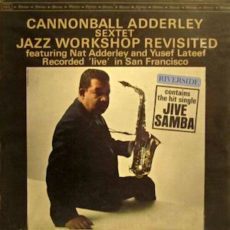
Jazz Workshop Revisited ~ Cannonball Adderley Sextet | By Eddie Carter
The Cannonball Adderley Sextet steps into the spotlight with a favorite album from my childhood that takes us to The Jazz Workshop. Three years earlier, the group made their first trip to the renowned club, and The Cannonball Adderley Quintet In San Francisco was released to rave reviews. This morning’s choice from the library, Jazz Workshop Revisited (Riverside RLP 444/RS 9444) was released in 1963 documenting their return to the venue, this time as a sextet. Nat Adderley on cornet, Cannonball Adderley (tracks: A1 to A3, B1, B3) on alto sax, Yusef Lateef (tracks: A1, B1, B2) on flute, (track: A1) on oboe, (tracks: A2, A3) on tenor sax, Joe Zawinul on piano, Sam Jones on bass, and Louis Hayes on drums. My copy used in this report is the 1965 US Stereo reissue.
Side One starts with an opening comment by Cannonball introducing the first tune, an original titled Primitivo. Yusef and the trio set the mood perfectly in the introduction. Cannonball states the haunting melody, segueing into a tenderly expressed first solo. Yusef follows on oboe with a tantalizingly seductive statement. Nat gives a passionate performance next, and Joe puts an elegant touch on the finale before the ensemble’s gentle closing chorus. The group invites us to celebrate Jessica’s Birthday by Quincy Jones with a festive melody to begin the party. Cannonball leads the solos with zestful energy on the opening statement. Nat bristles with joyful creativity on an exciting reading next, then Lateef blazes into the third interpretation with incandescent energy. Joe swings to an enthusiastic groove on the closer.
Marney by Donald Byrd builds to a brisk melody in unison. Cannonball steps up first to give a vivaciously spirited opening solo. Nat breathes fire on the next interpretation, then Yusef dispenses ferocious energy into the third reading. Joe keeps things cooking on the closer and Sam and Louis don’t pull any punches in their support. The altoist starts Side Two with another few words before the sextet dives into Nat Adderley’s bossa nova hit, The Jive Samba. The trio starts with a danceable introduction ahead of the ensemble’s captivating melody. Cannonball is especially funky on the opening statement, then Nat rocks the second reading with some spicy soul food. Lateef answers with a light and airy sound that swings. Zawinul shines brilliantly on an effervescent performance and Jones increases the finger-popping during the theme’s reprise with a concise comment.
Lillie by Sam Jones is a beautiful ballad that’s a showcase for Nat as the primary soloist. Yusef backs him on the flute during the opening and ending theme. Nat begins with a gracefully beautiful first reading and Joe has an alluring moment before the close. Yusef Lateef’s Mellow Bruno begins with a brisk theme stated by Cannonball who takes charge on the first solo with some spirited blowing. Nat applies some energetic exuberance to the second statement. Lateef provides plenty of infectious enthusiasm next. Zawinul wraps up this stellar session with a short performance before Cannonball takes the song out. Afterward, he lets the crowd know that it’s time to go – really! Wally Heider is the man behind the dials on Jazz Workshop Revisited. The soundstage is stunning and places you in the club among the crowd to enjoy the group at their best.
One of the things I always loved about Cannonball’s live performances is his rapport with an audience. In my opinion, Jazz Workshop Revisited is a great live album that perfectly complements his other two West Coast releases. If you’re a fan of his earlier Riverside records, I offer for your consideration on your next vinyl hunt, Jazz Workshop Revisited by The Cannonball Adderley Sextet. It doesn’t disappoint on any level and is essential listening for any jazz lover!
~ The Cannonball Adderley Quintet at The Lighthouse (Riverside RLP 344/RS 9344), The Cannonball Adderley Quintet In San Francisco (Riverside RLP 12-311/RLP 1157) – Source: Discogs.com
~ © 2021 by Edward Thomas Carter
More Posts: choice,classic,collectible,collector,history,instrumental,jazz,music,saxophone