

Daily Dose Of Jazz…
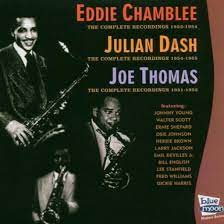
Joe Thomas was born in Muskogee, Oklahoma on December 23, 1908 and was the brother of Walter “Foots” Thomas. He first went to New York City with Jelly Roll Morton in 1929.
During the 1930s he worked with Blanche Calloway and other bands. The early Forties saw him working with jazz musician Dave Martin. He gave up playing to become a vocal coach and songwriter and later an A&R executive.
Alto saxophonist and songwriter Joe Thomas transitioned on April 15, 1997.

More Posts: history,instrumental,jazz,music,saxophone

Daily Dose Of Jazz…
Leonard “Red” Balaban was born in Chicago, Illinois on December 22, 1929 to Barney Balaban, former president of Paramount Pictures. By the Fifties he was residing in the Florida panhandle, working as a farmer and playing in regional ensembles. He moved to New York City in the mid-1960s and held a regular gig at the Dixieland jazz club Your Father’s Mustache.
He worked extensively as a sideman, for musicians such as Wild Bill Davison, Eddie Condon, Gene Krupa, Dick Wellstood, and Kenny Davern. He opened the third incarnation of Eddie Condon’s Jazz club on W. 54th Street after arranging permission for using Eddie’s name from Condon’s widow. He co-led the house band with Ed Polcer from 1975, with whom he later shared ownership of the club. Other musicians in this outfit included Vic Dickenson, Warren Vache, and Connie Kay. The club closed in the mid-1980s.
Tubist, sousaphonist, gui Red Balaban, who also played banjo, stand-up bass, slide trombone, ukulele and rhythm guitar, transitioned on December 29, 2013 at his lakefront home in West Haven, Connecticut.
More Posts: history,instrumental,jazz,music,sousaphone,tuba
Daily Dose Of Jazz…
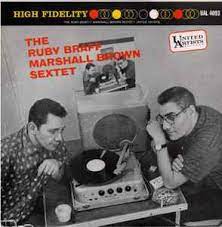
Marshall Richard Brown was born on December 21, 1920 in Framingham, Massachusetts and graduated from New York University with a degree in music. He was a band teacher in New York City schools, and one of his school bands performed at the Newport Jazz Festival in the 1950s.
With George Wein, he went to Europe to look for musicians for the International Youth Band. In the late 1950s he started the Newport Youth Band and his students included Eddie Gomez, Duško Gojković, George Gruntz, Albert Mangelsdorff, Jimmy Owens, and Gabor Szabo.
He worked with Ruby Braff, Bobby Hackett, Lee Konitz, and Pee Wee Russell. Valve trombonist and teacher Marshall Brown transitioned on December 13, 1983 in New York City. He was 67.
More Posts: adventure,educator,history,instrumental,jazz,music,trombone
Daily Dose Of Jazz…
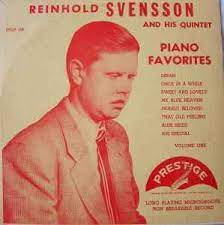
Reinhold Svensson was born December 20, 1919 in Husum, Germany. He recorded as a solo artist in 1941-1942, then joined the ensemble of violinist Hasse Kahn. In 1948, Putte Wickman took leadership of the group, and he worked with it until 1960 as a performer, arranger, and composer.
Reinhold appeared at the Paris Jazz Festival in 1949, worked with Arne Domnerus’s orchestra, and played with Charlie Norman in 1950-1951 as a duo under the names Ralph & Bert Berg and the Olson Brothers.
He also recorded with his own ensembles including Ragtime Reinhold. Domnerus, Jack Noren, Simon Brehm, and Thore Jederby were sidemen of his in the late 1940s and early 1950s.
Pianist, Hammond organist and composer Reinhold Svensson transitioned on November 23, 1968 in Stockholm, Sweden.

More Posts: composer,history,instrumental,jazz,music,organ,piano
Daily Dose Of Jazz…
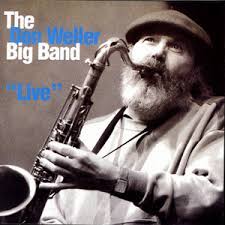
Donald Arthur Albert Weller was born on December 19, 1940 in Thornton Heath, Croydon, England. He began learning clarinet at the age of 14, and was classically educated for four or five years. He played the solo part in Mozart’s Clarinet Concerto at Croydon Town Hall aged 15, and began performing in Dixieland bands around the Croydon area, before switching to tenor saxophone and playing in Kathy Stobart’s rehearsal band.
During the 1970s he formed a jazz-rock group called Major Surgery that played a regular weekly gig at a local pub, the Dog & Bull. They played Weller’s compositions on the album released as The First Cut. This was followed by a quartet with drummer Bryan Spring and at the same time Don worked regularly with pianist Stan Tracey, and also with Harry Beckett and in a quintet with Art Themen. Renowned for his versatility, he has played with artists such as Alan Price, Tina May and Charlie Hearnshaw.
Weller played saxophone for rock records, working with the likes of David Bowie. He was the lead saxophonist with Tower of Power on the instrumental track Nascimento on Cat Stevens’ Back To Earth and also played on the Alex Harvey album The Mafia Stole My Guitar.
In the Eighties he stood in for Michael Brecker when the Gil Evans Orchestra played at the Bracknell Jazz Festival. This gig subsequently led to him touring the UK and recording with one of the band’s trumpeters, Hannibal Marvin Peterson, added on to the Weller–Spring Quartet. He went on to play and record with Evans’ British Orchestra, becoming a regular member of Rocket 88, as well as a first choice for TV and film soundtracks.
He contributed to several films composed for jazz big bands and was commissioned for his Electric Jazz Octet. Tenor saxophonist, and composer Don Weller had a triple bypass in 2012 and eight years later transitioned on May 30, 2020 in Croydon at the age of 79.
More Posts: bandleader,history,instrumental,jazz,music,saxophone