


The Jazz Voyager
Real Live Jazz at ABS: Gottesweg 135, Koln, Germany / Telephone: 00491726621022 / Contact: Patrik Becker. This restaurant, bar and club offers up mainstream, modern, contemporary, world and soul jazz as well as urban Americana and theme nights. Tributes are played by the young Cologne Jazz Scene and guests from the United States, Switzerland and more. Every Sunday at 7:30 pm – Admission is free.
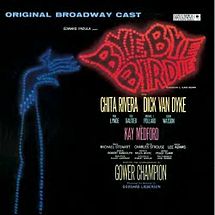
From Broadway To 52nd Street
Bye-Bye Birdie opened at the Martin Beck Theatre on April 14, 1960 with Lee Adams and Charles Strouse composing the music. Running 607 performances the musical starred Dick Van Dyke, Chita Rivera, Dick Gautier, Kay Medford, Susan Watson and Paul Lynde. Two actors, Van Dyke and Lynde would go on to star in the film version. A Lot Of Livin’ To Do and Put On A Happy Face are two compositions that would go on to become jazz standards.
The Story: A popular rock star, Conrad Birdie, is about to be drafted and his agent, Albert, arranges a coup he hopes will keep revenues coming in during Conrad’s stint and allow him to marry Rosie. They pick a girl in a small American town to represent girls across the country to be sung to one last time before Conrad enters the service. Albert’s mother is against the marriage and breaks it up. Conrad goes off to have a wild night, Albert wins back Rosie but everything is turned upside down in the small town.
Broadway History: An Off-Off-Broadway production that features members of Actors Equity is called an Equity Showcase production, however, not all Off-Off-Broadway shows are Equity Showcases. The union maintains very strict rules about working in such productions, including restrictions on price, the length of the run and rehearsal times. Professional actors’ participation in showcase productions is frequent and comprises the bulk of stage work for the majority of New York actors. There has been an ongoing movement to revise the Equity Showcase rules, which many in the community find overly restrictive and detrimental to the creation of New York theatre.
The term indie theatre, or independent theatre, coined by playwright Kirk Bromley, has been adopted by many as a replacement for the term Off-Off-Broadway, and is used by groups such as The League of Independent Theater and the website nytheatre.com.
Sponsored By

www.whatissuitetabu.com

The Jazz Voyager
The Jazz Garden: 1053 Veres Pálné u. 44/a, Budapest, Hungary / Tel: (+ 36-1) 266-7364 Fax: (+36-1) 266-7365
The Jazz Garden Music Club & Restaurant is a very special attraction in the very heart of Budapest where you can enjoy the atmosphere of a summer night in a starlit garden even though you are in a cellar. “Jazz Garden” proudly presents the celebrities of the Hungarian and international jazz scene nightly.
On the premises is a casual jazz club, a sophisticated restaurant and a nicely designed banquet room is available for your special events and parties. Food is served throughout every day and night.
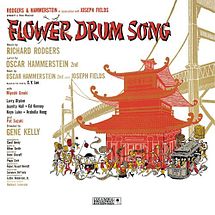
From Broadway To 52nd Street
Flower Drum Song opens the curtains of the St. James Theatre on December 1, 1958 and runs for 600 performances. The music composed by Richard Rodgers and Oscar Hammerstein for actors Pat Suzuki, Juanita Hall, Miyoshi Umeki, Larry Blyden, Jack Soo, Arabella Hong, Ed Kenney and Keye Luke leave the world with the jazz classic Love, Look Away.
The Story: Wang Chi-yang, a wealthy 63-year-old man Chinese refugee lives in San Francisco’s Chinatown with his two sons. He has a cough, which symbolizes his authority and his resistance to American culture and refusal to adopt Western ways. He is also at odds with his sister-in-law and his sons who are assimilating. Older son Wang Ta woos nightclub dancer Linda, but discovering she has many men dumps her. Linda’s seamstress friend Helen cannot find a man and gets Ta drunk, seduces him, has a short-lived affair. Ta eventually abandons her and then she commits suicide.
Impatient at Ta’s inability to find a wife, Wang arranges a marriage for his son. However, before she arrives, Ta meets a young woman, May Li, and with his father’s approval he and May Li fall in love. He vows to marry her after she is falsely accused of stealing a clock. Wang struggles to understand the conflicts that have torn his household apart; his hostility toward assimilation is isolating him from his family. In the end Wang decides to go to a Chinese-run Western clinic, symbolizing that he is beginning to accept American culture.
Jazz History: Hard bop, an extension of bebop or “bop” music that incorporates influences from rhythm and blues, gospel and blues especially in the saxophone and piano playing. Hard bop was developed in the mid-1950s, partly in response to the vogue for cool jazz in the early 1950s. The hard bop style coalesced in 1953 and 1954, paralleling the rise of rhythm and blues. Miles Davis’ performance of “Walkin” the title track of his album of the same year, at the very first Newport Jazz Festival in 1954, announced the style to the jazz world. The quintet Art Blakey and the Jazz Messengers fronted by Blakey featured pianist Horace Silver and trumpeter Clifford Brown, who were leaders in the hard bop movement along with Davis.
Sponsored By
www.whatissuitetabu.com

From Broadway To 52nd Street
West Side Story opened at the Winter Garden Theatre on September 26, 1957. Stephen Sondheim and Leonard Bernstein composed and wrote the score for the musical that ran 732 performances. Larry Kert, Carol Lawrence, Chita Rivera, Mickey Cain and Ken Leroy were the stars of the show that gave the jazz world such classics as Somewhere, I Feel Pretty, Tonight, Maria and Cool.
The Story: On the streets of West Side Manhattan in the late summer of 1957, there is mounting racial tension between rival white American and Puerto Rican gangs to maintain control of the neighborhood – the Jets and the Sharks. An interracial relationship blossoms between Tony and Maria who see past their ethnic differences. However, Maria’s brother Bernardo and leader of the Sharks does not want this love-match to succeed. Destined to be short-lived, a rumble between the two gangs ensues, Maria begs Tony to stop it, the fight escalates from lists to knives and Tony ultimately kills Bernardo.
When Bernardo’s girlfriend Anita learns of his death she is overcome with emotion and seeking out Maria, who already knows, discovers Tony is with her. Tony leaves for refuge at Doc’s drugstore after which they learn that Chino was seeking revenge for Bernardo by shooting Tony. Maria begs Anita to go tell Tony but after a mock rape at the hands of the Jets, Anita delivers a different message – that Maria is dead. In shock Tony runs out screaming for Chino to come kill him. On the playground Tony and Maria see each other but before they can embrace Chino shoots and kills Tony.
Broadway History: The Off-Off-Broadway movement began in 1958 as a reaction to Off-Broadway, and a “complete rejection of commercial theatre”.[2] Among the first venues for what would soon be called “Off-Off-Broadway” were coffeehouses in Greenwich Village, particularly the Caffe Cino at 31 Cornelia Street, operated by the eccentric Joe Cino, who early on took a liking to actors and playwrights and agreed to let them stage plays there without bothering to read the plays first, or to even find out much about the content. Also integral to the rise of Off-Off-Broadway were Ella Stewart at La MaMa and Al Carmines at the Judson Poets’ Theater, located at Judson Memorial Church, Playbox Studio, New York Theatre Ensemble, The Old Reliable, The Dove Company and the Nuyorican Poets Cafe.
Sponsored By
www.whatissuitetabu.com