

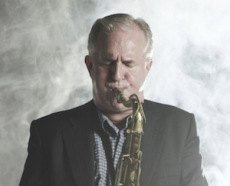
SCOTT HAMILTON
According to The Guardian, Scott Hamilton represents the timeless essence of jazz. The tenor saxophonist is known for his captivating style of playing, for which trumpeter Roy Eldridge was a major influence. After trying out several instruments, he picked the saxophone when he ended up in New York. He stayed with the instrument ever since and performed with jazz legends such as Ella Fitzgerald, Benny Goodman and Woody Herman.
This concert will feature straight-ahead jazz of the highest level by a musician who has been at the international top for many years. He will be accompanied by some of the finest in Dutch jazz: Rein de Graaff on piano, Marius Beets on double bass, and Eric Ineke on drums.
‘Following a Scott Hamilton solo is like listening to a great conversationalist in full flow. First comes the voice, the inimitable, assured sound of his tenor saxophone, then the informal style and finally the amazing fluency and eloquent command of the jazz language’ (Dave Gelly).
More Posts: adventure,club,genius,jazz,music,preserving,saxophone,travel
SCOTT HAMILTON
According to The Guardian, Scott Hamilton represents the timeless essence of jazz. The tenor saxophonist is known for his captivating style of playing, for which trumpeter Roy Eldridge was a major influence. After trying out several instruments, he picked the saxophone when he ended up in New York. He stayed with the instrument ever since and performed with jazz legends such as Ella Fitzgerald, Benny Goodman and Woody Herman.
This concert will feature straight-ahead jazz of the highest level by a musician who has been at the international top for many years. He will be accompanied by some of the finest in Dutch jazz: Rein de Graaff on piano, Marius Beets on double bass, and Eric Ineke on drums.
‘Following a Scott Hamilton solo is like listening to a great conversationalist in full flow. First comes the voice, the inimitable, assured sound of his tenor saxophone, then the informal style and finally the amazing fluency and eloquent command of the jazz language’ (Dave Gelly).
More Posts: adventure,club,genius,jazz,music,preserving,saxophone,travel
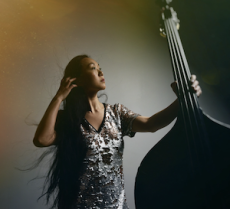
LINDA MAY HAN OH QUARTET
Renowned bassist from New York presents compositions from her album The Glass Hours.
From rock solid accompaniment on double bass to elastic electric bass lines: Linda May Han Oh has mastered it, and always seems to become one with her instrument on stage. On top of that she is an excellent composer of tunes that seem ‘simple and clear, many with folk-like melodies, but are actually complex constructions involving intricate overlays of different densities and activity, sometimes coming into phase, sometimes gently straying apart’, according to Downbeat.
Her new album The Glass Hours is a collection of works based on abstract themes of the fragility of time and life. Vocalist Sara Serpa plays an important role on the album. She will perform here in the band alongside pianist Fabian Almazan, who released The Glass Hours on his label Biophilia Records. Linda May Han Oh is in high demand as a bassist and is known for playing in the Pat Metheny Group, as well as with American jazz greats such as Mark Turner, Dave Douglas en Joe Lovano.
More Posts: adventure,bass,club,genius,jazz,music,preserving,travel
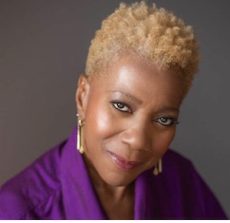
CARMEN LUNDY
“Musicians as diversely gifted as Carmen Lundy, who has excelled as a vocalist, composer, lyricist, arranger, and pianist for more than three decades, remain far and few between.” – Jazz Times
Carmen Lundy: vocals | Julius Rodriguez: piano & keys | Ben Williams: acoustic & electric bass | Terreon Gully [drums | Andrew Renfroe: guitar
Two-time Grammy® Nominated for Best Jazz Vocal Album singer and composer, Carmen Lundy, has been making her mark in New York City’s jazz scene since 1978. Her debut album, “Good Morning Kiss” dominated the Billboard chart for 23 weeks.. Beyond her solo success, Carmen contributed to Grammy®-winning projects, received a Lifetime Achievement Award in Jazz, and is a prolific composer with over 150 published songs. Recognized by the Jazz Times and The New York Times, Carmen Lundy’s legacy is one that transcends genres, spanning music, acting, and mixed media art.
Carmen Lundy began her professional career as a jazz vocalist and composer when there were very few young, gifted and aspiring jazz vocalists on the horizon. Three decades later, Ms. Lundy is celebrated throughout the world for her vocal artistry and is highly regarded for her jazz innovation.
***Fees Apply To All Tickets
More Posts: adventure,club,genius,music,piano,preserving,travel,vocal
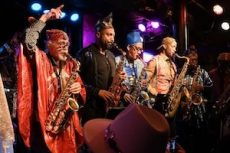
SUN RA ARKESTRA
Directed by Marshall Allen and celebrating Marshall’s 100th birthday!
The Sun Ra Arkestra are known for their live shows that combine big band swing, outer-space jazz, dancing, singing, chanting and Afro-pagentry.
“Besides,” Sun Ra once said, “that’s the way black people say ‘orchestra.'”
The Arkestra continue to tour the world and have performed in more than 25 countries including shows at the pyramids in Egypt and in the USSR, Carnegie Hall, the Berlin Jazz Festival, the Fillmore East, the Hollywood Bowl, Lupo’s Heartbreak Hotel, the Newport Jazz Festival, Fuji Rock Festival, and the Kennedy Center.
During World War 11 Marshall Allen enlisted in the US Army 92nd Division Infantry and performed in the Army band. Marshall joined the Sun Ra Arkestra in 1955 and has been their leader since 1995. He was awarded a PEW Fellowship in 2012. Marshall continues to compose and record with the Arkestra. He tours with them when in driving distance of his home in Philadelphia and he greatly looks forward to the shows. An inner ear issue restricts his flying at this time.
In Marshalls own words: “My work is an extension of Sun Ra’s mission to provide for the spiritual healing of the planet earth.”
***Fees Apply To All Tickets
More Posts: adventure,club,ensemble,genius,jazz,music,preserving,travel