

From Broadway To 52nd Street
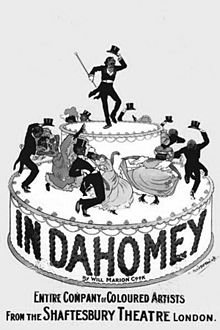
In Dahomey opened on February 18, 1903 at the New York Theater and ran for 53 performances, then considered a successful run. It was a landmark American musical comedy, in that it was “the first full-length musical written and played by blacks significantly marked the first full-length Black to be staged in an indoors venue at a major Broadway house and the first black musical to have its score published, albeit in England. As one of the most successful musical comedies of its era, it propelled composer Will Marion Cook, lyricist Paul Lawrence Dunbar and leading performers Bert Williams, James Smith and George Sisay to become household names. It was “the first African American show that synthesized successfully the various genres of American musical theatre popular at the beginning of the twentieth century—minstrelsy, vaudeville, comic opera and musical comedy.
Though a jazz standard did not emanate from this musical either, the In Dahomey poster features the famous “cake walk” with the character portrayed by Bert Williams and prompted Percy Grainger to write a highly virtuosic concert “rag” titled In Dahomey (Cakewalk Smasher), that he completed in 1909.
The Story: A tale of a group of Blacks, who, having found a pot of gold, move to Africa and become rulers of Dahomey (present-day Benin).
Broadway History: One of the most influential sources of the American musical was one of its most shameful. The minstrel show got its start in the early nineteenth century when a number of white entertainers, mostly of Irish descent, found they could connect with their more raucous audiences by applying burnt cork to their skin and caricaturing black people in various songs, dances and skits. However, the portrayals by white entertainers created a dialogue that became very fashionable, even though they perpetuated negative stereotypes. Black entertainers knew they didn’t speak like that and formed a troupe, and out of that came comic duos on Broadway like Flournoy Miller and Aubrey Lyles in the 20’s, William Gaxton and Victor Moore in the 30’s. But one man transcended minstrelsy’s denigration of his race and became not only the most popular comedian of his day, but the most famous African American since Frederick Douglass. He was Bert Williams, who denied entrance into Stanford University, worked as a banjo player in saloons and minstrels until he teamed up with George Walker. The team gained fame, which led them to head the cast of “In Dahomey” in 1903, the first full-length musical written and played by blacks performed at a major Broadway house.
Sponsored By

www.whatissuitetabu.com
New Music
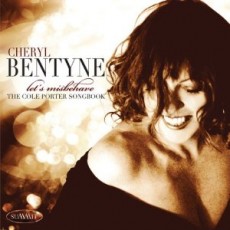
Cheryl Bentyne’s latest offering – “Let’s Misbehave: Cole Porter Songbook – is another release in a long series of solo albums from this reigning soprano of The Manhattan Transfer. Cheryl connects with Porter’s ability to “cover the human condition” and invite one’s ear out for delightful listening to fourteen of his most memorable tunes, such as Begin The Beguine, Night and Day, Love For Sale and I Love Paris. If you like Cole Porter then you’ll enjoy Ms. Bentyne misbehaving!
More Posts: vocal
From Broadway To 52nd Street
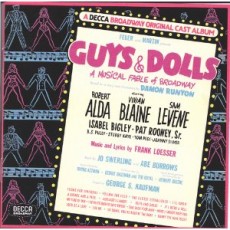
Beginning Saturday, September 1, 2012, Notorious Jazz will present its latest documentary – “From Broadway To 52nd Street” – the history of the compositions written for the musical stages of Broadway that have become jazz standards.
You’ll get historical insight into the era, the composers, the play, the lyricists, the streets, theatres, clubs and the people who made the songs famous on both performance stages. To the present day, the music continues to celebrate perpetual encores through the interpretive talents of great jazz musicians and vocalists.
So join Notorious Jazz on Saturday, September 1st as we present the first installment, and then each successive Saturday for a new series element to the history of this timeless music.
Sponsored By
www.whatissuitetabu.com
More Posts: broadway,dance,history,jazz,musical,play,song,vocal
Requisites
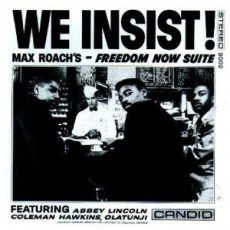
We Insist! Freedom Now Suite: This classic piece of art stands at the intersection of politics and music. It was recorded at a time when the civil rights movement was starting to heat up and drummer Max Roach composed and performed the seven-part suite dealing with black history, particularly slavery and racism.
Driva’ Man has a powerful statement by veteran tenor Coleman Hawkins and there is valuable solo space elsewhere for trumpeter Booker Little and trombonist Julian Priester, but it is the overall performance of Abbey Lincoln that is most notable. Formerly a nightclub singer, Lincoln really came into her own under Roach’s tutelage and she is a strong force throughout this intense set. On Triptych: Prayer / Protest / Peace, Lincoln is heard in duets with the drummer and her wrenching screams of rage are quite memorable.
Personnel: Max Roach – drums, Coleman Hawkins – tenor saxophone, Booker Little – trumpet, Julian Priester – trombone, Walter Benton – tenor saxophone, James Schenk – bass, Olantunji / Ray Mantilla – percussion, Abbey Lincoln / Oscar Brown Jr. – vocal
Record Date: Nola Penthouse Sound Studio, New York / August 31, 1960 & September 6, 1960 / Candid Records
Producer: Nat Hentoff
Songs: Driva’man, Freedom Day, Triptych: Prayer/Protest/Peace, All Africa, Tears For Johannesburg

More Posts: collectible,drums,vocal
Requisites
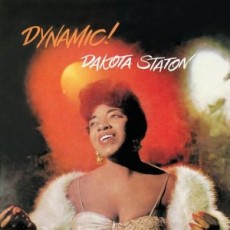
Dynamic: This 1958 classic boasts the talents of the legendary Pittsburgh jazz and soul vocalist Dakota Staton. Tasteful and swinging, with an alternation between lush orchestra arrangements and intimate combo settings, the album coheres beautifully and represents Staton in fine form. This is her sophomore project on the heels of her critically acclaimed “The Late, Late Show” with an addition four previously unreleased tracks added to the re-mastered compact disc. Staton has redefined jazz singing as pure fun!
Personnel: Dakota Staton – vocal, George Shearing – piano, Harry “Sweets” Edison – trumpet, plus orchestra
Record Date: February 1958
Songs: Let Me Off Uptown, Night Mist, Anything Goes, When Sunny Gets Blue, They All Laughed, I Wonder, Say It Isn’t So Joe, Too Close For Comfort, Little Girl Blue, It Could Happen To You, Some Other Spring, Cherokee, Invitation, The Party’s Over, I’ll Remember April, The Nearness Of You
More Posts: collectible,vocal