Daily Dose Of Jazz…
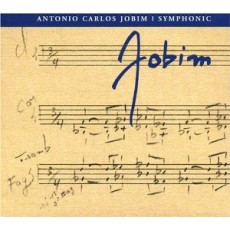
It has been said that Antonio Carlos Jobim was the George Gershwin of Brazil, and there is a solid ring of truth in that, for both contributed large bodies of songs to the jazz repertoire, both expanded their reach into the concert hall, and both tend to symbolize their countries in the eyes of the rest of the world.
Born Antônio Carlos Brasileiro de Almeida Jobim on January 25, 1927 in Tijuca neighborhood of Rio de Janiero studied to become an architect but the lure of music was too strong being firmly rooted in the music of Pixinguinha, who began modern Brazilian music in the 1930’s. By twenty he started playing piano in nightclubs and working recording sessions. He cut his first record in 1954 leader his group Tom and His Band, backing singer Bill Farr.
Tom, a nickname he affectionately carried throughout his life, was firmly planted in jazz having been impacted by Gerry Mulligan, Chet Baker, Barney Kessel and other West Coast musicians. He also gleaned influence upon his harmonies from Claude Debussy and Samba gave his music an exotic rhythmic underpinning. His piano is simple and melodic, his guitar gentle and his singing hauntingly emotional. Among his many themes his lyrics talked of love, political repression, betrayal, the natural beauties of Brazil and his home city of Rio.
Jobim first found fame in 1956 when he teamed with poet and diplomat Vinicius de Moraes to score part of the play Orfeo do Carnival, which would later gain them worldwide acclaim at Cannes when Black Orpheus debut in 1959.
In 1958, an unknown Brazilian singer João Gilberto recorded some of Jobim’s songs, which effectively launched bossa nova. Yet, Jobim’s breakthrough outside Brazil occurred in 1962 when Stan Getz and Charlie Byrd scored a surprise hit with his tune “Desafinado” – and later Getz teamed with Joao Gilberto and his wife Astrud resulting in Getz/Gilberto in 1963 and Getz/Gilberto 2 in 1964. The ’63 album became one of the best selling jazz albums of all time and grabbed 4 Grammy Awards. With their gracefully urbane, sensuously aching melodies and harmonies, Jobim’s songs gave jazz musicians in the 1960s a quiet, strikingly original alternative to their traditional Tin Pan Alley source.
Grammy award winning songwriter, composer, arranger, singer, pianist and guitarist while driving home after finishing recording for his next album Tom Jobim, collapsed and passed away of heart failure in New York City on December 8, 1994.

Daily Dose Of Jazz…
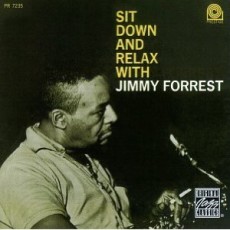
One of the many jazz musicians to come out of St. Louis, Missouri was Jimmy Robert Forrest Jr., born January 24, 1920. Working with pianist Eddie Johnson, Fate Marable and the Jeter-Pillars Orchestra while in high school, he went on the road with Dan Albert in 1938 and then the Jay McShann Orchestra from 1940 to 1942.
Forrest moved to New York and played with Andy Kirk and Duke Ellington before returning to St. Louis. His recording of “Night Train” with it’s hook and classic tenor solo reached the #1 spot on the Billboard R&B chart in 1952 and stayed for seven weeks. Gathering greater attention Jimmy recorded a series of jazz influenced R&B singles for United Records including two other hits “Hey Mrs. Jones” and “Bolo Blues”.
“Night Train” became the theme song for a nightly rhythm and blues program of the same name hosted by William A. “Rascal” McCaskill on KREL-AM in Houston market from 1954-1957 that virtually introduced white teenagers to what was called race music.
During the fifties he led his own combos and played with Miles Davis but Jimmy Forrest’s most important associations were with Harry “Sweets” Edison from ’58-’63, the Count Basie Orchestra from ’72-’77 and Al Grey with whom he co-led a quintet until his death.
Tenor saxophonist Jimmy Forrest, bandleader and sideman, died on August 26, 1980 in Grand Rapids, Michigan.

More Posts: saxophone
Daily Dose Of Jazz…
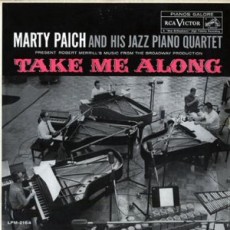
Marty Paich was born Martin Louis Paich on January 23, 1925 in Oakland, California. He started his music career taking lessons on the accordion followed by the piano and by 10 he formed his first of several bands and by 12 was playing regularly at weddings and similar social events. He attended a series of professional schools, served in the Army Air Corps during WWII leading various bands and orchestras until his discharge. Marty went back to school studying composition and graduating magnum cum laude in 1951 from the Los Angeles Conservatory.
Paich had an extraordinary ear for style and an eclectic taste. His early work included arranging and playing the score for Disney’s Lady and The Tramp, accompanist for Peggy Lee, playing piano for Shorty Roger’s Giants and touring with Dorothy Dandridge.
During the 1950s, Paich was active in West Coast jazz performance while also working intensively in the studios. He not only played on, but arranged and produced, numerous West Coast jazz recordings, including albums by Ray Brown, Ella Fitzgerald, Terry Gibbs, Shelly Manne, Anita O’Day, Dave Pell, Buddy Rich but it was his association with Mel Torme and their work with the Marty Paich Dektette, albeit difficult at times, was what many jazz critics consider to be the high point of their respective careers.
The 60’s moved him to the studios and television working for Andy Williams, Al Hirt, Dinah Shore, Glen Campbell, Sonny & Cher, the Smothers Brothers and winning an Emmy for Ironside.
In a career which spanned half a century, he worked as a pianist, composer, arranger, producer, music director and conductor for such artists as Frank Sinatra, Sammy Davis Jr., Sarah Vaughan, Stan Kenton, Jack Jones, Art Pepper, Stan Getz, Barbra Streisand, Ray Charles, Aretha Franklin, Linda Ronstadt, and Michael Jackson and a hundred others. Marty Paich passed away on August 12, 1995, aged 70 from colon cancer, at his home in Santa Ynez, California.
Daily Dose Of Jazz…
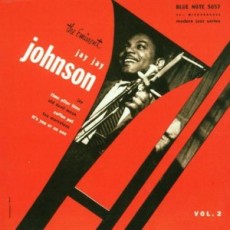
J. J. Johnson was born James Louis Johnson in Indianapolis, Indiana on January 22, 1924. He started studying piano at the age of 9 and at fourteen decided to play the trombone. By 1941 he began his professional career with Clarence Love and followed by Snookie Russell in ’42, then playing through the forties with the Benny Carter Orchestra, participating in the first Jazz At The Philharmonic organized by Norman Granz in Los Angeles.
He would tour and record with the Count Basie band, Illinois Jacquet and then began leading and recording small groups featuring Max Roach, Sonny Stitt and Bud Powell. By 1951 he took a job as a blueprint inspector but never abandoned his love for music as documented by his compositions Enigma and Kelo recorded by Miles Davis, garnering an invitation to play on the 1954 classic Davis Blue Note session, Walkin’.
Johnson went on to lead groups with Kai Winding, arranging for and backing Sarah Vaughan, following with a successful solo career touring the U.S., the U.K. and Scandinavia. He recorded a wide range of albums with notables as Bobby Jaspar, Clifford Jordan, Freddie Hubbard, Tommy Flanagan, Cedar Walton, Andre Previn and the list goes on and on.
In 1958-59 Johnson was one of three plaintiffs in a court case that hastened the abolition of the cabaret card system. By the sixties he was concentrating more on composition, writing a number of large-scale works that incorporated elements of both classical and jazz.
The 70’s saw J.J. in Hollywood scoring for film and television – Across 110th Street, Starsky & Hutch, and the Six Million Dollar Man but racism and other prejudices kept a black jazz musician from securing the amount and quality of work he was qualified to perform. However, his compositions including “Wee Dot”, “Lament” and “Enigma” have become jazz standards.
The trombonist, composer and arranger also authored a book of original exercises and etudes and a biography titled “The Musical World Of J.J. Johnson. He was voted into the Down Beat Hall of Fame in 1995. Diagnosed with prostate cancer, on February 4, 2001, he committed suicide by shooting himself.

Daily Dose Of Jazz…
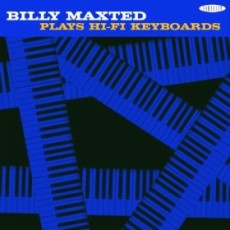
Born January 21, 1917, pianist Billy Maxted grew up in Racine, Wisconsin. He started out playing and arranging for the Red Nichols Big Band in 1937 and stayed with him for three years. After serving in the Navy he provided arrangements for Benny Goodman and Claude Thornhill and co-led a band with Ray Eberle from 1948 to 1948.
In the following years he worked with drummer and bandleader Ben Pollack, guitarist, composer and big band leader Teddy Powell and trombonist and bandleader Will Bradley.
Maxted moved to Long Island, NY and for much of his life he was a fixture at Nick’s in Greenwich Village. From 1955 to 1966 he recorded a dozen albums including Dixieland and Big Band hits. In 1961 he moved to Fort Lauderdale and that same year reached the Billboard “Bubbling Under The Top 100” chart with a swing version of “Satin Doll”.
He worked with Pee Wee Erwin, Bob Crosby and Red Nichols and over his career recorded for MGM< Brunswick, Cadence and Seeco labels. Not much was heard from him after his move to Florida and in relative obscurity Billy Maxted passed away on October 11, 2001 in Fort Lauderdale.