


Daily Dose Of Jazz…
Hank Frederic Gregson Wayland was born January 21, 1906 in Fall River, Massachusetts. He learned music from his father who was a musician and played in high school bands. He moved to New York City in 1926, where he played the double bass in theater orchestras and in the studios.
In the 1930s he performed and/or recorded with Benny Goodman, Red Norvo, Artie Shaw, Bunny Berigan, and Larry Clinton. During The Depression, Wayland was forced to send his sons to Florida to live with his wife’s brother while he toured the US and in Europe.
In the early Forties Hank played with Bob Chester, then moved to California the following year where he played with Eddie Miller and Wingy Manone in addition to more work as a studio musician. He appeared in bit parts in low budget Hollywood films, however he did appear without credit in the film Stars and Stripes Forever.
During The Depression, Wayland was forced to send his sons to Florida to live with his wife’s brother while he toured the US and in Europe. He eventually relocated his family to Glendale, California and faded from the scene after the 1950s. He officially retired from his music career in 1968.
Diagnosed with colon cancer in 1978 he underwent a colectomy. Later that year he was suspected of suffering from Alzheimer’s disease. Double bassist Hank Wayland, who never led a recording session, died peacefully on March 27, 1983 while living in a retirement home.

More Posts: bass,history,instrumental,jazz,music
Daily Dose Of Jazz…
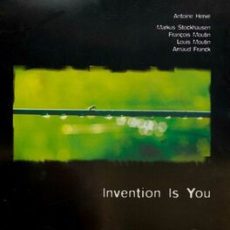
Antoine Hervé was born on January 20, 1959 in Paris, France. He studied composition at the Conservatoire National Supérieur de Musique. Between 1987 and 1989 he was director of the French National Jazz Orchestra.
Next to musicals, soundtracks for movies and dance shows Hervé has composed a concert for trumpet and a piece for drums and orkest. During 1997 he and Markus Stockhausen founded a quintet.
Emerging as a gifted representative of his generation of improvisers, his delve into fusion music, European classical music, contemporary and modern jazz led him and 12 other musicians to form the group Bob 13. He would go on to create a trio with bassist Michel Benita and drummer Peter Gritz.
His influences have been Bill Evans, Wynton Kelly, Oscar Peterson and McCoy Tyner, as well as Chopin, Debussy and Bartok.
Pianist Antoine Hervé continues to explore the realm of jazz through his compositions and performance.
More Posts: bandleader,history,instrumental,jazz,music,piano
Daily Dose Of Jazz…
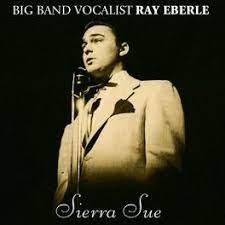
Raymond Eberle was born on January 19, 1919 in Mechanicville, Saratoga County, New York. He started singing in his teens without formal training. In 1938 while looking for a male vocalist for his big band asked Bob Eberly if he had any siblings at home who could sing and his brother was hired on the spot.
Eberle went on to find success with Miller, deeming the songs for the film Orchestra Wives, such as the jazz standard “At Last”, to be among his favorites, as they were songs he could make a story out of. During the Forties he appeared in Twentieth Century Fox movies, and several Universal Studios films, singing mostly ballads.
He led his own orchestra, The Ray Eberle Orchestra, as well as the Serenade In Blue Orchestra from 1943. In the 1950s and 1960s.he also appeared on numerous television variety shows. He maintained his band until his death.
After his departure from Miller, Eberle briefly joined Gene Krupa’s band before launching a solo career. He later joined former Miller bandmate Tex Beneke’s orchestra in 1970 for a national tour, and reformed his own orchestra later in the decade.
Vocalist Ray Eberle died of a heart attack in Douglasville, Georgia on August 25, 1979, aged 60.
More Posts: history,instrumental,jazz,music,vocal
The Jazz Voyager
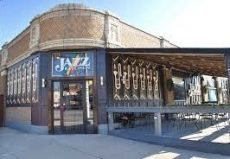
In the air once more and three hours later flying from Phoenix to that renowned city with the racetrack, Indianapolis, where this jazz voyager will be in The Jazz Kitchen audience for a toe-tapping good time. Since 1994 this venue has been serving up world~class musicians and cuisine in a casual, sophisticated atmosphere.
The Jazz Voyager will witness the talents of Tony Monaco, who may be the best organ player to come along. This will be my first time hearing him in person, having only experienced him on compact disc. Mentored by the legendary Jimmy Smith in the classic style, he does not swing, smolder or smoke, he burns. He began his keyboard life at age eight, at twelve he heard Jimmy Smith and jazz became his destiny. An enthusiastic student, Tony began working in Jazz clubs as a teenager in his hometown of Columbus, Ohio where he was guided by local organ gurus Hank Marr and Don Patterson.
For those of you who have never been to this establishment it is located at 5377 N. College Avenue, Indiana 46220. For those wanting more information go to https://notoriousjazz.com/event/tony-monaco.

More Posts: adventure,club,genius,jazz,keyboards,music,organ,preserving,travel
Daily Dose Of Jazz…
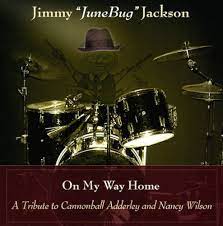
James Charles Jackson Jr. was born on January 18, 1957 and raised in Kalamazoo, Michigan. Hailing from a musical family, he grew up surrounded by instrumentalists and vocalists. Before reaching high school, he was the drummer in his brother’s band, Ripple, that recorded and played gigs in the area. When it was time to go on the road his mother was adamant that he must finish high school.
Graduating in 1977 he landed a job in Atlanta, Georgia as the drummer for The Counts. Jimmy played with them for a few years until they disbanded, then transitioned to the Mose Davis Trio. Though much younger than his bandmates, he played well beyond his years.
Getting his big break came with meeting jazz organist Jimmy Smith, who had a show in Atlanta and Davis loaned him his Hammond organ for the performance. After moving the instrument, Jackson asked if he could sit in on the sound check. Blowing Smith away with his playing during the sound check landed him a job with the organist. He would tour the world with the band.
While residing in Atlanta, Jimmy played with the Paul Mitchell Trio at Dante’s Down the Hatch, as well as freelancing around town. Leaving Atlanta in 2006 for New York City and then on to the Washington, D.C. area a year or so later. His heart always considered Atlanta as his second home
Drummer and vocalist Jimmy Jackson, who was affectionately known by most as Junebug, died on January 28, 2012 of complications associated with congestive heart failure at the age of 55.
More Posts: bandleader,drums,history,instrumental,jazz,music